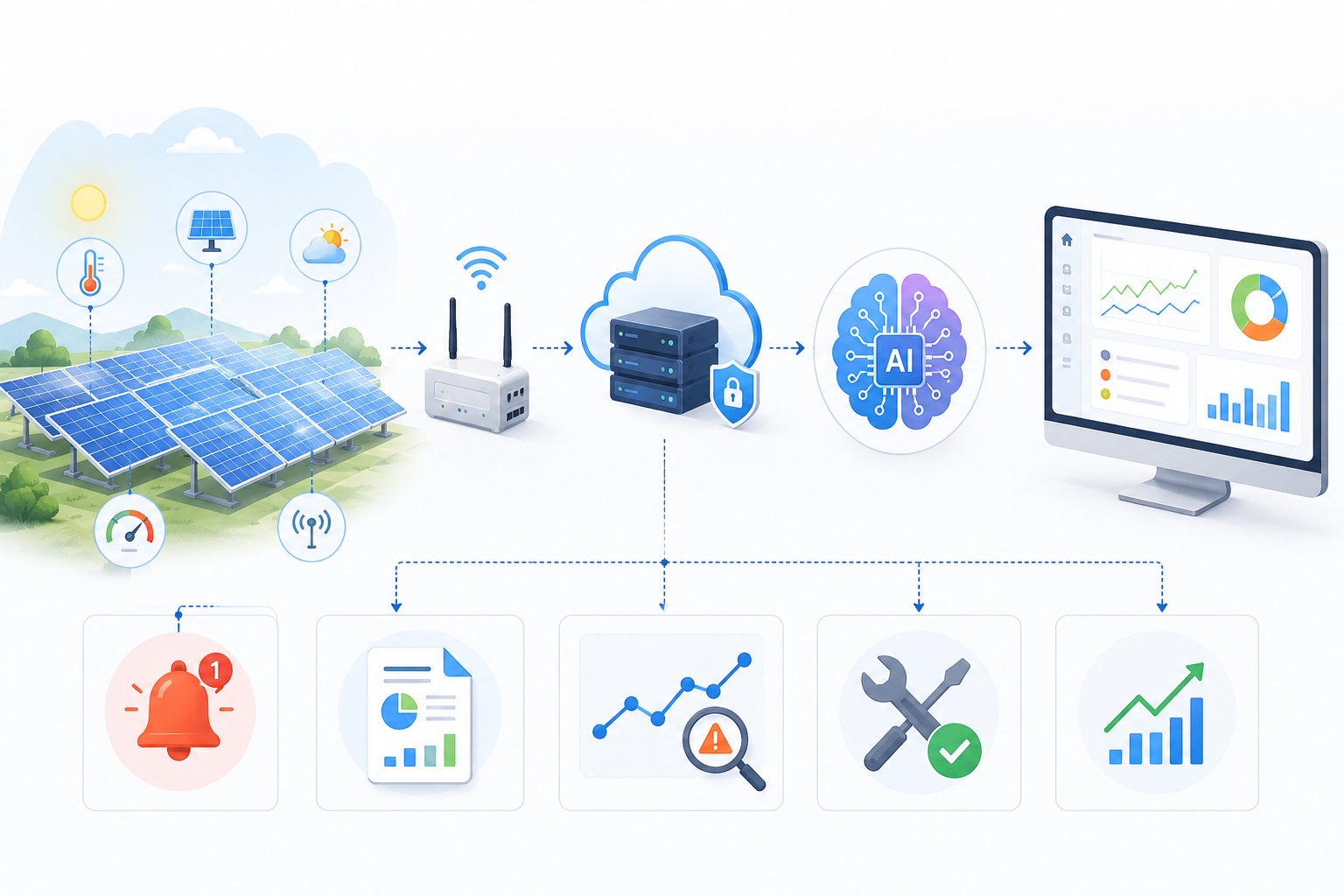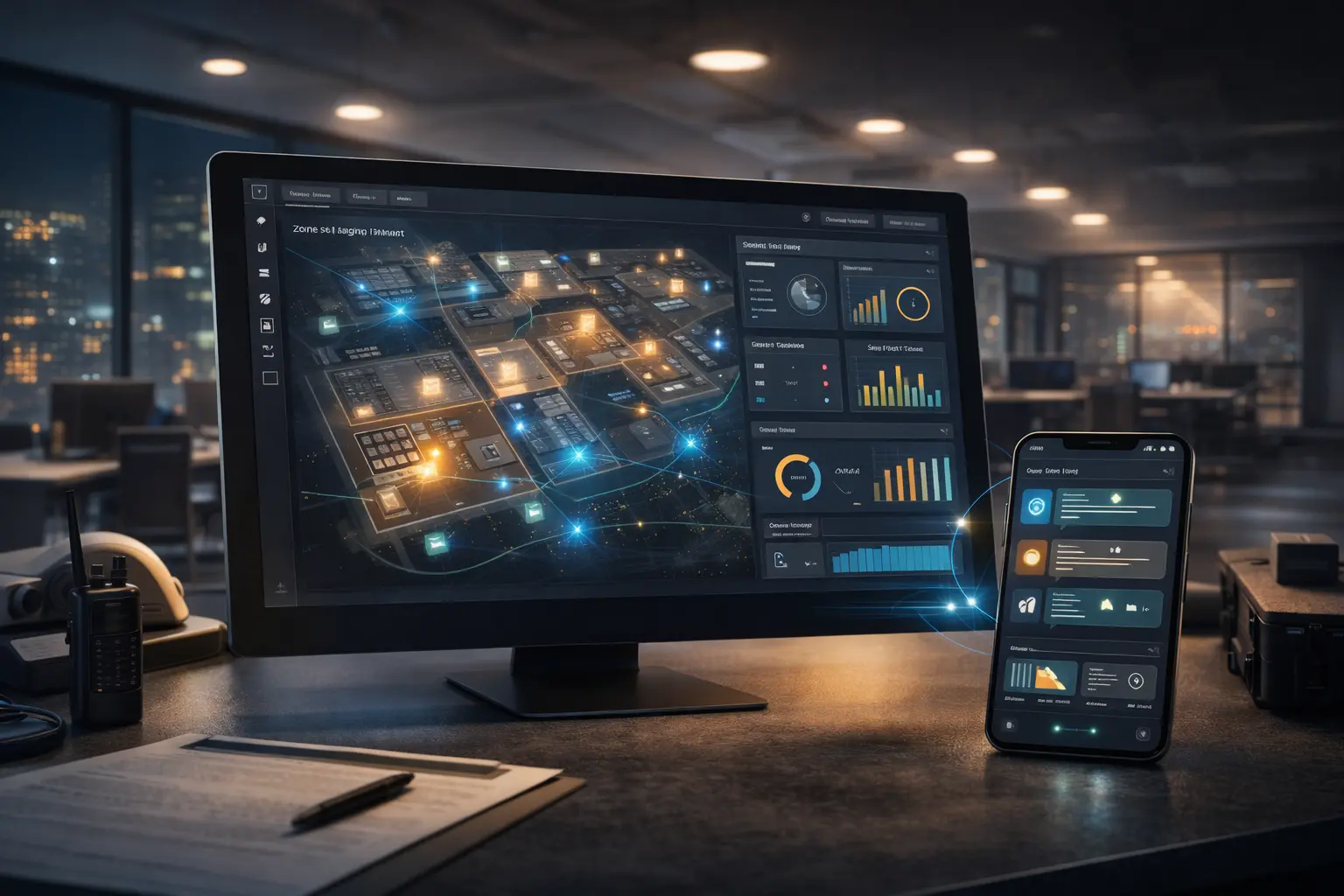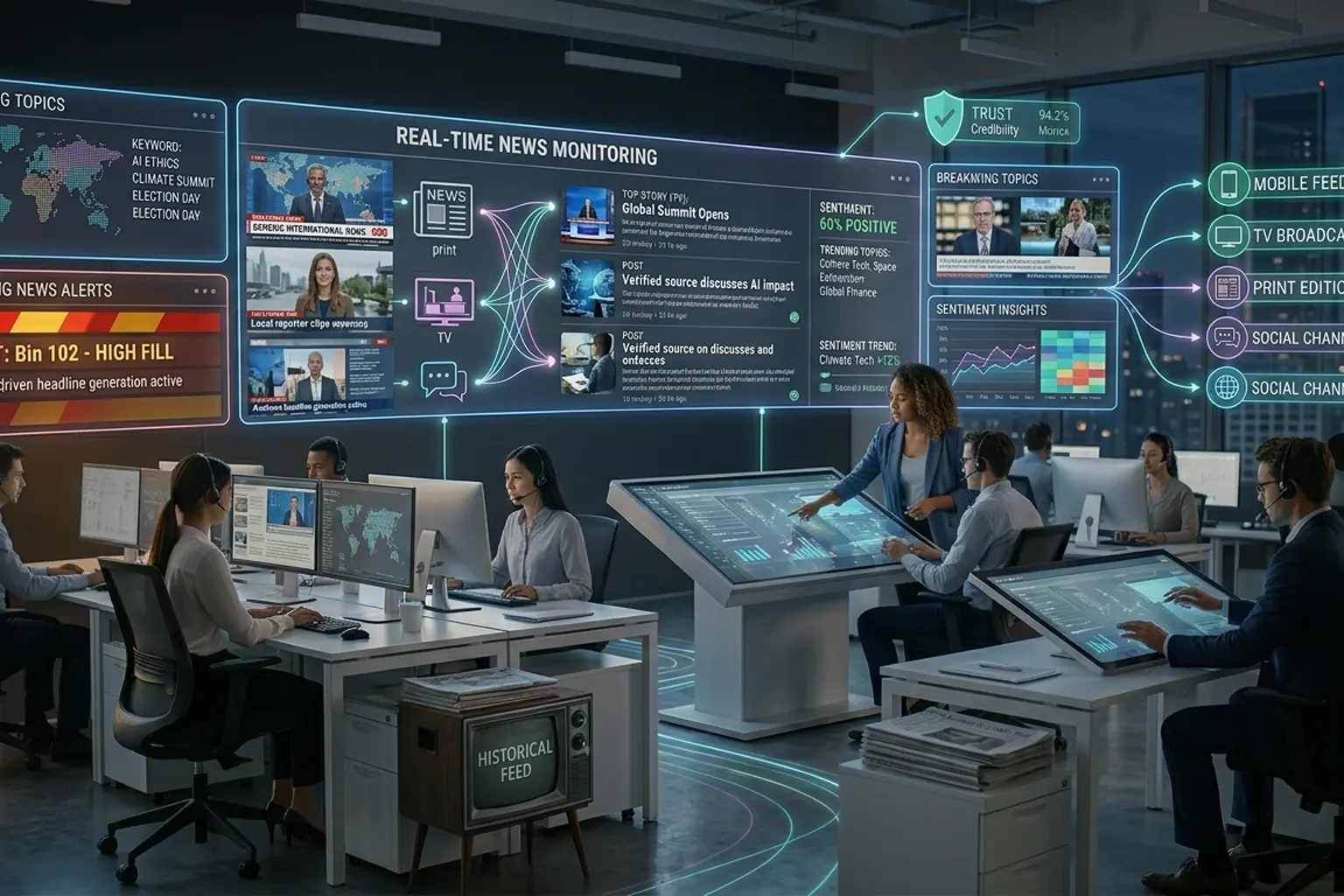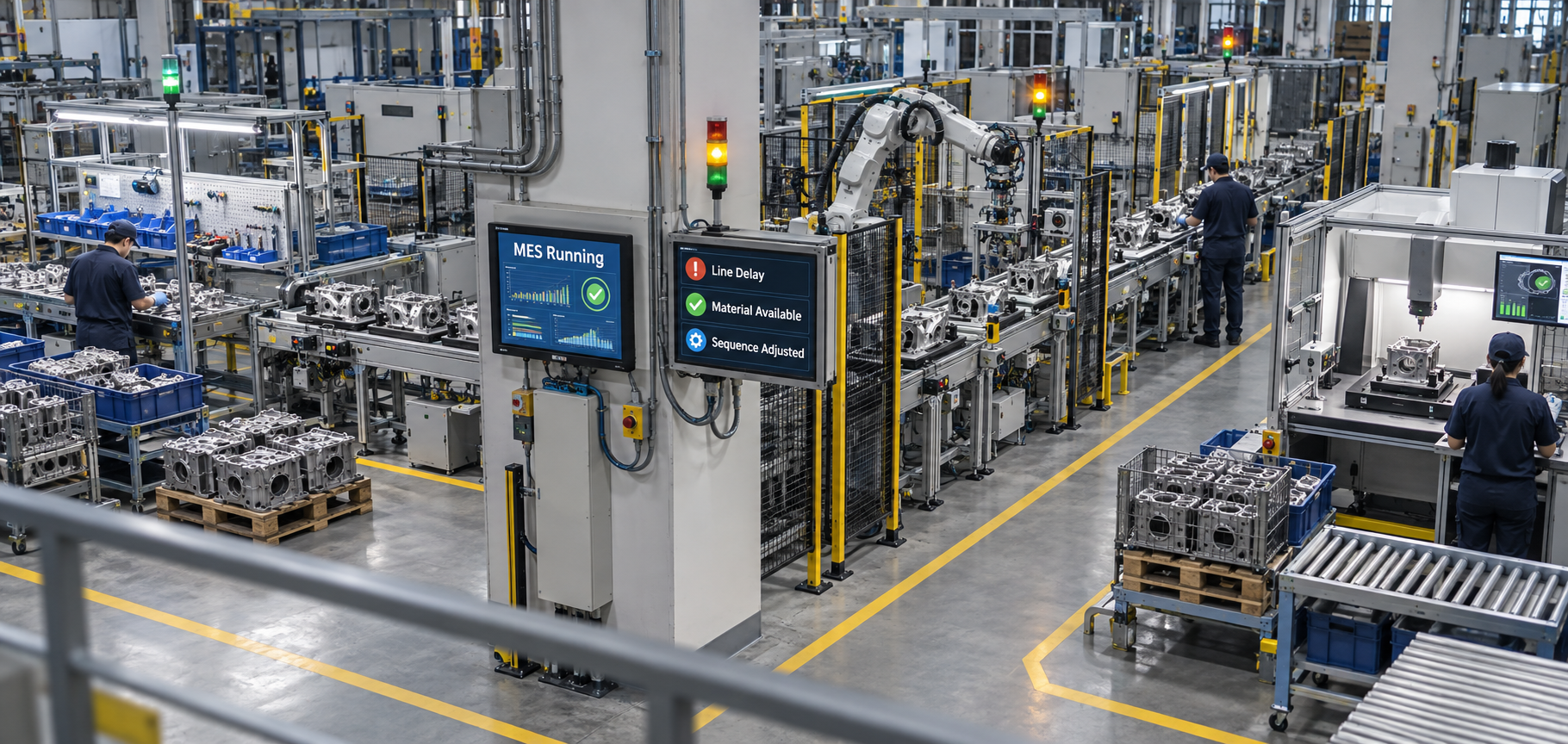


A production supervisor sees that an assembly line is falling behind target. The MES shows the output gap, but finding the cause takes longer. The supervisor checks downtime entries, asks maintenance about an earlier stoppage, and confirms whether the next batch has enough material. By the time those details come together, the shift is nearly over.
An AI copilot for manufacturing operations can help bring that information into one conversation. It can answer questions using production records, explain what the available evidence suggests, and propose a next step for a supervisor to review. The MES continues to run the production workflow. The copilot helps people understand what is happening within it.
What Does an AI Copilot Add to an Existing MES?
A manufacturing execution system records and manages work on the shop floor. Depending on the installation, it may track orders, work in progress, equipment status, quality checks, and production results. Many systems already provide useful reports and alerts.
An MES AI copilot adds a different way to work with that information. Instead of navigating several screens to investigate an exception, an authorized user could ask, “Why did output fall on Line 2 after lunch?” The copilot would gather the relevant records, show the likely contributing factors, and link its answer to the underlying data.
That makes it a form of shop floor decision support. It should help a supervisor investigate and respond, while the MES remains responsible for production execution and the official record.
Why Is Connecting a Copilot to Factory Operations Difficult?
The challenge is rarely a lack of data. It is making data from different systems describe the same event accurately.
A machine may be called “Mixer 04” in a maintenance system and “MX-4” in the MES. A stoppage may have a timestamp but no reliable reason code. Material availability in ERP may have changed since the last update. Operators may also know about a recurring issue that was never documented consistently.
These details matter. If a copilot connects the wrong maintenance record to a production event, its explanation may sound convincing while being wrong. Reliable manufacturing execution system integration therefore starts with equipment identifiers, timestamps, data ownership, access permissions, and the quality of the records themselves.
A copilot should also say when the evidence is incomplete. “The line slowed after a recorded stoppage, but no cause was entered” is more useful than an invented diagnosis.
How Can the Copilot Work With the MES You Already Use?
The starting point is a defined operational question. For example, a team may want supervisors to investigate production delays faster. That tells the project team which MES records the copilot needs and which other systems, if any, are necessary.
Source
Information it may contribute
MES
Work order status, output, downtime entries, quality results, and operator notes
Machine or plant data system
Equipment events and measurements, where available and relevant
Maintenance system
Work orders, previous faults, repairs, and technician notes
ERP or inventory system
Material availability and order priorities
The copilot needs a controlled way to read approved information from those sources. The integration method will depend on the installed MES and its supported interfaces. Data must then be matched to the correct line, asset, order, and time period before it is used to answer a question.
Where machine signals provide useful context, IoT integration for manufacturing can help connect that information to the wider investigation. It does not mean every copilot needs a new sensor deployment. Start with the data the chosen use case requires.
The ISA-95 framework is useful for thinking about the relationship between enterprise systems, manufacturing operations, and plant control. In this project, the practical rule is to keep those responsibilities clear: the copilot can explain information and support a decision without taking over the MES or equipment controls.
Which Features Belong in a First Release?
A first release should do a small number of jobs well.
Answer questions about production status
A supervisor could ask which orders are behind plan, what happened during a particular shift, or where a lot is in the production process. The answer should identify the time period and records used. This makes real-time production monitoring useful in conversation, although the freshness of an answer depends on how often each source updates.
Explain exceptions using linked records
If output falls, the copilot could place a downtime entry beside the affected work order and relevant maintenance history. It should distinguish a recorded fact from a possible explanation. A correlation between a stoppage and lower output does not, by itself, establish the cause of the stoppage.
Suggest a next step for review
The copilot might suggest checking a material shortage, asking maintenance to inspect an asset, or reviewing an alternative sequence. Human review of AI recommendations is especially important when a proposed action could affect production priorities, quality controls, or equipment operation.
What Benefits Should a Manufacturer Evaluate?
A useful copilot may reduce the time supervisors spend gathering records and help teams hand over unresolved issues between shifts. It may also make investigations more consistent by showing which information supported an answer.
Those are outcomes to measure, not automatic results of adding AI. A fast answer has little value if it uses stale data or sends the team down the wrong path. The most meaningful benefit is whether people can reach a sound operational decision sooner.
A Practical Use Case: Why Is the Assembly Line Falling Behind?
Consider a hypothetical plant where Line 2 is producing fewer units than planned. A supervisor asks the copilot what changed during the current shift.
The MES shows that output declined after a short stoppage. The equipment event history confirms when the machine stopped and restarted. A maintenance note shows that the same asset was inspected for an intermittent feed issue the previous day. ERP indicates that material for the next order is available, but the material for a later order has not yet been released.
A helpful response would present those findings separately. It could flag the earlier feed issue as worth checking, while stating that the available records do not prove it caused today’s stoppage. It might then suggest asking maintenance to inspect the feed mechanism and having a planner review whether the next order can proceed as scheduled.
This is production downtime analysis that supports the people running the shift. The supervisor decides what to investigate, maintenance assesses the equipment, and the planner approves any schedule change through the established process.
How Do You Measure the Return From a Copilot Pilot?
Choose a baseline before building the pilot. If supervisors currently take an average of 25 minutes to assemble the records for a recurring exception, measure the same task with the copilot in use. Also check whether its answers are accurate and whether staff can trace them to source records.
Useful pilot measures include investigation time, time to reach the responsible person, answer accuracy, recommendation acceptance, and regular use by operators or supervisors. Record integration, support, and maintenance costs alongside any time saved.
A simple first calculation is:
Estimated time value = investigations per period × average minutes saved × relevant labor cost per minute
That calculation is only part of the case. It should be considered alongside answer quality, the cost of mistakes, and whether faster investigations lead to better operational decisions. Results from one line should not be presented as guaranteed savings across an entire plant.
How Should a Manufacturer Implement the First Pilot?
1. Select one recurring decision
Choose an issue that matters and occurs often enough to test, such as investigating a production delay or preparing a shift handover. Define what a good answer would contain.
2. Check the required records
Confirm that the MES captures the relevant events and that equipment names, order IDs, and timestamps can be matched across any supporting systems. Identify gaps before judging the copilot’s answers.
3. Set permissions and action boundaries
Decide who may ask which questions and what data they may see. For the first pilot, let the copilot answer and recommend. If writing information back to the MES is later required, define the approval, validation, and audit steps for each permitted action.
4. Test against past and live situations
Ask supervisors to compare the copilot’s answers with records they have already investigated. Then observe how it performs during ordinary shifts, including cases with missing or conflicting information.
5. Review results with the people using it
Track the pilot measures, collect operator feedback, and correct data or workflow problems. Expand to another use case only when the first one produces answers staff can understand and trust.
This is a practical way to build an AI copilot without replacing MES. The pilot tests whether the added assistance improves a specific decision before the project grows.
When Does a Custom Copilot Make Sense?
An existing MES feature may cover the need if staff mainly want to search its own records or generate a standard report. A custom copilot becomes more relevant when answers must bring together several systems, use plant-specific terms, follow unusual approval paths, or fit an established supervisor workflow.
That work involves more than creating a chat interface. It calls for data mapping, permissions, integration, testing, and a clear way to handle uncertain answers. Teams considering manufacturing software development should begin with the operational decision they want to improve, then design the smallest solution that supports it.
Conclusion
An AI copilot can make an existing MES easier to use for daily investigations and decisions. The strongest starting point is one recurring problem, reliable access to the necessary records, and a pilot that supervisors can evaluate against their current process.
If your team is assessing this approach, Theta Technolabs can help map the systems involved and scope a focused pilot through its AI development services in Dallas. Contact us to discuss the production workflow you want to improve.
Frequently Asked Questions
Can you build an AI copilot without replacing an existing MES?
Yes, if the existing MES provides a suitable way to access the records needed for the use case. The copilot can use those records to answer questions and support decisions while the MES continues to manage execution.
What data does a manufacturing copilot need from an MES?
It depends on the question. A production delay pilot might need work order status, planned and actual output, downtime entries, equipment identifiers, and timestamps. Start with one use case rather than collecting every available field.
Can a copilot use machine data that is not stored in the MES?
Yes, where approved access and a reliable way to match machine events with MES records are available. The team must account for differences in equipment names, timestamps, and update frequency.
Should a copilot change production schedules automatically?
A first pilot should usually present a proposed change for a planner or supervisor to review. Any later write-back workflow needs defined permissions, validation rules, approval steps, and an audit record.
How do you know whether the pilot is working?
Compare it with the previous process. Measure investigation time and answer accuracy, check whether users can verify the sources, and ask whether the copilot helped them reach the right person or decision sooner.


_Enhancing%20Driver%20Safety%20and%20Compliance%20with%20Web%20Apps%20in%20the%20Logistics%20Sector_Q3_24.jpg)


_Integrating%20Chatbots%20Into%20Your%20Application.jpg)
_How%20much%20does%20it%20cost%20to%20create%20an%20android%20app%20in%202024%20for%20Startups_%20A%20detailed%20guide_Q2_24.jpg)
_Key%20Trends%20in%20Healthcare%20Software%20Development%20for%20the%20Future_Q2_24.jpg)
_Best%20iOS%20App%20Development%20Company_%20Enhancing%20User%20Engagement%20with%20Push%20Notifications_Q2_24.jpg)
_Chatbots%20for%20Event%20Management%20and%20Hospitality%20Services_Q1_24.jpg)
_Choosing%20the%20Right%20App%20Development%20Company_%20A%20Comprehensive%20Guide_Q1_24.jpg)