Financial data moves across many systems before it reaches a decision-maker. A Los Angeles business may use accounting software, payment gateways, banking tools, CRMs, ERPs, spreadsheets, and internal databases at the same time. When these systems do not communicate properly, finance teams spend more time collecting data than understanding it.
This is where AI financial data platforms can help. These platforms connect data sources, organize financial information, and provide real-time financial insights through dashboards, alerts, and analytics. For companies that need faster visibility into cash flow, revenue, expenses, and financial risks, a financial data platform for Los Angeles businesses can support better planning without replacing human financial judgment.
Common Financial Data Challenges Faced by Los Angeles Businesses
Many businesses do not struggle because they lack financial data. They struggle because the data is scattered, delayed, or difficult to trust. In fast-moving markets like Los Angeles, delayed reporting can slow down decisions around hiring, investment, expansion, and cost control.
Common challenges include:
- Financial records stored across accounting tools, ERPs, CRMs, payment systems, and spreadsheets
- Manual reporting that takes hours or days to prepare
- Limited visibility into daily cash flow, margins, and receivables
- Difficulty identifying unusual expenses, delayed payments, or revenue drops early
- Inconsistent financial data integration between departments and business units
For finance teams, the real problem is not only reporting speed. It is confidence. If reports are based on incomplete or outdated data, leadership may not have the full picture when making important business decisions.
What Is an AI Financial Data Platform?
An AI financial data platform is a system that collects financial data from multiple sources, cleans and organizes it, applies analytics or AI models, and presents useful insights through dashboards, reports, and alerts.
Unlike traditional static reporting, AI financial data platforms can support pattern detection, forecasting, anomaly review, and decision support. For example, the platform may help a finance team identify changes in payment behavior, compare revenue trends, or review unusual spending patterns.
However, AI should not be treated as a replacement for finance teams. It works best as a support system that improves visibility, reduces manual effort, and helps people make better-informed decisions.
How AI-Based Financial Data Aggregation Works
Strong financial data aggregation is the first step toward real-time reporting. The process usually works like this:
- Financial data is collected from accounting tools, secure banking APIs, payment gateways, CRMs, ERPs, payroll systems, and internal databases.
- The data is cleaned, standardized, categorized, and validated to reduce duplication and reporting errors.
- Data pipelines move the information into a centralized warehouse or reporting environment.
- AI financial analytics models review trends, anomalies, cash flow patterns, and performance signals.
- Dashboards and alerts deliver insights to CFOs, founders, finance teams, and department leaders.
This process turns raw financial records into usable business intelligence. For Los Angeles companies managing multiple revenue channels, locations, or customer segments, this can make financial planning more timely and practical.
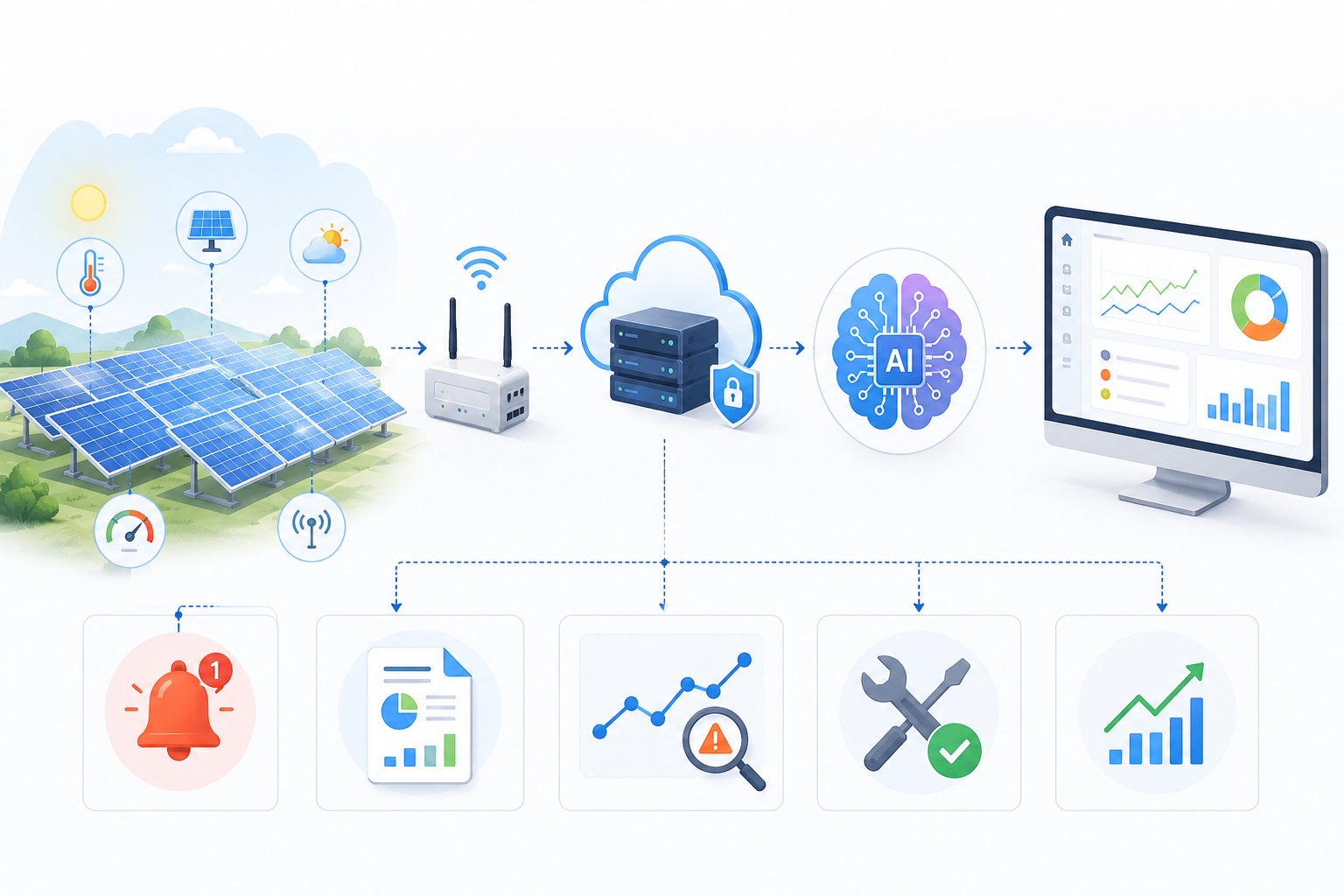
The workflow below shows how an AI financial data platform turns scattered financial data into real-time business insights. It starts with data from banking APIs, accounting tools, payment gateways, and financial systems, then moves through integration, cleaning, AI analysis, dashboards, and final business decision-making.
Figure: AI financial data platform workflow from financial data sources to real-time dashboards and business decisions.
Why Data Engineering Is the Foundation of Real-Time Financial Insights
AI is only useful when the data behind it is clean, connected, and reliable. This is why data engineering for fintech platforms is so important. A platform cannot produce dependable insights if the data pipelines are broken, APIs are inconsistent, or financial records are poorly structured.
A strong data engineering setup usually includes:
- ETL or ELT pipelines
- Secure API integrations
- Data warehouses or data lakes
- Data validation rules
- Real-time or near real-time data streaming
- Access controls and governance
- Monitoring for data quality issues
This foundation also helps finance teams reduce reporting gaps, improve data consistency, and prepare financial data for reliable analytics.
For fintech companies and finance-focused businesses, this technical foundation supports better reporting accuracy, faster access to data, and safer financial workflows. Businesses building custom platforms can also connect their product strategy with fintech software development so the data system supports real business operations, not just technical reporting.
Key Features and Practical Use Cases for Los Angeles Businesses
The best platforms connect features with clear business outcomes. A dashboard alone is not enough. It should help teams understand what is happening, why it matters, and what needs attention.
Feature
Practical Use Case for Los Angeles Businesses
Real-time financial dashboards
Helps CFOs, founders, and finance teams monitor cash flow, revenue, expenses, margins, and payment activity.
Predictive financial analytics
Supports cash flow forecasting, revenue planning, expense trend analysis, and budget reviews.
Automated alerts
Helps teams review unusual expenses, failed payments, delayed receivables, or sudden revenue drops faster.
Financial data integration
Connects accounting tools, banking APIs, payment gateways, CRMs, ERPs, and spreadsheets into one view.
Role-based access
Gives leadership, finance teams, and department heads the right level of financial visibility.
For fintech and payment companies, AI can help monitor transaction behavior and highlight unusual activity for review. For eCommerce and subscription businesses, real-time financial dashboards can show recurring revenue, refunds, payment failures, and customer spending patterns. For real estate, healthcare, entertainment, and professional service firms, dashboards can support billing visibility, multi-location expense tracking, and cash flow planning.
This makes predictive financial analytics useful for planning, but it should be used carefully. Forecasts are not guarantees. They are decision-support tools that depend on the quality of historical data, model design, and business context.
Security, Compliance, and Responsible AI Considerations
Financial data is sensitive, so security and responsible AI practices should be part of the platform from the beginning. A well-built system should not only deliver fast insights. It should also protect data, control access, and make AI outputs easier to review.
Important considerations include:
- Data encryption
- Secure APIs
- Role-based access
- Audit logs
- Data masking where needed
- Human review for important financial decisions
- Explainable AI outputs
- Model performance monitoring
For responsible AI adoption, finance and fintech teams can refer to the NIST AI Risk Management Framework, which highlights trustworthy AI practices such as reliability, security, transparency, explainability, privacy protection, and bias management. (NIST AI Resource Center)
This matters because financial decisions can affect customers, operations, investors, and business planning. AI should support better decisions, not create a black box that teams cannot understand.
Suggested Technology Stack and Architecture
A practical AI financial data platform should be designed in layers. This makes the system easier to scale, secure, and improve over time.
Layer
What It Includes
Data Sources
Accounting software, ERP, CRM, banking APIs, payment gateways, payroll tools, spreadsheets
Data Engineering Layer
ETL or ELT pipelines, APIs, data cleaning, validation rules, data warehouse
Intelligence Layer
AI/ML models, forecasting, anomaly detection, trend analysis
Experience Layer
Web dashboards, mobile access, reports, alerts, admin controls
Security Layer
Encryption, role-based access, audit logs, monitoring
Cloud infrastructure is often important for this type of system because financial data volumes can grow as the business expands. Companies may also need secure storage, scalable processing, backup planning, and performance monitoring. This is where cloud consulting services can support the architecture behind real-time financial systems.
Why Choose Theta Technolabs for AI Financial Data Platform Development?
Theta Technolabs helps businesses build custom software solutions across Web, Mobile, Cloud, AI/ML, and data engineering. For companies exploring AI-powered financial platforms, the right development partner should understand both business workflows and technical architecture.
Our team can support platform planning, data pipeline development, financial dashboard development, API integrations, AI/ML model implementation, cloud deployment, and secure platform modernization. For businesses looking for an AI development company in Los Angeles, this combination of data engineering, AI, fintech software knowledge, and cloud capability can help turn scattered financial data into usable insights.
Conclusion
AI financial data platforms are becoming valuable for businesses that need clearer, faster, and more connected financial visibility. When financial data is scattered across accounting tools, payment systems, CRMs, ERPs, and internal reports, decision-making becomes slower and less confident.
The main conclusion is that real-time financial insights depend on more than AI alone. They require clean data pipelines, secure integrations, reliable dashboards, responsible AI practices, and human review. For Los Angeles businesses, this approach can support better financial planning, faster reporting, and more informed decisions without treating AI as a replacement for finance teams.
Build a Smarter Financial Data Platform
If your business wants to connect financial data, build real-time dashboards, or modernize reporting with AI, Theta Technolabs can help. Our team supports data engineering, AI/ML development, fintech software development, dashboard development, mobile app development, and scalable cloud consulting services aligned with your platform goals.
For project discussions, contact sales@thetatechnolabs.com.
Frequently Asked Questions
1. What is the main purpose of an AI financial data platform?
The main purpose is to connect financial data from different systems, organize it, and deliver useful insights through dashboards, reports, forecasting, and alerts. It helps finance teams reduce manual reporting and improve visibility.
2. How can real-time financial insights help Los Angeles businesses?
Real-time financial insights help leaders monitor cash flow, revenue trends, expenses, payment activity, and risk signals faster. This is useful for businesses that operate in competitive markets or manage multiple revenue channels.
3. Why is data engineering important for AI financial analytics?
AI models need clean, structured, and reliable data. Data engineering creates the pipelines, integrations, warehouses, validation rules, and secure access systems that make AI financial analytics more dependable.
4. Can AI financial dashboards replace finance teams?
No. AI dashboards should support finance teams, not replace them. They can reduce manual work and improve visibility, but human review is still important for major financial decisions.
5. What data sources can be connected to a financial data platform?
A platform can connect accounting software, ERP systems, CRMs, banking APIs, payment gateways, payroll tools, spreadsheets, and internal databases depending on business requirements.
6. Is an AI financial data platform suitable for small and mid-sized businesses?
Yes, if it is planned according to the company’s budget, data volume, reporting needs, and growth goals. A business can start with core dashboards and expand later with forecasting, alerts, and advanced analytics.



.png)



.png)























.png)
.png)






.png)
.png)
.png)
.png)


.png)
.png)
.png)
.png)

.png)









.png)