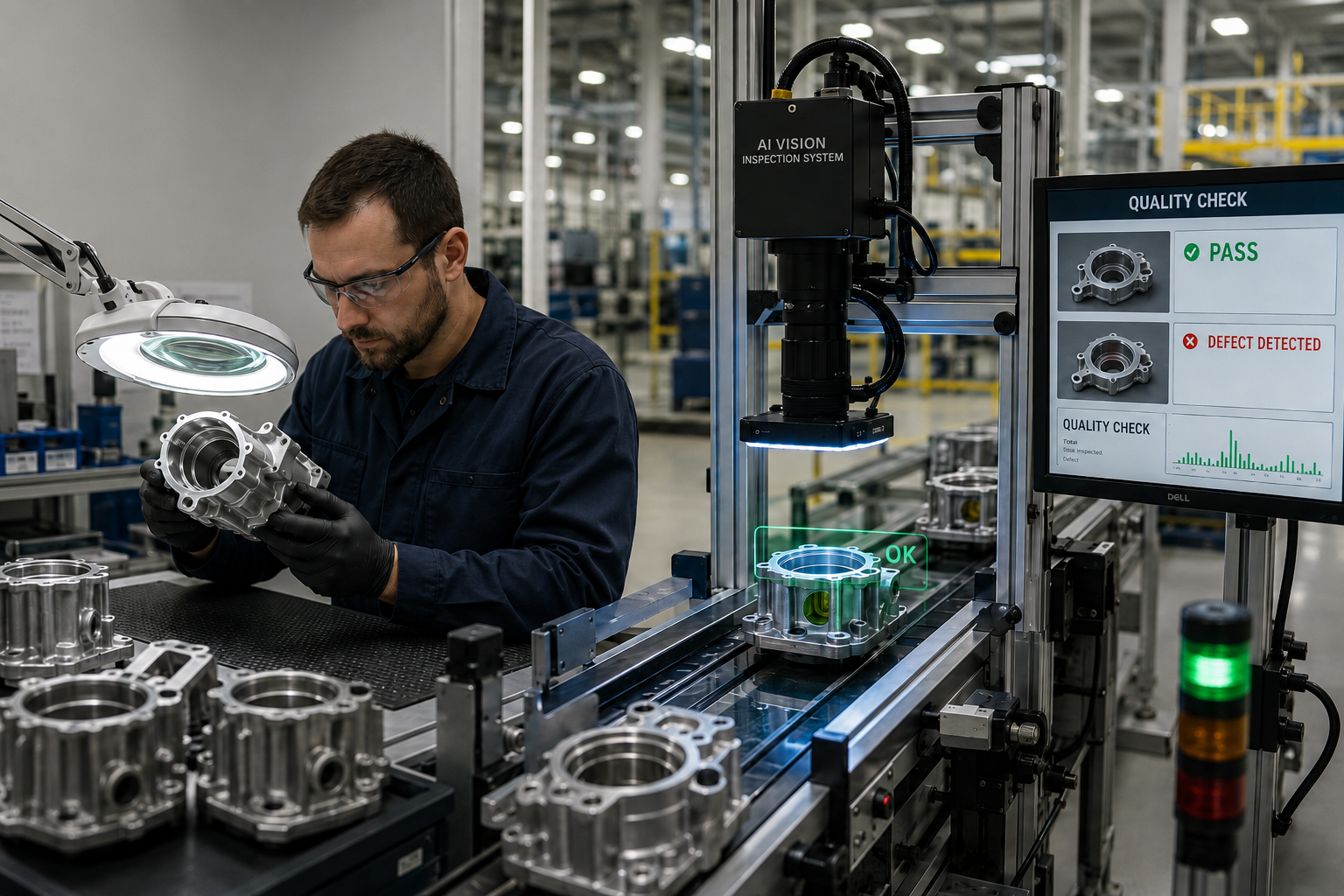


A scratch the width of a hair slips past an inspector at the end of a double shift. Weeks later it resurfaces as a customer return, an 8D report, and a dent in your quality scorecard. For auto component suppliers, the gap between "good enough" inspection and consistent inspection gets measured in chargebacks and, eventually, lost contracts. That pressure is why more suppliers are seriously weighing AI inspection for auto components against the manual process they've run for years.
The honest answer in any manual vs AI inspection comparison is that neither wins outright. AI and computer vision lead on consistency, speed, and 100% coverage, while manual inspection still fits very low volumes and judgment-heavy calls. The right choice comes down to your production volume, the defects that actually cost you money, and your budget — not which technology sounds more advanced.
Why This Decision Matters for New York Auto Component Suppliers
For a Tier-2 or Tier-3 supplier, an escaped defect is rarely just a scrapped part. It's a chargeback, a returned lot, a scorecard downgrade, and if the pattern repeats the risk of being dropped from an OEM or Tier-1 approved vendor list. One bad streak can undo years of relationship-building.
New York sharpens the math. Regional labor costs are high, which makes a wall of manual inspectors an expensive line item, and skilled QC inspectors are hard to hire and harder to keep. Those two pressures are exactly why AI visual inspection for manufacturers in New York has moved from "someday" to an active item in budget meetings. When you can't easily add headcount and every inspector hour costs more, automation stops being a luxury and starts being a staffing strategy.
Manual vs. AI Inspection: The Honest Comparison
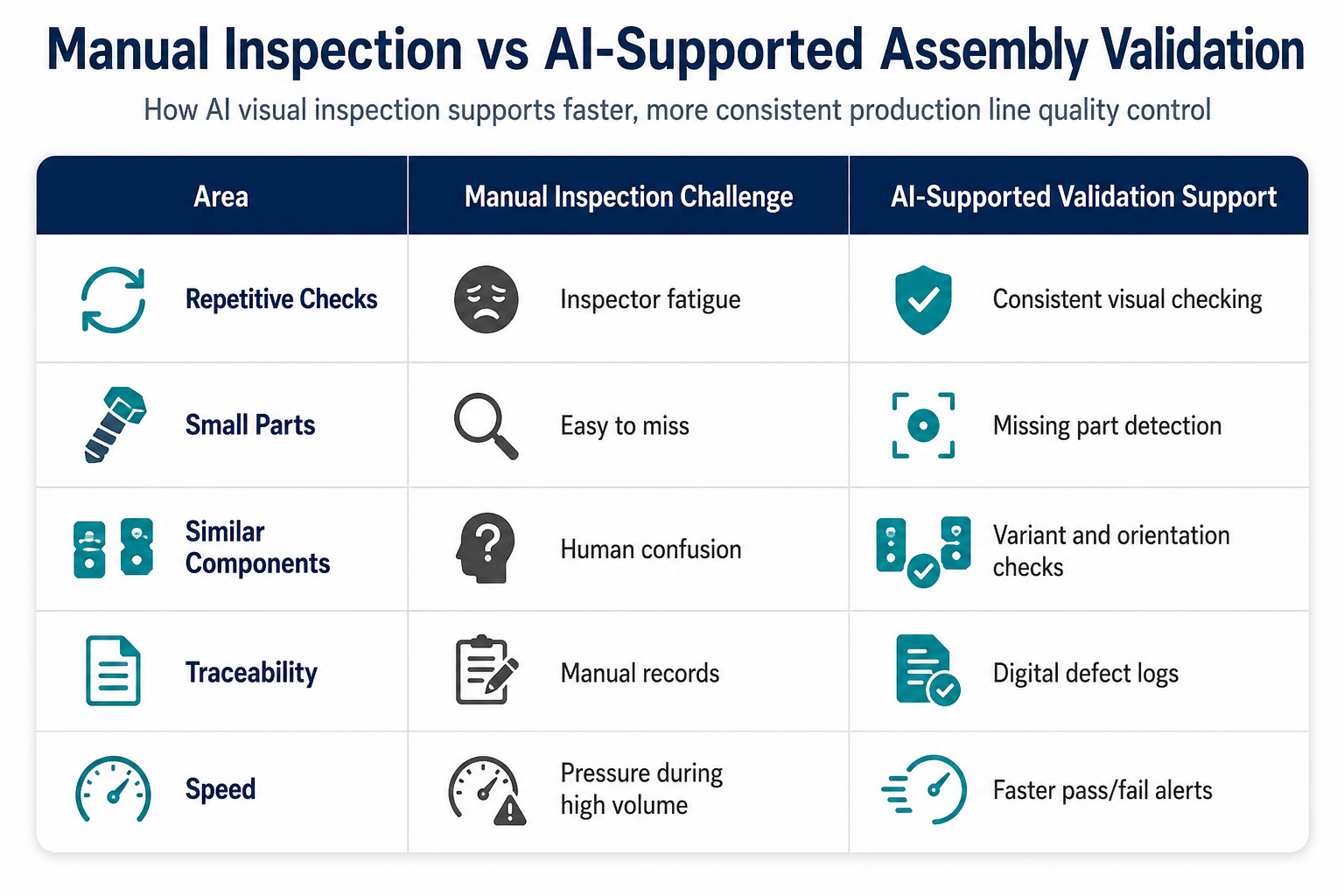
Here's how the two approaches stack up on the factors that actually decide quality outcomes on the floor:
Where AI Has the Advantage
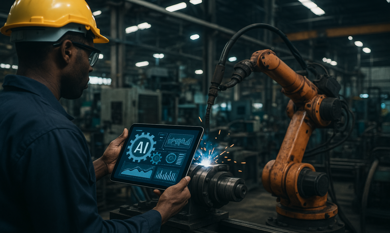
The advantage isn't that AI is "smarter" than your team it's that it doesn't get tired, distracted, or inconsistent. A vision system applies the same standard to part one and part ten thousand, inspects every unit instead of a sample, and leaves a documented trail behind each decision. For machine vision quality control, that repeatability is the entire point.
Where the numbers come from
These gains hold up under independent scrutiny. A peer-reviewed study of automobile surface-defect inspection found that a machine-vision system classified flaws using image analysis and a trained model, reaching 95.6% accuracy on dents and 97.1% on scratches. Those are specific, measured numbers rather than a rounded marketing headline, and they reflect how these systems work: deep learning models trained on large sets of labeled defect images.
When Manual Inspection Still Makes Sense
AI isn't the right call for every line, and any honest comparison has to say so. Manual inspection still earns its place when:
- Volumes are very low or runs are short — the capital outlay won't pay back.
- The judgment is subjective — color match, finish "feel," and aesthetic calls that depend on brand intent are hard to codify.
- A part is brand new — with no labeled images yet, there's nothing to train on, so human eyes bridge the gap.
- Features are hidden — deep recesses or surfaces a camera can't reach still need a person.
If most of your inspection falls into these buckets, a hybrid approach often beats going all-in on either side.
What AI and Computer Vision Inspection Actually Catches
For the surfaces and assemblies most suppliers worry about, automated surface defect detection covers a wide range of flaws:
- Scratches, dents, and dings
- Porosity, burrs, and weld defects
- Surface contamination and finish flaws
- Discoloration and texture variation
Beyond surfaces, the same computer vision defect detection approach handles automated assembly validation — confirming the right component is present, correctly oriented, and complete before a part moves downstream. Presence-absence checks, wrong-part detection, and orientation verification all run at line speed, with an image saved for every unit.
The Real Cost Question: ROI and TCO
Comparing AI inspection vs manual inspection cost on the sticker price alone is misleading. The honest comparison is total cost of ownership against total value.
On the cost side, weigh:
- Hardware (cameras, lighting, enclosures)
- Software and platform fees
- Integration with your existing line
- Data collection and annotation to train the model
- Ongoing support and maintenance
On the value side, weigh labor hours saved, scrap and false-reject reduction, and — usually the biggest number — the chargebacks, returns, and warranty costs you avoid by catching defects before they ship. Payback depends entirely on your volume and what your current escapes actually cost you, so the right move is to model it on your own numbers rather than trust a generic figure. Anyone guaranteeing a fixed payback before seeing your parts is selling, not estimating.
How to Choose Before You Buy: A Supplier's Decision Framework
If you're working out how to choose an AI inspection system, these are the questions to put to any vendor — and to yourself — before signing anything:
- What's your volume and mix? High-volume, repetitive parts favor AI; very low volume or extreme high-mix may not.
- Which defects actually cost you? Map your top returns and chargebacks first, then confirm the system catches those specifically.
- Capex or opex? Decide whether you'd rather own hardware or pay a platform model, and budget accordingly.
- How does it integrate? Strong manufacturing software solutions should connect to the line and workflow you already run, not force a rebuild.
- Who maintains the model? Understand the effort to keep accuracy high as parts and conditions change over time.
- Can you pilot it on your real parts first? Any credible partner will prove performance on your components before you commit at scale.
Treat a vague or evasive answer on any of these as a reason to keep looking.
Compliance and Traceability for OEM Audits
For suppliers operating under IATF 16949, inspection isn't only about catching defects — it's about proving you caught them. AI inspection produces an image-backed record for each part, which makes PPAP documentation and customer-audit readiness far less painful than reconstructing manual logs. That traceability is increasingly what keeps a supplier on the approved vendor list, because OEMs want evidence, not assurances. When an auditor asks how a lot was inspected, "Here's the image and result for every unit" is a stronger answer than a clipboard.
So, Which Should You Choose?
There's no universal winner in the manual-versus-AI debate. The right answer depends on your volume, your defect profile, and your budget — and for many New York auto component suppliers facing high labor costs and a tight inspector market, AI inspection for auto components is becoming the more practical path. The smartest next step isn't a purchase order; it's a pilot. See AI + computer vision inspection run on your own parts, measure it against your current process, and let the results on your components make the decision.
Your Next Step
That pilot-first approach is exactly how we work at Theta Technolabs. We build AI and computer vision inspection systems for manufacturers — automated visual inspection for surface defect detection and assembly validation, trained on deep learning models and designed to fit the manufacturing line you already run rather than replace it. So, if you're at the point of weighing manual against AI for your own components, the most useful next step is to see the system work on your parts before you commit your budget. Reach our team at sales@thetatechnolabs.com.
Frequently Asked Questions
1. Is AI inspection more accurate than manual inspection for auto components?
Often yes — mainly because it's consistent. It applies the same standard to every part without fatigue and can inspect 100% of units rather than a sample. That said, real-world accuracy depends heavily on the quality of the training data behind the system.
2. How much does an AI visual inspection system cost for a mid-size supplier?
There's no single price. Cost is driven by your production volume, part complexity, the number of inspection points, and integration needs, so two suppliers can see very different quotes. The useful comparison is against the defect costs you're currently absorbing.
3. Will AI inspection help us meet OEM scorecards and IATF 16949 requirements?
It can. The per-part image records and documentation support PPAP and audit readiness, which is exactly the kind of traceability OEMs look for on quality scorecards.
4. Is AI inspection worth it for low-volume or high-mix production?
Not always. For very low volumes the investment may not pay back, and extreme high-mix work can be harder to train for. This is one case where manual or hybrid inspection often still wins.
5. How long does it take to deploy AI inspection on an existing line?
It varies. Expect time for data collection, model training, and line integration rather than an overnight switch — a pilot is the realistic way to gauge the timeline for your specific parts.























.png)
.png)





.png)
.png)
.png)
.png)


.png)
.png)
.png)
.png)

.png)










.png)





_How%20Cloud%20Solutions%20Are%20Enhancing%20Remote%20Patient%20Monitoring%20in%20Healthcare_Q4_25.jpg)
_Streamlining%20Appointment%20Scheduling%20with%20Cloud%20Computing%20in%20Dallas%20Healthcare_Q4_25.jpg)
_The%20Impact%20of%20Cross-Platform%20Apps%20on%20Real%20Estate%20Market%20Trends%20in%20Dallas_Q3_24-1.jpg)
_How%20AI%20is%20Enhancing%20Construction%20Site%20Surveillance%20and%20Security%20in%20Dallas_Q3_24-1.jpg)
_Web%20Apps%20for%20Retail%20and%20eCommerce_%20Streamlining%20Operations%20and%20Reducing%20Costs_Q3_24.jpg)
_Enhancing%20Driver%20Safety%20and%20Compliance%20with%20Web%20Apps%20in%20the%20Logistics%20Sector_Q3_24.jpg)


_Integrating%20Chatbots%20Into%20Your%20Application.jpg)
_How%20much%20does%20it%20cost%20to%20create%20an%20android%20app%20in%202024%20for%20Startups_%20A%20detailed%20guide_Q2_24.jpg)
_Key%20Trends%20in%20Healthcare%20Software%20Development%20for%20the%20Future_Q2_24.jpg)