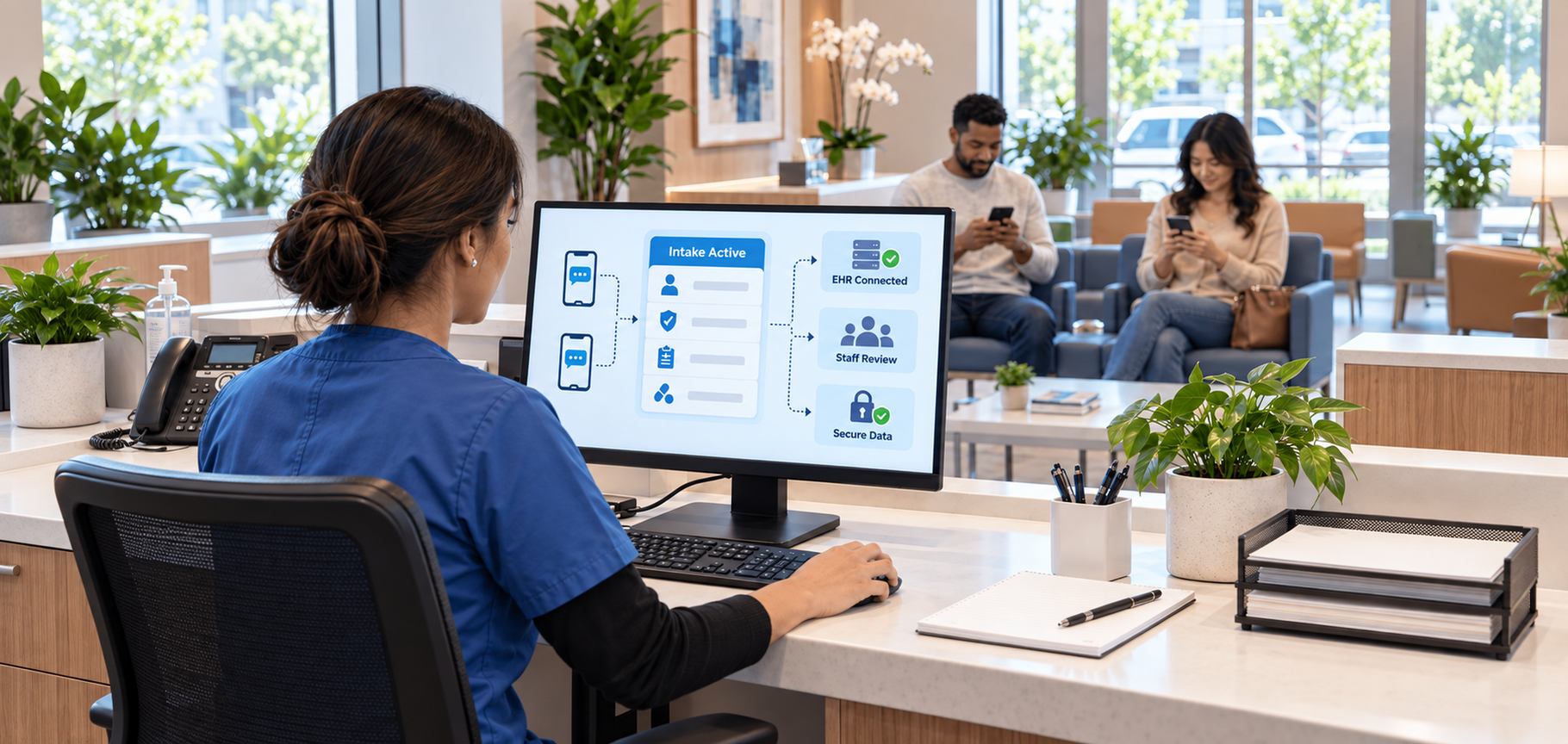


Walk into most outpatient clinics in Dallas on a Monday morning and you will see the same thing: a line at the front desk, a stack of clipboards, and a receptionist trying to verify insurance while three phones ring at once. Patients fill out the same information they have provided a dozen times before, staff re-key it into the EHR by hand, and errors slip through because nobody has time to double-check a rushed form. Conversational AI patient intake is built to fix exactly this kind of friction, not by replacing your front desk, but by handling the repetitive, structured parts of intake before the patient ever sits down in your waiting room.
What Conversational AI Patient Intake Actually Involves
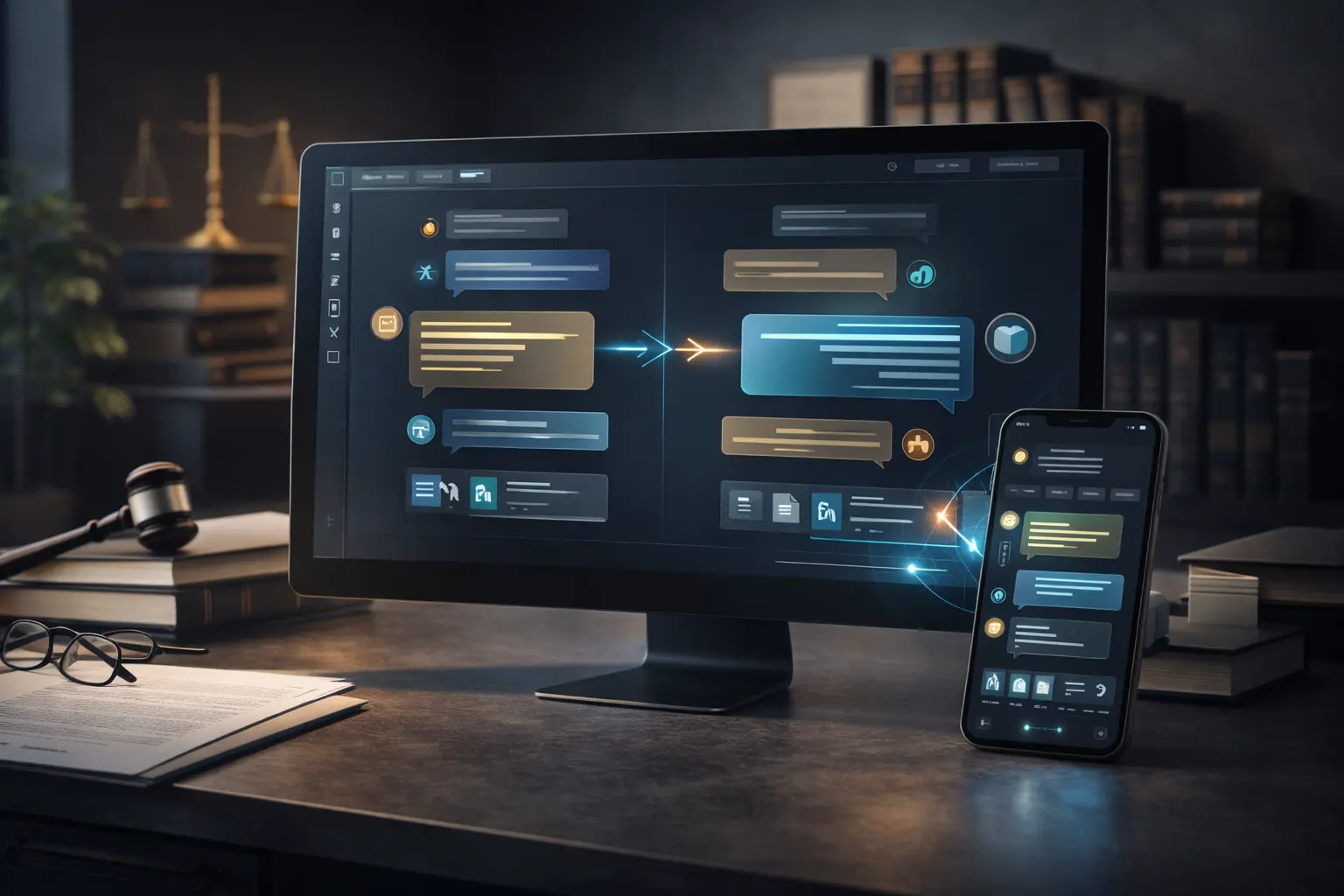
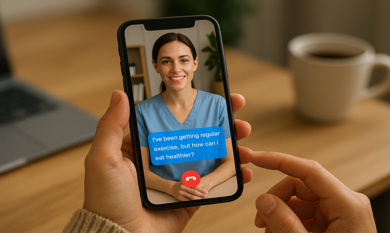
Conversational AI patient intake is a system that talks to patients through natural, back-and-forth dialogue, over text, a web chat, or voice, and collects the same information a front-desk form would, but adaptively. Instead of a static PDF with fixed fields, a patient might get a message like: "Before your visit on Thursday, can you tell me if you are currently taking any new medications?" If the answer is yes, the system asks a relevant follow-up. If no, it moves on. That is the core difference from a digital form: the questions branch based on what the patient actually says, and the responses come back structured and ready for staff review, rather than sitting in a PDF someone has to read line by line.
This is not the same as a basic chatbot that just answers FAQs. AI patient intake automation is specifically built to gather clinical and administrative information (demographics, insurance details, symptoms, medication history) and hand it off in a format your staff can act on immediately.
Why Dallas Outpatient Clinics Stand to Benefit Most
Dallas has one of the fastest-growing outpatient and specialty clinic markets in Texas, and that growth is outpacing hiring. Front-desk and medical assistant roles are hard to fill and harder to retain, which means the busiest clinics are often the ones most short-staffed at intake. At the same time, patients, especially younger ones and those managing chronic conditions, increasingly expect to handle pre-visit paperwork on their phone rather than in a waiting room.
That combination makes outpatient clinic AI chatbot systems a natural fit here. It is not about replacing people; it is about taking the repetitive parts of intake off a team that is already stretched thin. As a healthcare software development company in Dallas, we have seen this play out directly with clinics trying to scale patient volume without proportionally scaling front-desk headcount.
How the Intake Flow Actually Works
At a technical level, a conversational AI intake flow generally follows four steps:
- The patient starts a conversation through a text message, a chat widget on your website, or a phone call routed to a voice agent, usually triggered by an appointment confirmation.
- The NLP layer interprets responses in real time, asking follow-up questions based on what the patient actually says rather than a fixed script.
- The structured data is organized and pushed into a review queue connected to your EHR or practice management system, so a staff member can quickly confirm it before it's added to the patient's chart, rather than digging through a separate file to reconcile it.
- An escalation trigger kicks in when needed. If the AI cannot confidently interpret an answer, it flags the response for staff review before the visit. If a patient describes something that sounds like a medical emergency, the system does not attempt to route that to a staff member in real time. Instead, it immediately tells the patient to stop the intake conversation and call 911 or go to the nearest emergency room, since no automated system should be relied on for live triage.
That last step matters more than most vendors talk about. A well-built intake system is not trying to make every decision itself. It is designed to know when it is out of its depth and to route that moment to a person, which is what makes the whole thing safe to deploy in a clinical setting. This is also where working with a chatbot development company in Dallas that understands healthcare workflows, rather than a generic chatbot vendor, tends to matter, since the escalation logic has to be built around your clinic's actual triage rules, not a one-size-fits-all template.
HIPAA Compliance and Building Patient Trust
Any conversational AI system touching patient data needs to be built with HIPAA compliant conversational AI principles from the ground up: encrypted data in transit and at rest, strict access controls, and audit trails showing exactly who or what touched a patient's information and when. This is not an optional add-on; it is a baseline requirement for anything handling protected health information.
Just as important is being clear about what the AI is not doing. It is not diagnosing patients, and it is not making clinical judgments. Its job is to gather information accurately and know when to step back. A recent feasibility study on conversational AI in a cardiovascular outpatient clinic found that a well-designed AI intake agent could conduct structured pre-visit interviews while still allowing clinicians to review and act on the information before the actual encounter, which reinforces that the technology works best as a layer that prepares the visit, not one that replaces clinical judgment. (ScienceDirect, 2026)
Build vs. Buy: Custom Conversational AI vs. Off-the-Shelf Tools
Most of the intake tools clinics find first are off-the-shelf SaaS products. They are quick to set up and fine for clinics with simple, generic intake needs. But they tend to hit a ceiling fast: rigid question flows that cannot be tailored to a specific specialty, limited or shallow EHR integrations, and little room to adjust escalation logic to match how your clinic actually triages patients.
Custom healthcare software development services in Dallas solve a different problem. A custom-built intake flow can be shaped around your specific EHR, your specialty's actual pre-visit questions, and even multi-language support if your patient population needs it. This matters more the more complex your clinic is. A single-provider general practice might do fine with an off-the-shelf tool, but a multi-location specialty group juggling several EHR systems usually outgrows generic tools quickly.
There is no universal right answer here, and it's worth being upfront about the trade-off: custom development takes more time, more upfront cost, and ongoing engineering support to keep pace with EHR API changes, HIPAA safeguards, and compliance documentation like BAAs. For a single-location clinic with fairly standard intake needs, an established SaaS tool with existing EHR integrations is often the more practical and faster route. Custom development tends to make more sense once a practice has outgrown what off-the-shelf tools can flex to, such as multi-location groups with several EHR systems, unusual specialty workflows, or intake needs that off-the-shelf platforms simply don't support. That's usually the point where working with a provider of AI software development services in Dallas who understands healthcare workflows starts to pay off, since the build can be shaped around your specific EHR and specialty rather than a generic template.
What Implementation Typically Looks Like
Every clinic's rollout looks a little different, but a typical path involves a discovery phase to map your current intake questions and EHR setup, followed by a pilot on a single intake flow, often just new-patient registration, before expanding to the full patient base. Timelines vary widely depending on EHR complexity and how many intake variations your clinic runs, so it is worth treating any specific number you hear from a vendor as a starting estimate rather than a guarantee. What is more reliable is the general shape: start narrow, validate with real patients and real staff feedback, then widen the scope. This kind of patient intake chatbot Dallas clinics approach reduces risk compared to a full rollout on day one.
Frequently Asked Questions
1. Is conversational AI patient intake HIPAA compliant?
It can be, but compliance depends entirely on how the system is built. Encryption, access controls, and audit logging all need to be part of the architecture from day one, not added later.
2. Can it replace front-desk staff entirely?
No. It is designed to take repetitive intake questions off your team's plate, not to replace the judgment, empathy, and complex problem-solving front-desk staff provide.
3. What happens if a patient's answer signals an urgent symptom?
A properly designed system does not try to route emergencies to a staff member in real time. It immediately directs the patient to call 911 or seek emergency care, and separately flags the response for staff to review when they're back online.
4. Does it work with our existing EHR?
Most modern EHR systems support EHR integration AI intake setups, though the depth of that integration, real-time sync versus periodic export, depends on the specific platforms involved and is worth confirming early in scoping.
5. How long does it take to deploy for one clinic?
It depends heavily on EHR complexity and how many intake variations your clinic needs, which is why starting with a single pilot flow is a more realistic first step than a full rollout.
The Bottom Line
Conversational AI patient intake is not about removing the human element from your front desk. It is about giving that team room to focus on patients instead of paperwork. For outpatient clinics in Dallas dealing with growing patient volume and tight staffing, that shift can be the difference between a waiting room that feels chaotic and one that runs smoothly.
The clinics that get the most out of this are usually the ones that start small. A single pilot flow, real feedback from front-desk staff, and a clear view of where the AI should hand off to a person will tell you more about fit than any vendor pitch. From there, expanding to full intake coverage is a much safer decision, because it is based on how the system actually performed with your patients and your workflow, not on assumptions made before a single conversation happened.
At Theta Technolabs, we build conversational AI intake systems around a clinic's actual EHR, specialty, and staffing setup rather than fitting your clinic into a generic template. If you are weighing whether an off-the-shelf tool or a custom-built intake system makes more sense for your practice, we are happy to talk through your specific EHR setup and workflow. Reach out to us at sales@thetatechnolabs.com.



















.png)
.png)





.png)
.png)
.png)
.png)


.png)
.png)
.png)
.png)

.png)





.png)




_How%20Cloud%20Solutions%20Are%20Enhancing%20Remote%20Patient%20Monitoring%20in%20Healthcare_Q4_25.jpg)
_Streamlining%20Appointment%20Scheduling%20with%20Cloud%20Computing%20in%20Dallas%20Healthcare_Q4_25.jpg)
_The%20Impact%20of%20Cross-Platform%20Apps%20on%20Real%20Estate%20Market%20Trends%20in%20Dallas_Q3_24-1.jpg)
_How%20AI%20is%20Enhancing%20Construction%20Site%20Surveillance%20and%20Security%20in%20Dallas_Q3_24-1.jpg)
_Web%20Apps%20for%20Retail%20and%20eCommerce_%20Streamlining%20Operations%20and%20Reducing%20Costs_Q3_24.jpg)
_Enhancing%20Driver%20Safety%20and%20Compliance%20with%20Web%20Apps%20in%20the%20Logistics%20Sector_Q3_24.jpg)


_Integrating%20Chatbots%20Into%20Your%20Application.jpg)
_How%20much%20does%20it%20cost%20to%20create%20an%20android%20app%20in%202024%20for%20Startups_%20A%20detailed%20guide_Q2_24.jpg)
_Key%20Trends%20in%20Healthcare%20Software%20Development%20for%20the%20Future_Q2_24.jpg)