

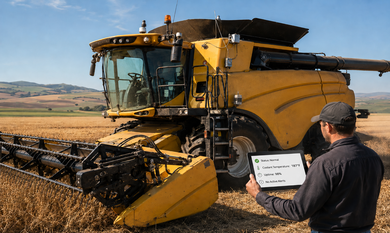
Agriculture is undergoing one of the largest technological transformations in its history. As global food demand rises, farmers are turning to automation, AI, and advanced analytics to improve yield, reduce manual labor, and minimize crop losses. Among all emerging technologies, computer vision has become one of the most powerful tools—unlocking real-time visibility into crop health, soil quality, pest presence, and yield forecasting.
Today, farms no longer rely solely on physical inspections or manual observations. Instead, drones, mobile apps, edge devices, and AI-powered cameras are being used to capture millions of data points every day. These innovations are driving the rapid adoption of computer vision agriculture apps, offering farmers greater accuracy and faster decision-making.
Computer vision empowers agriculture with capabilities like exposure detection, crop counting, early disease identification, soil analysis, and more. It uses deep learning to interpret images and videos, turning visual data into actionable insights. This is the foundation of next-generation AI crop analytics—a powerful shift from traditional farming to fully optimized digital agriculture.
Why Computer Vision Is a Game-Changer in Agriculture
Traditional farming often relies on human observation. However, physical inspections are time-consuming, inconsistent, and dependent on the expertise of the farmer. With large farmlands and complex crop cycles, even experienced farmers can miss early warnings of disease, pest infestation, or nutrient deficiency.
Computer vision resolves these challenges through:
1. Automated Image Processing
AI analyzes plant images captured through mobile phones, drones, and field cameras to detect diseases, texture changes, discolorations, or growth inconsistencies.
2. Real-Time Monitoring
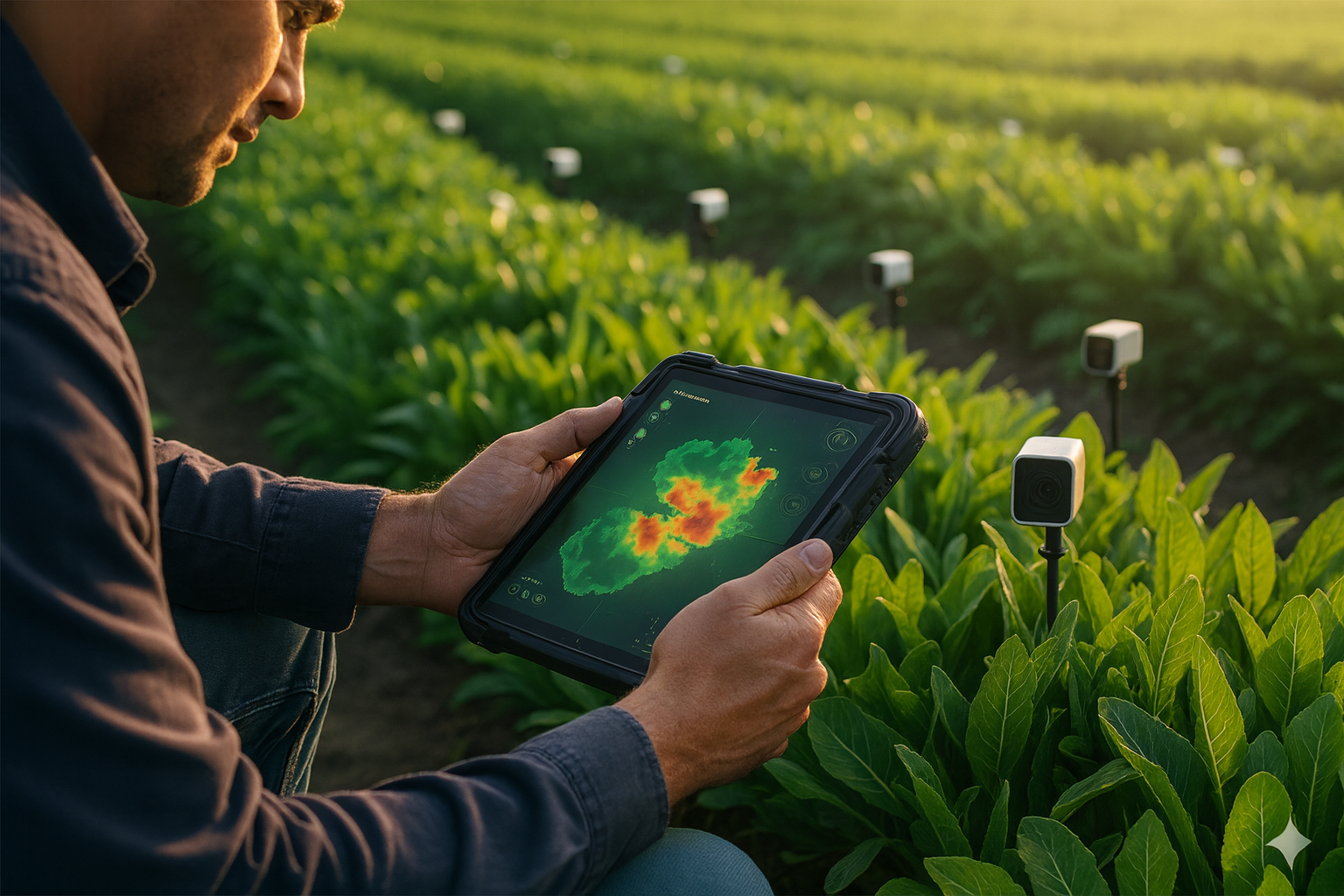
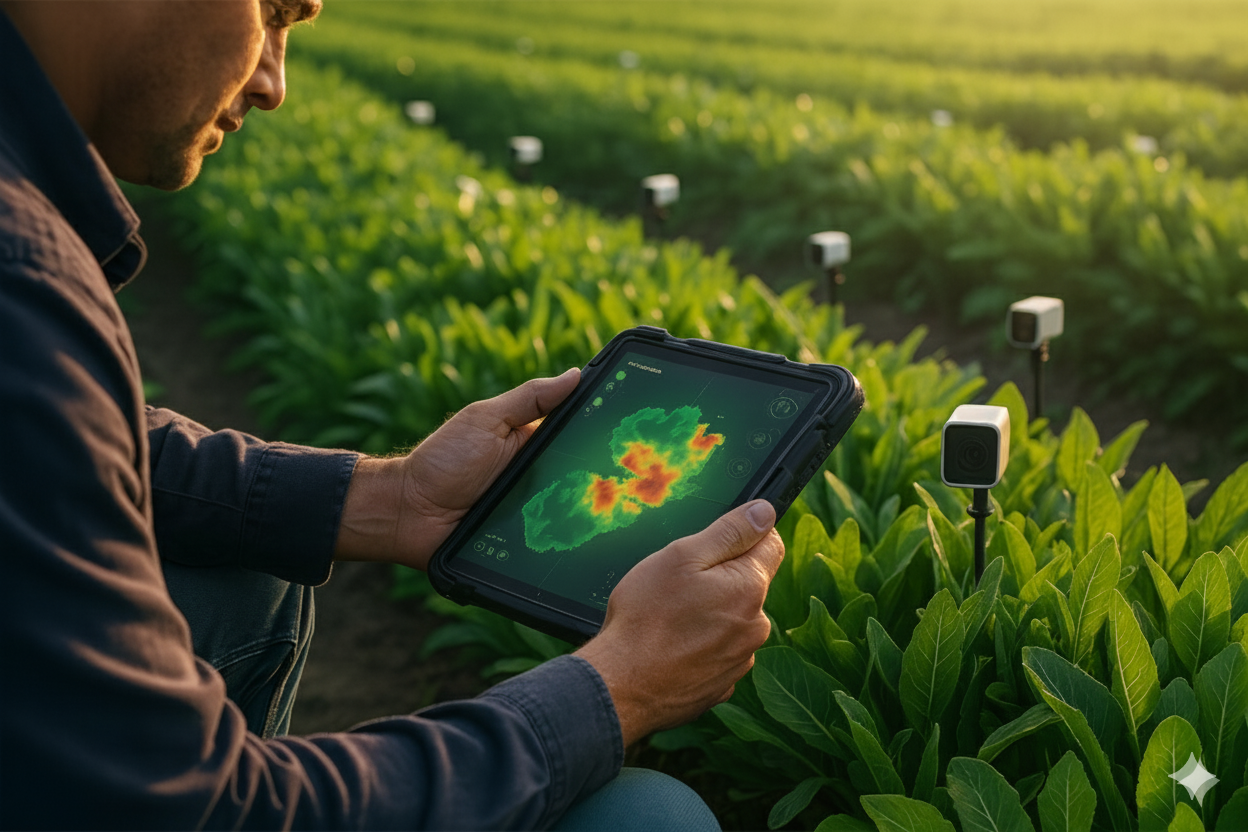
Cameras placed across fields provide continuous surveillance, enabling Automated field monitoring that alerts farmers instantly when issues arise.
3. Pattern Recognition
Deep learning models identify plant stress, water scarcity, fungal symptoms, and nutrient imbalance—faster and more accurately than visual inspection.
4. Precision Agriculture
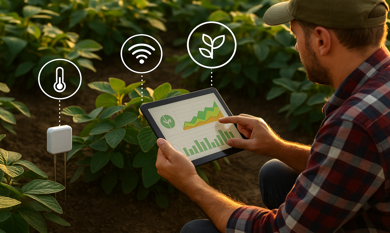
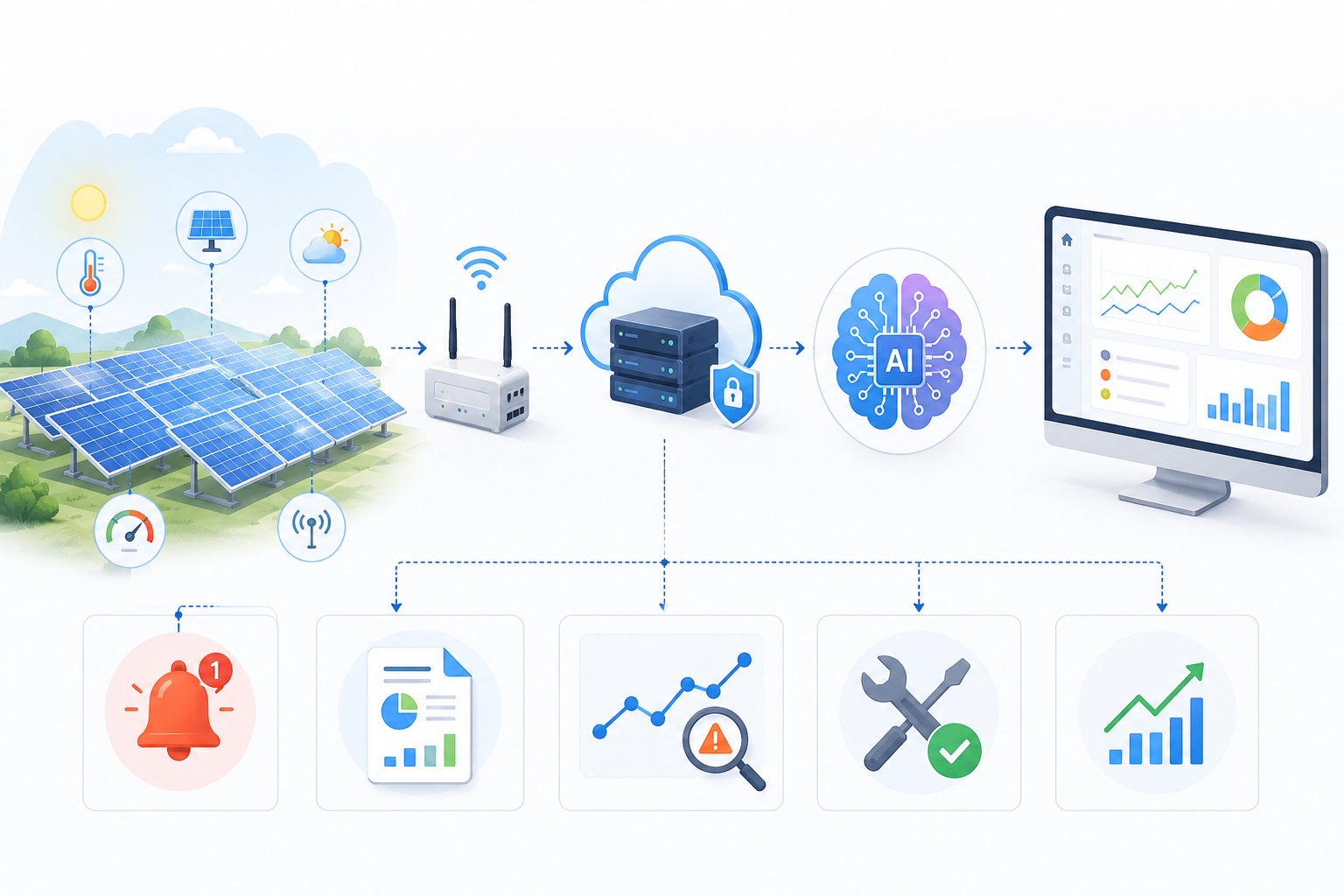
Paired with IoT sensors, CV tools deliver insights about soil moisture, leaf temperature, and overall plant performance. This leads to digital farming analytics that improve decision-making from planting to harvesting.
5. Accurate Yield Forecasting
By analyzing crop density, size, and uniformity, AI produces high-precision predictions. This forms the backbone of Smart yield forecasting, which helps farmers plan logistics, storage, and market strategies.
How Computer Vision Enhances Day-to-Day Farming Operations
Computer vision systems can be deployed across the entire farming lifecycle—from preparing fields to final harvesting.
Seedling Stage
Models analyze sprout quality, germination rates, and soil texture. Early detection allows farmers to replant or adjust nutrient supply.
Vegetative Stage
Monitoring leaf health, plant height, and canopy structure helps optimize irrigation, fertilizer application, and pest-control measures.
Flowering & Fruiting Stage
Computer vision can count fruits, measure their maturity, and identify deformities—ensuring accurate yield estimates and quality control.
Harvest Stage
Autonomous harvesters equipped with CV systems detect ripe produce, reducing human labor and post-harvest losses.
Throughout these stages, precision agriculture cv tools simplify complex tasks and support better resource allocation.
Real-Time Use Cases of Computer Vision in Modern Farming
1. Disease Detection
AI models can detect fungal infections, leaf blight, or bacterial diseases days before they become visible to the human eye. Early treatment prevents widespread crop loss.
2. Pest Identification
Computer vision identifies pest patterns—such as holes in leaves or color changes—and alerts farmers immediately with recommended treatments.
3. Ripeness Analysis
CV systems determine fruit ripeness based on color gradients and size patterns, ensuring better harvest timing and improved market value.
4. Irrigation Optimization
By analyzing leaf color, soil cracks, and moisture patterns, AI systems guide irrigation schedules, reducing water waste.
5. Weed Detection & Removal
CV-powered robots identify weed clusters and selectively remove them without damaging crops.
6. Yield Estimation
Using aerial imagery and plant growth data, AI models deliver highly accurate crop yield prediction ai insights, helping farmers forecast revenue and planning needs.
Next-Gen Tools Enabling Computer Vision in Agriculture
To effectively implement computer vision on farms, businesses require a strong ecosystem of hardware, software, and connectivity.
These include:
- Vision-based farming tools like drone cameras, handheld scanning devices, and in-field image sensors
- Mobile applications developed through cross platform mobile app development services dallas to ensure both farmers and field workers can access insights
- Android applications built with android mobile app development services dallas that provide offline accessibility for rural operations
- Powerful cloud systems for training and managing deep-learning models
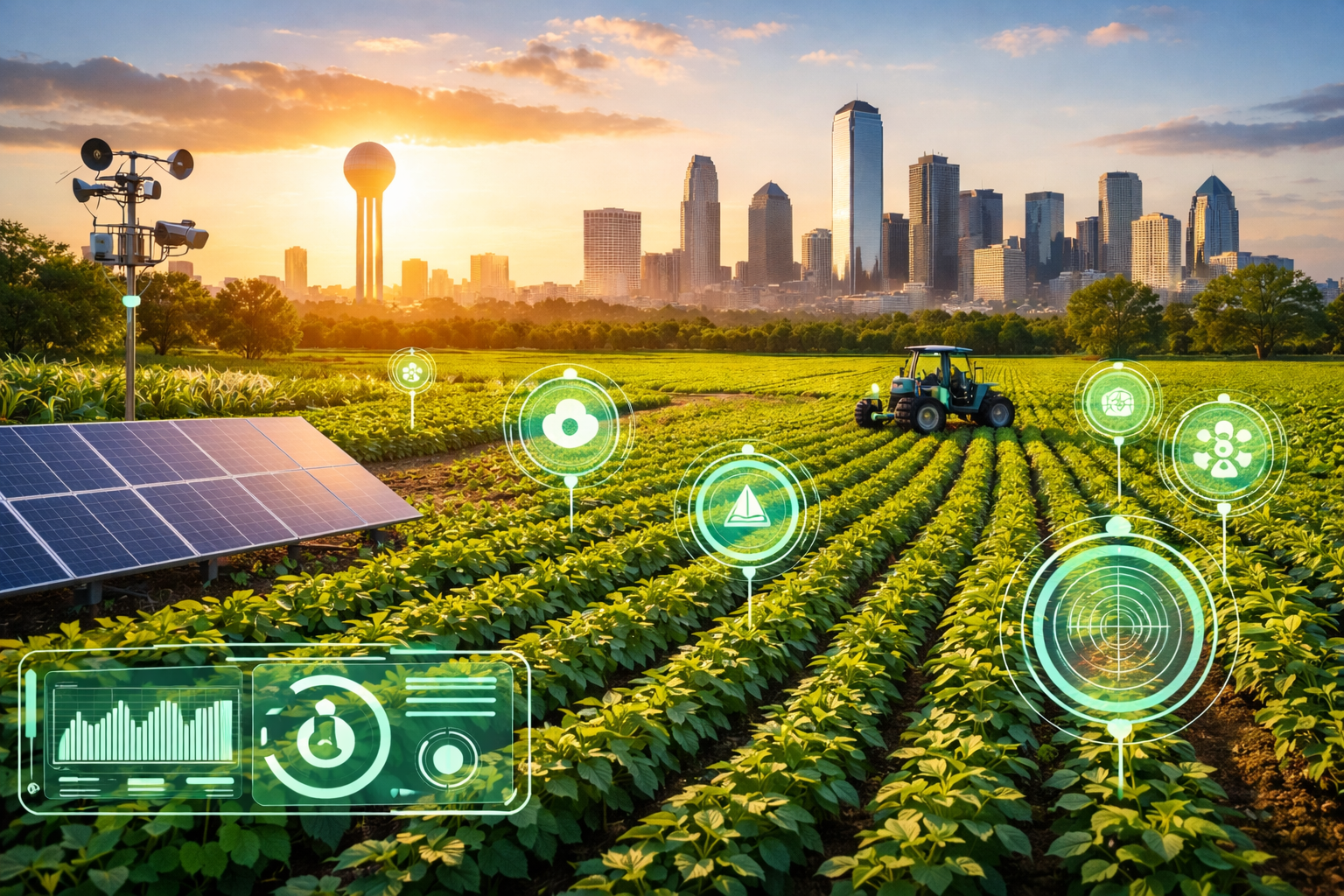
- Integration with IoT sensors and farm machinery
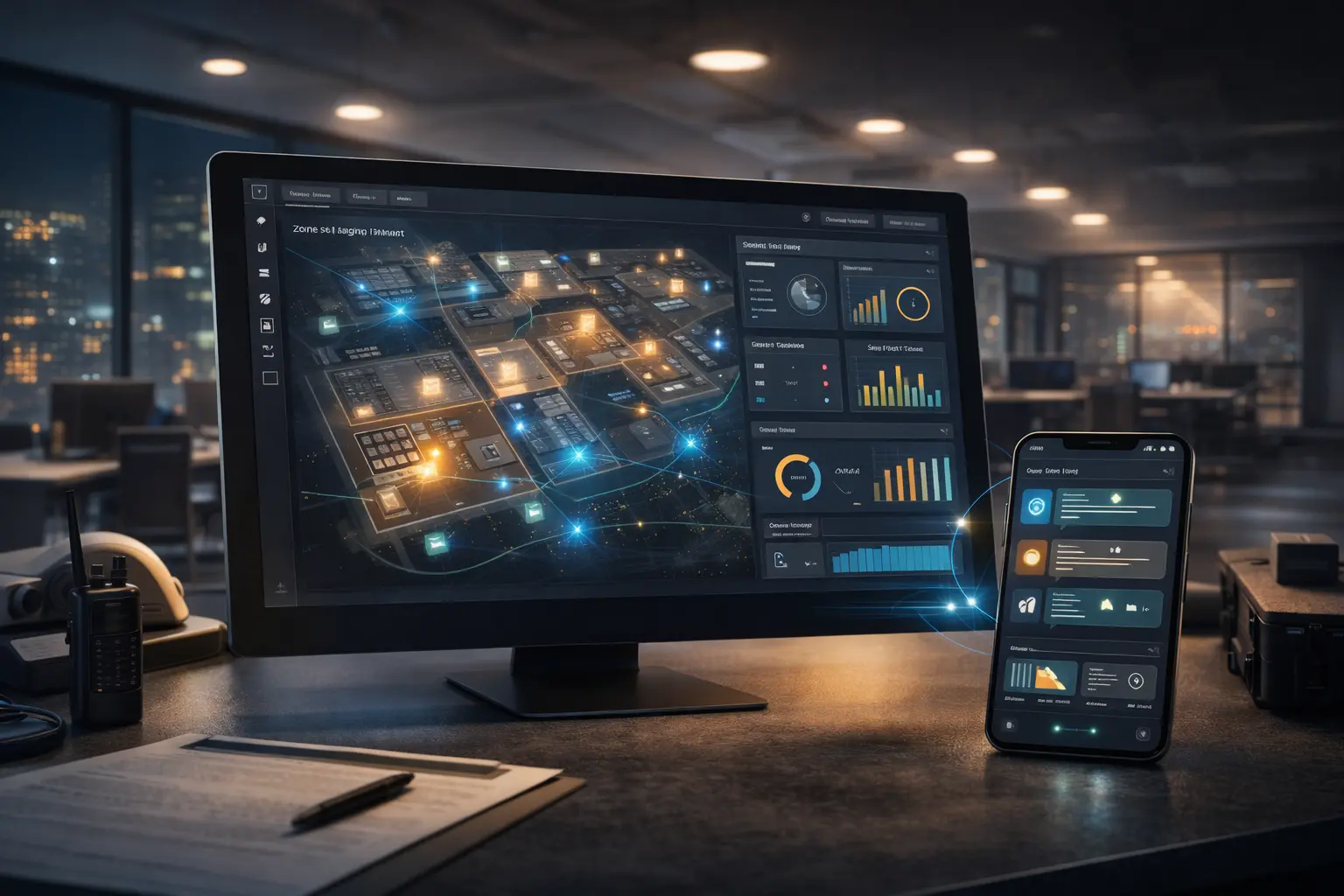
- Dashboards visualizing data across seasons, geographies, and crop types
These tools collectively transform farms into data-driven environments with continuous visibility into every process.
Case Study: How a 500-Acre Farm Improved Yield With Computer Vision
A mid-sized cotton farm wanted to reduce losses caused by late detection of pests and unpredictable soil conditions. The farm implemented drone-based imaging paired with on-field CV cameras.
Solution Deployed:
- Drone imagery for mapping plant health
- Real-time pest detection through field cameras
- Mobile app dashboards for farmers
- Automated irrigation recommendations from AI models
- Weekly performance insights through Digital agri-insights
Result After One Season:
- 37% reduction in pest-related losses
- 20% improvement in irrigation efficiency
- 18% increase in overall yield
- Faster decision-making and fewer manual inspections
This demonstrates how computer vision can create measurable impact—even in traditional farming environments.
The Future of Computer Vision in Agriculture
Over the next few years, computer vision will drive even more advanced capabilities:
1. Autonomous Farming Vehicles
Robots and tractors equipped with machine vision will monitor and manage fields without human presence.
2. Predictive Farming Models
With real-time and historical data, forecasting will become more accurate not just for yield, but for disease outbreaks and soil health changes.
3. Climate-Adaptive AI Systems
CV models will adapt crop strategies based on weather patterns and climate shifts.
4. Hyper-Personalized Farming
Every inch of farmland will be managed based on customized insights, maximizing both efficiency and profitability.
5. Fully Automated Crop Management
From sowing to harvesting, AI will manage the entire cycle with minimal human intervention.
Computer vision is not just improving farming—it is redefining it.
Conclusion
Computer vision has become a cornerstone of next-generation farming, helping businesses and agricultural enterprises monitor crops, detect diseases early, and predict yield with high accuracy. With innovations in deep learning, edge computing, and mobile accessibility, the opportunities for smarter and more sustainable farming are expanding rapidly.
Organizations planning to build advanced agricultural systems need reliable technology partners who understand AI, mobile development, and system integration. As a trusted provider of computer vision software development services dallas, Theta Technolabs delivers robust agricultural innovations across Web, Mobile and Cloud, empowering companies to lead the future of automated, intelligent farming.
Build Intelligent Computer Vision Solutions for Agriculture
Our team can help you build scalable, AI-powered agricultural applications that transform real-time field insights into smarter decisions. Email us at sales@thetatechnolabs.com
FAQs
1. How does computer vision help farmers monitor crop health?
Computer vision analyzes images captured from drones, mobile devices, and field cameras to detect diseases, pests, nutrient deficiencies, and growth issues early. Farmers receive instant alerts, reducing manual inspections and improving crop protection.
2. Can AI-based crop monitoring work in remote farming areas with limited connectivity?
Yes. Many modern agricultural systems use edge devices and offline-capable mobile apps, allowing analysis even without continuous internet. Data syncs automatically once connectivity is restored, ensuring smooth usage in rural fields.
3. Is computer vision accurate enough for real crop yield prediction?
AI models analyze plant size, density, color variations, and growth patterns to deliver accurate Smart yield forecasting. When combined with weather, soil, and historical data, it provides highly reliable yield estimates for planning and logistics.
4. What equipment is required to deploy computer vision in agriculture?
Businesses typically use drones, high-resolution cameras, IoT sensors, and mobile apps connected to cloud dashboards. These tools power Automated field monitoring, disease detection, and data-driven decision-making across the entire farm lifecycle.
5. Can computer vision solutions be customized for specific crops or regions?
Absolutely. Models can be trained using region-specific images, local soil conditions, and crop varieties. This ensures more accurate Digital agri-insights and better performance across diverse agricultural environments.














.png)


.png)


















.png)



















.png)

.png)



.png)