Healthcare systems today are under immense pressure. Hospitals and clinics must deliver faster care, reduce errors, manage growing patient volumes, and still maintain compliance with strict regulations. At the same time, clinical staff are overwhelmed with administrative tasks that take time away from patient care. This is where AI in healthcare is making a meaningful difference.
Artificial Intelligence is no longer an experimental technology in healthcare—it is actively reshaping how clinical workflows operate. From automating repetitive tasks to enabling faster diagnoses and real-time decision support, AI is helping healthcare organizations move toward smarter, more efficient systems. Many healthcare providers now partner with an experienced AI development company in Dallas to design scalable and compliant AI solutions tailored to their clinical needs.
Understanding Clinical Workflows in Modern Healthcare
Clinical workflows include every step involved in patient care—from appointment scheduling and patient intake to diagnosis, treatment planning, documentation, billing, and follow-ups. Traditionally, these workflows rely heavily on manual processes, fragmented systems, and human coordination.
Common challenges include:
- Excessive administrative workload for clinicians
- Delays in accessing patient data
- Inefficient coordination between departments
- Higher chances of documentation errors
- Slower decision-making during critical care
AI-driven clinical workflow automation addresses these issues by streamlining processes, improving data accessibility, and supporting clinicians with intelligent insights.
How AI Is Automating Administrative and Operational Tasks
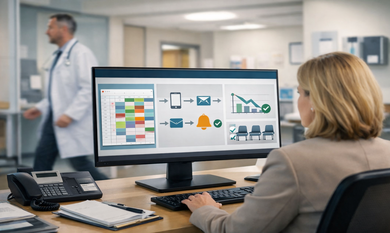
One of the earliest and most impactful applications of AI in healthcare is automation. Administrative tasks such as appointment scheduling, insurance verification, and clinical documentation consume a large portion of a clinician’s time.
AI-powered systems can:
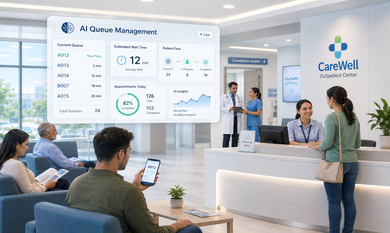
- Automatically schedule appointments based on availability and urgency
- Transcribe doctor-patient conversations into structured clinical notes
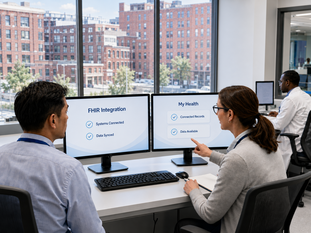
- Extract and organize data from electronic health records (EHRs)
- Automate billing and coding processes
Realistic scenario:
A mid-sized hospital implemented AI-based documentation tools to automate clinical note-taking. Physicians reduced documentation time by nearly 40%, allowing them to spend more time with patients. This directly improved staff satisfaction and reduced burnout—an often overlooked but critical outcome.
These efficiencies contribute to better operational efficiency in hospitals, especially as patient volumes continue to rise.
AI-Powered Diagnostics and Clinical Decision Support
Another major transformation comes from AI-powered diagnostics. Machine learning models can analyze medical images, lab results, and patient histories faster and often more consistently than manual methods.
Examples include:
- AI models detecting early signs of cancer from radiology scans
- Predictive systems identifying patients at risk of complications
- Decision-support tools recommending treatment options based on clinical data
Case-style example:
A digital health startup integrated machine learning development services Dallas to assist radiologists with early-stage lung cancer detection. The AI system flagged high-risk scans for immediate review, reducing diagnosis delays and improving early intervention rates—leading to improved patient outcomes.
Rather than replacing clinicians, AI acts as a second layer of intelligence, enhancing accuracy and confidence in clinical decisions.
Medical Data Analytics for Faster, Smarter Decisions
Healthcare generates massive volumes of data, but much of it remains underutilized. Medical data analytics powered by AI enables healthcare organizations to convert raw data into actionable insights.
AI systems can:
- Identify patterns in patient outcomes
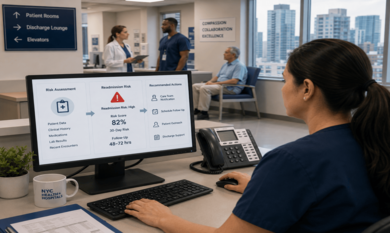
- Predict hospital readmissions
- Optimize resource allocation
- Monitor population health trends
For hospital administrators and clinical operations managers, these insights support smarter planning and better use of resources. For founders and CTOs, AI-driven analytics provide a foundation for scalable healthcare platforms.
The Growing Role of Healthcare Mobile Apps
Modern healthcare is no longer confined to hospital walls. Healthcare mobile apps powered by AI are transforming how patients and providers interact.
Key use cases include:
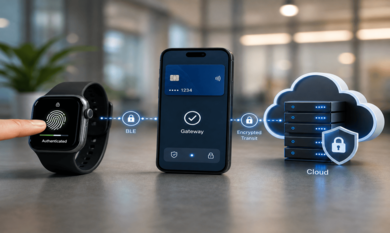
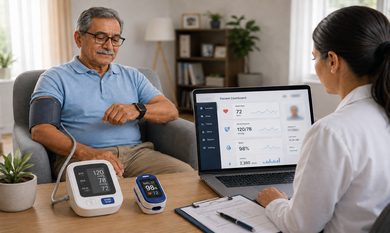
- Remote patient monitoring through wearable data
- AI chatbots for symptom triage and follow-ups
- Personalized care plans delivered via mobile platforms
- Real-time alerts for clinicians based on patient data
Organizations offering mobile app development services in Dallas are increasingly integrating AI to ensure these apps are not only functional but intelligent, secure, and compliant.
Example:
A post-surgery monitoring app uses AI to analyze patient-reported symptoms and vital signs. When abnormal patterns appear, clinicians are alerted immediately—preventing complications and reducing readmissions.
Ensuring Compliance, Security, and Scalability
For healthcare IT decision-makers, technology adoption must meet strict regulatory standards. AI solutions must be:
- HIPAA-compliant
- Secure by design
- Scalable across departments or locations
This is why healthcare organizations often collaborate with a specialized AI development company in Dallas that understands both advanced technology and healthcare compliance requirements.
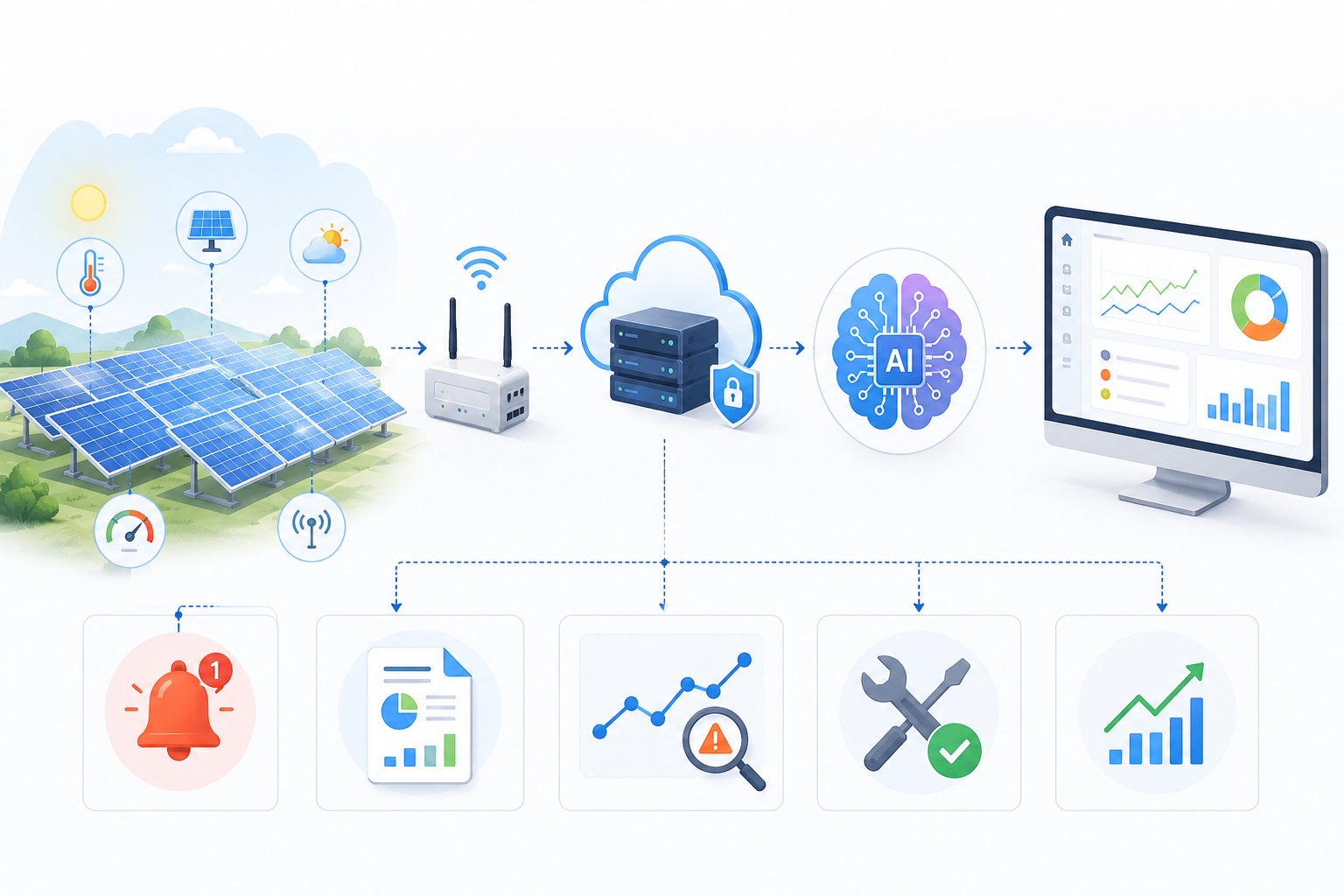
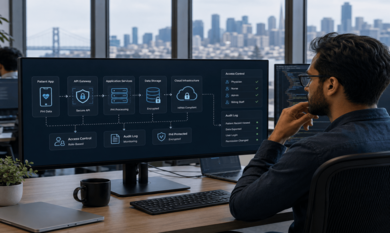
When AI systems are built with cloud-based architectures, they can scale efficiently while maintaining performance, security, and reliability—critical factors for growing healthcare networks.
AI Adoption Benefits for Healthcare Businesses
For B2B healthcare organizations and digital health startups, AI delivers measurable business value:
- Reduced operational costs through automation
- Faster clinical workflows and decision-making
- Higher staff productivity and satisfaction
- Better patient engagement and retention
- Data-driven strategies for long-term growth
AI is no longer a competitive advantage—it is becoming a necessity for healthcare organizations that want to remain future-ready.
Challenges and Best Practices for AI Implementation
While the benefits are significant, successful AI adoption requires careful planning. Common challenges include:
- Data quality and integration issues
- Resistance to change among clinical staff
- High initial implementation costs
Best practices to overcome these challenges:
- Start with specific, high-impact use cases
- Ensure clinician involvement from day one
- Choose experienced technology partners
- Focus on interoperability and long-term scalability
The Future of Clinical Workflows with AI
As AI continues to evolve, clinical workflows will become more predictive, personalized, and proactive. Future systems will anticipate patient needs, optimize care pathways, and continuously learn from outcomes.
Healthcare organizations that invest early in AI-driven workflows will be better positioned to deliver high-quality care while maintaining efficiency and compliance.
Conclusion
AI is fundamentally changing how healthcare organizations operate—from automating administrative tasks and enhancing diagnostics to enabling smarter data-driven decisions. Healthcare providers can create connected ecosystems that improve efficiency, accuracy, and patient care by integrating intelligent systems across Web, Mobile and Cloud.
Partnering with a trusted AI development company in Dallas enables healthcare startups, hospitals, and enterprises to implement scalable, secure, and compliant AI solutions. Companies like Theta Technolabs help organizations design and deploy AI-powered platforms that align technology with real clinical needs.
As healthcare continues to evolve, AI-driven clinical workflows will play a central role in delivering better outcomes for both patients and providers.
Ready to Transform Your Healthcare Workflows with AI?
If you’re exploring AI-powered clinical solutions, Theta Technolabs can help you turn ideas into secure, scalable healthcare platforms.
📩 Contact us: sales@thetatechnolabs.com
Let’s build smarter healthcare systems—together.
FAQs
1. How does AI improve clinical workflow efficiency in healthcare?
AI automates administrative tasks, speeds up data access, and supports faster clinical decisions, allowing healthcare professionals to focus more on patient care.
2. Is AI in healthcare safe and compliant with regulations?
Yes, when implemented correctly. AI solutions are designed to follow healthcare regulations like HIPAA, ensuring data security, privacy, and compliance.
3. Can AI replace doctors or clinical staff?
No. AI supports clinicians by providing insights and automation, but final medical decisions always remain with qualified healthcare professionals.
4. What types of healthcare organizations can benefit from AI solutions?
Hospitals, clinics, diagnostic centers, digital health startups, and enterprise healthcare networks can all benefit from AI-powered workflow automation.
5. How long does it take to implement AI-based healthcare solutions?
Implementation timelines vary based on complexity, but most AI solutions can be deployed in phases, delivering value within a few months.


















.png)




.png)






















.png)
























.png)


.png)



.png)