.png)


Healthcare organizations in Los Angeles operate in one of the most demanding environments in the U.S. Large patient volumes, complex care pathways, rising operational costs, and strict compliance requirements create constant pressure on hospitals and clinics. At the same time, patients expect faster service, personalized care, and seamless digital experiences.
To meet these challenges, healthcare providers are increasingly turning to AI-driven healthcare workflows. Artificial Intelligence is no longer experimental—it is actively transforming how clinical and administrative process's function. Many organizations, including those in California, collaborate with providers of AI software development services in Los Angeles to build scalable, compliant, and intelligent healthcare systems that deliver real business and clinical impact.
The Current Challenges in Healthcare Workflows
Healthcare workflows include everything from patient registration and clinical documentation to diagnostics, billing, follow-ups, and reporting. In many hospitals and clinics, these workflows are still fragmented across multiple systems and heavily dependent on manual effort.
Common challenges include:
- Administrative overload for doctors and nurses
- Delays in accessing complete patient data
- Inefficient coordination between departments
- Higher risk of documentation errors
- Difficulty maintaining consistent compliance
These inefficiencies directly affect operational efficiency in healthcare, staff satisfaction, and patient outcomes. AI addresses these gaps by automating processes, connecting data, and enabling faster, smarter decision-making.
How AI Is Reshaping Clinical and Administrative Workflows
1. Clinical Process Automation for Better Efficiency
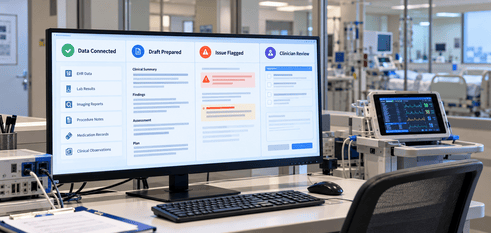
One of the most immediate benefits of AI in healthcare is clinical process automation. AI systems can automate repetitive and time-consuming tasks that traditionally burden clinical staff.
Examples include:
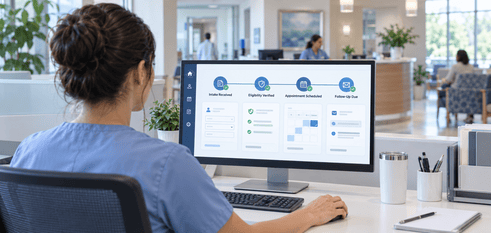
- Automated patient intake and triage
- AI-powered medical transcription and documentation
- Intelligent scheduling based on urgency and availability
- Automated insurance verification and billing workflows
Realistic scenario:
A multi-specialty clinic in Los Angeles implemented AI-based documentation tools to automate physician notes. Doctors reduced documentation time by nearly 35%, allowing more focus on patient interaction while improving record accuracy.
This type of automation significantly improves efficiency without compromising care quality.
2. Intelligent Medical Systems for Smarter Decisions
AI also enables intelligent medical systems that support clinicians during diagnosis and treatment planning. These systems analyze large volumes of structured and unstructured medical data to surface actionable insights.
Use cases include:
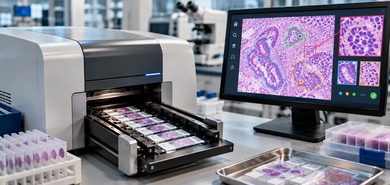
- AI-assisted radiology and imaging analysis
- Predictive models for patient deterioration
- Treatment recommendations based on patient history
Rather than replacing clinicians, AI acts as a decision-support layer—enhancing accuracy, consistency, and confidence in medical decisions.
Healthcare Data Analytics Driving Better Outcomes
Healthcare generates massive amounts of data, but much of it remains underutilized. Healthcare data analytics powered by AI helps organizations convert raw data into insights that improve both clinical and operational outcomes.
AI-driven analytics can:
- Identify patterns in patient outcomes
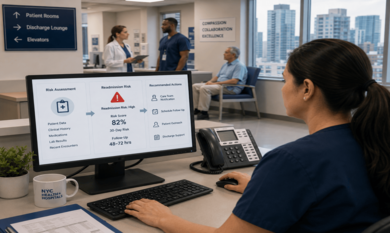
- Predict hospital readmissions
- Optimize staffing and resource allocation
- Support population health management
For healthcare administrators in Los Angeles, these insights enable proactive planning and better use of limited resources—especially in large hospital networks.
Building HIPAA-Compliant AI Platforms
Compliance is a top priority for any healthcare organization. AI solutions must meet strict regulatory requirements, especially HIPAA.
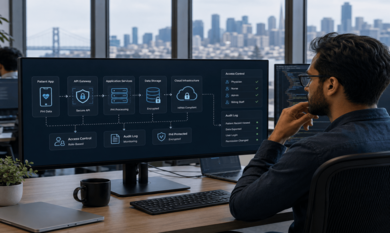
Modern HIPAA-compliant AI platforms are designed with:
- Secure data encryption
- Role-based access control
- Audit trails and logging
- Secure cloud architectures
This is why many healthcare organizations partner with experienced providers of AI software development services that understand both advanced AI technologies and healthcare compliance frameworks.
Custom AI Solutions for Healthcare Organizations
No two healthcare organizations operate the same way. Off-the-shelf tools often fail to address unique workflows, data structures, or integration needs.
Working with a custom healthcare software development company allows hospitals and clinics to:
- Design AI solutions tailored to their workflows
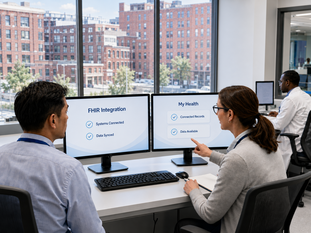
- Integrate AI with existing EHR, EMR, and billing systems
- Build scalable architectures across departments or locations
Implementation example:
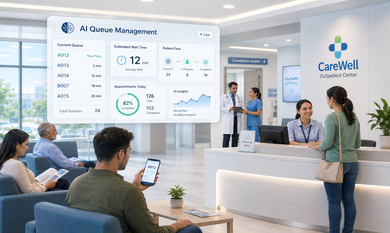
A Los Angeles hospital network partnered with a custom development team to build an AI-driven patient flow management system. The solution reduced emergency department wait times by analyzing historical data, current capacity, and real-time patient intake.
AI-Powered Patient Experience Improvements
AI doesn’t just benefit internal teams—it also transforms the patient experience.
Healthcare AI solutions support:
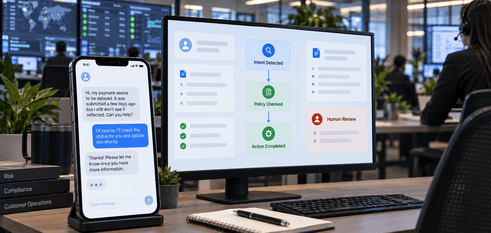
- AI chatbots for appointment scheduling and follow-ups
- Personalized care recommendations
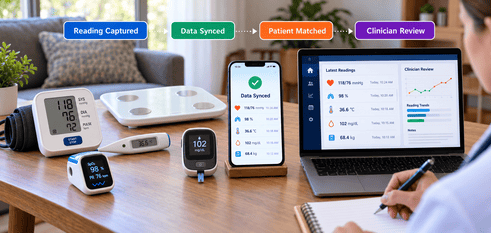
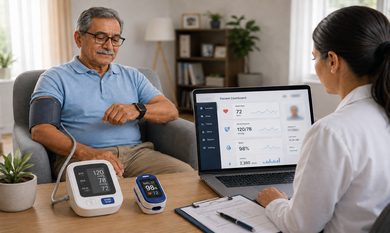
- Remote patient monitoring and alerts
- Faster access to medical information
These capabilities improve engagement, reduce no-shows, and build trust—critical factors in competitive healthcare markets like Los Angeles.
Scalability and Innovation for HealthTech Startups
Los Angeles is a growing hub for HealthTech startups. These companies need systems that scale quickly while remaining compliant and reliable.
AI-powered platforms built with startup IT solutions & services enable startups to:
- Launch faster with automation-first architectures
- Scale AI capabilities across Web, Mobile, and Cloud
- Meet compliance requirements from day one
For founders and product owners, AI-driven workflows create a strong foundation for long-term growth and investor confidence.
Business Impact for Healthcare Leaders
From a leadership perspective, AI adoption delivers measurable value:
- Reduced operational costs
- Faster and more accurate workflows
- Improved staff productivity and satisfaction
- Enhanced patient outcomes and experiences
- Better compliance and audit readiness
These benefits position AI not as a technology upgrade, but as a strategic investment for healthcare organizations.
Best Practices for AI Adoption in Healthcare
While AI offers significant advantages, successful implementation requires planning and alignment.
Best practices include:
- Start with high-impact use cases
- Involve clinicians and operations teams early
- Focus on data quality and interoperability
- Choose experienced, healthcare-focused AI partners
- Plan for scalability and long-term evolution
Following these principles ensures AI solutions deliver sustainable value rather than short-term gains.
The Future of Healthcare Workflows in Los Angeles
As AI technologies continue to evolve, healthcare workflows will become more predictive, personalized, and proactive. Future systems will anticipate patient needs, optimize care pathways, and continuously improve through learning.
Healthcare organizations in Los Angeles that invest early in AI-driven healthcare workflows will be better equipped to handle growing demand while maintaining quality, efficiency, and compliance.
Conclusion
AI is transforming healthcare workflows by automating processes, enhancing clinical decisions, and unlocking the value of data. By implementing intelligent systems across Web, Mobile and Cloud environments, healthcare organizations can achieve higher efficiency, better patient experiences, and stronger compliance.
Partnering with experienced providers of AI software development services enables hospitals, clinics, and HealthTech companies to build scalable, secure, and future-ready healthcare platforms. As AI adoption accelerates, intelligent healthcare systems will play a central role in shaping the future of care delivery in Los Angeles.
Ready to Transform Healthcare Workflows with AI?
Whether you’re a hospital, clinic, or HealthTech startup in Los Angeles, Theta Technolabs helps you build secure, scalable, and HIPAA-compliant AI solutions across Web, Mobile and Cloud platforms.
📩 Contact us:
sales@thetatechnolabs.com
FAQs
1. How do AI development services improve healthcare workflows?
AI automates clinical and administrative tasks, reduces manual effort, and enables faster decision-making, improving overall operational efficiency in healthcare.
2. Are AI healthcare solutions compliant with HIPAA regulations?
Yes. When built correctly, AI solutions follow HIPAA guidelines with secure data handling, access controls, encryption, and audit logs.
3. What healthcare workflows can be automated using AI?
AI can automate patient intake, clinical documentation, scheduling, billing, diagnostics support, and healthcare data analytics.
4. Can AI solutions integrate with existing EHR and hospital systems?
Yes. AI platforms are designed to integrate seamlessly with existing EHR, EMR, billing, and hospital management systems.
5. Is AI suitable for both large hospitals and HealthTech startups?
Absolutely. AI solutions are scalable and can be customized for enterprise hospitals as well as fast-growing HealthTech startups.



















.png)




.png)






















.png)