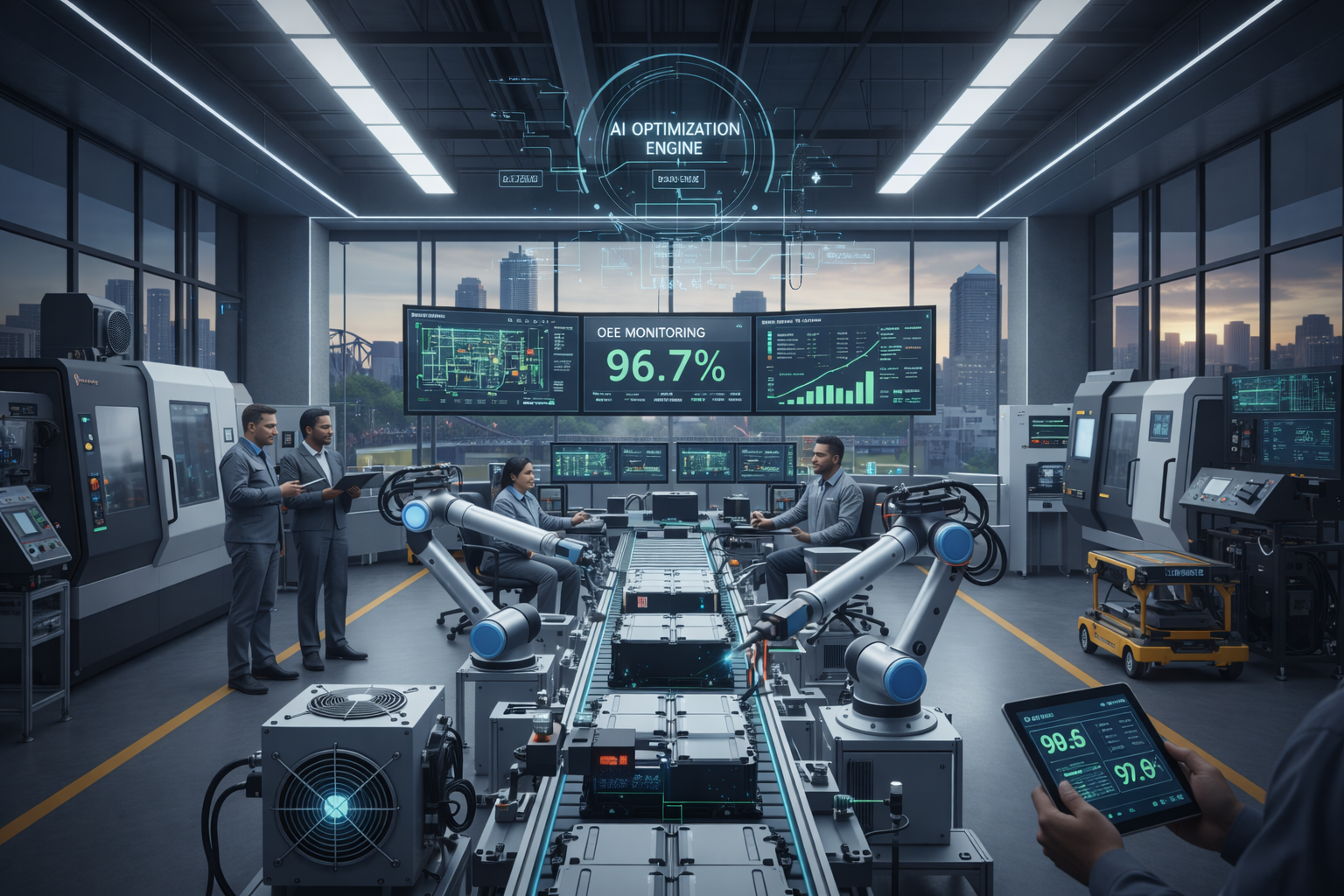


In 2026, manufacturing efficiency is no longer measured by how quickly teams respond to breakdowns. It is measured by how rarely breakdowns happen at all.
Across Illinois, plant leaders face a consistent challenge. Demand volatility is higher. Product variants are increasing. Labor availability remains tight. Margins depend on precision. In this environment, even a small production constraint can ripple across shifts, impact delivery commitments, and erode customer trust.
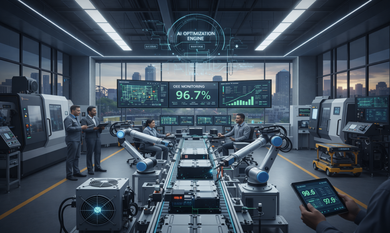
This is where AI for manufacturing bottleneck optimization in Chicago has shifted from experimentation to operational backbone. Rather than simply reporting delays, AI systems now identify and resolve constraints before they disrupt output.
For executives, this means steadier throughput and predictable planning. For engineers and floor managers, it means fewer reactive decisions and more controlled operations.
The conversation is no longer about adopting AI. It is about how operations look once intelligent systems are fully embedded into the production fabric.
Why Traditional Methods Fall Short
Every manufacturing leader understands bottlenecks. A single constrained resource limits total system output. In theory, this is simple. In practice, modern production environments are far more complex.
Traditional approaches rely on:
- Historical downtime analysis
- Manual OEE tracking
- Scheduled maintenance windows
- Static line balancing
These methods worked when product variation was low and demand predictable. In 2026, they struggle.
Consider what happens during a typical constraint event:
- A machine’s cooling unit runs slightly below optimal performance.
- Feed rate remains unchanged.
- Micro-delays accumulate.
- Downstream stations begin waiting.
- By the time alarms trigger, throughput is already compromised.
Traditional predictive systems may flag a “possible failure.” But they stop at insight. They do not intervene.
High-demand environments require real-time production line constraint management, not just reporting. This is where the shift from predictive analytics to Agentic AI becomes critical.
From Predictive to Agentic: The New Standard in Constraint Management
For years, predictive models told manufacturers what might happen. They analyzed vibration patterns, temperature shifts, and performance deviations.
But prediction alone does not eliminate bottlenecks.
Agentic AI in shop floor operations represents the next step. Instead of waiting for human confirmation, AI agents:
- Detect early signs of throughput degradation
- Simulate impact on overall line capacity
- Adjust machine parameters within defined safety boundaries
- Coordinate upstream and downstream processes
This transition from “alerting” to “acting” is what defines the 2026 factory.
It is also the foundation of advanced industrial ai solutions for illinois factories, where constraint resolution is automated rather than escalated.
Shop Floor Intelligence Example
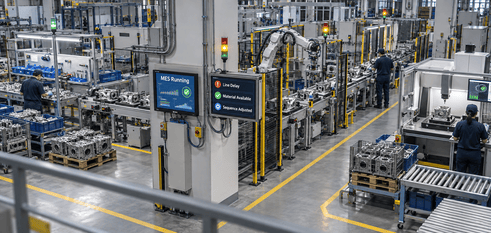
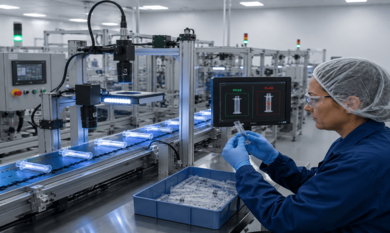
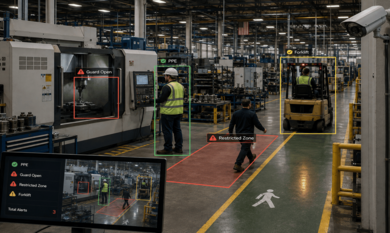
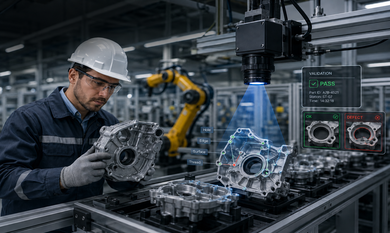
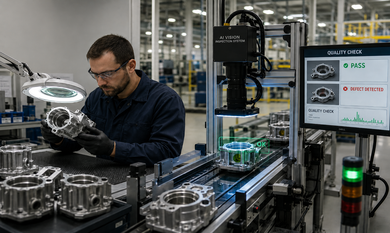
Imagine a mid-sized automotive components plant operating near Chicago. The facility runs three shifts and produces precision metal housings for electric vehicle platforms.
The plant recently implemented an AI-driven constraint management layer across its primary machining line.
1. Early Signal Detection
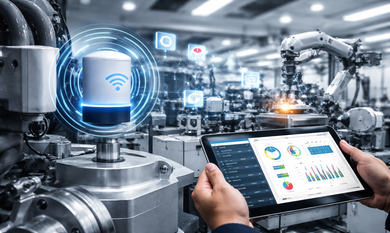
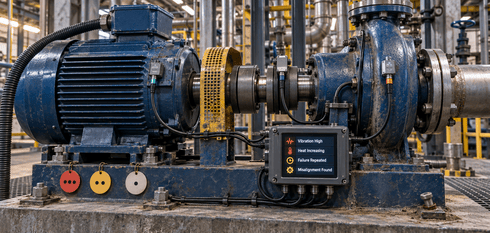
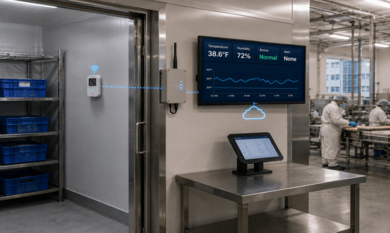
During the second shift, sensors detect minor temperature irregularities in a cooling unit serving a CNC machine. The deviation is small, well below alarm thresholds.
Traditional systems would log the data. Operators might notice it later.
The AI layer performs predictive throughput analysis in real time. It calculates that if temperature drift continues, cycle times will increase by 3 percent within 40 minutes. That delay would propagate downstream, creating a two-hour backlog by shift end.
2. Autonomous Adjustment
Instead of sending a passive alert, the Agentic AI:
- Slightly reduces feed rate on the affected machine
- Redistributes load to parallel equipment
- Adjusts buffer flow between stations
This intervention maintains stable output while preventing overheating.
3. Coordinated Maintenance Scheduling
Simultaneously, the system notifies maintenance with a recommended inspection window during a natural micro-pause between batches.
No emergency stop. No bottleneck. No missed shipment.
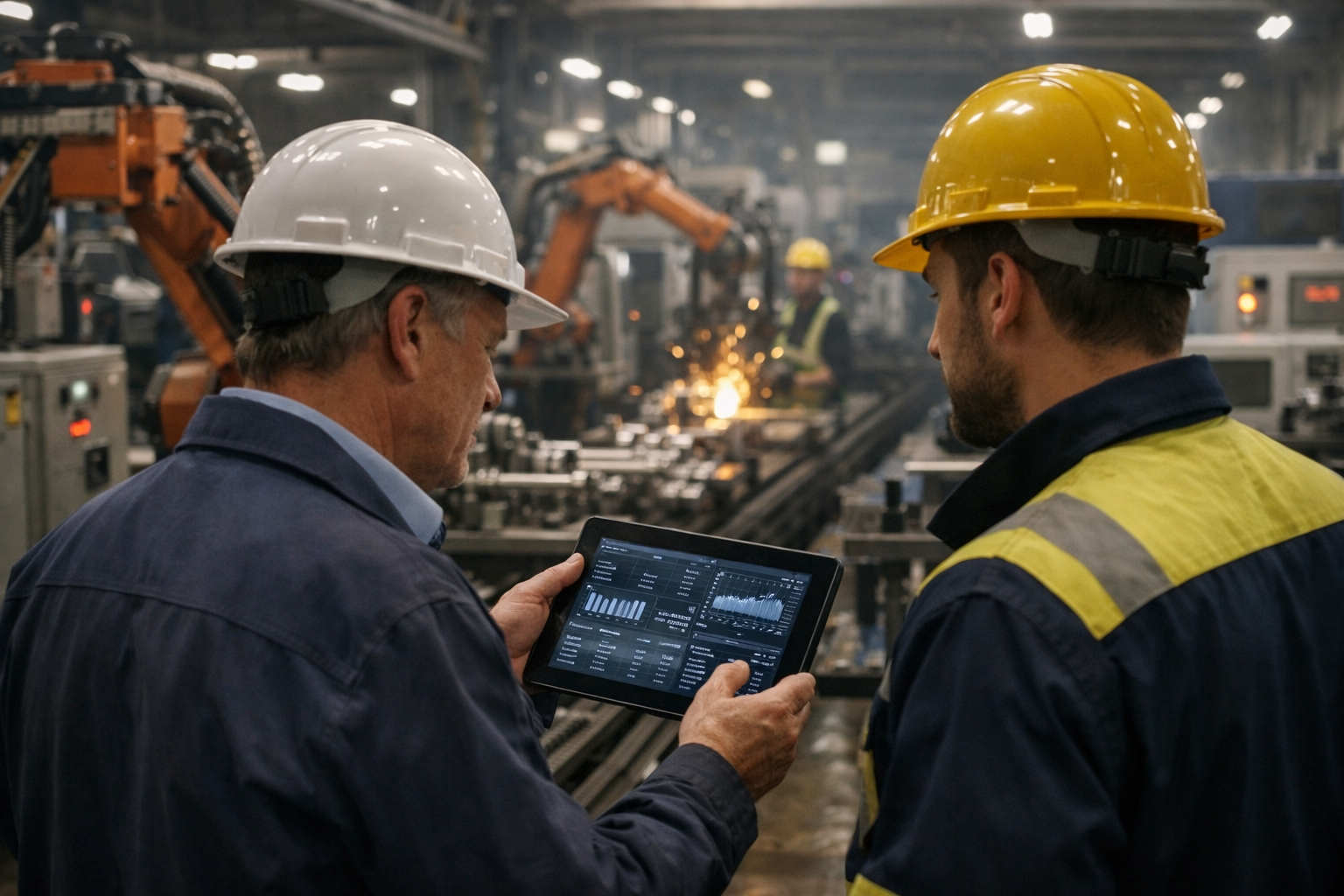
For floor engineers, the experience is different from past operations. They see:
- A stable dashboard
- Machine-level latency reduction
- No unexpected queue buildup
The bottleneck never materializes.
How Real-Time Constraint Management Reshapes the Shop Floor
With AI fully implemented, operations become proactive and coordinated.
Continuous Constraint Scanning
Every machine is monitored not just for failure, but for capacity drift. The AI continuously evaluates:
- Cycle time variability
- Queue buildup trends
- Energy consumption anomalies
- Operator intervention patterns
This enables true real-time production line constraint management, where bottlenecks are addressed before they appear on OEE reports.
Cross-System Coordination
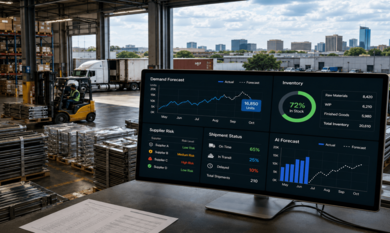
Constraint management no longer lives in a silo. AI integrates with:
- ERP for order priority adjustments
- MES for dynamic scheduling
- Quality systems for defect trend correlation
This holistic view ensures that throughput optimization does not compromise quality.
OEE Automation at Scale
In 2026, OEE (Overall Effectiveness) automation is no longer a manual reporting task.
AI automatically:
- Identifies hidden micro-stoppages
- Quantifies speed losses
- Correlates downtime to upstream variables
Executives receive accurate, real-time performance metrics without relying on end-of-shift data consolidation.
Real Production Performance Gains
When bottleneck optimization becomes autonomous, the gains are structural rather than temporary.
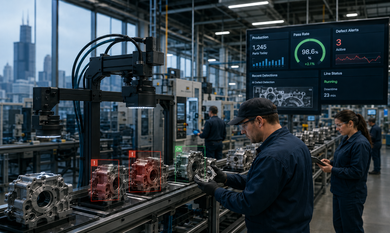
Across Illinois plants deploying advanced AI systems, typical improvements include:
- 8 to 15 percent increase in sustained throughput
- 20 percent reduction in unplanned micro-stoppages
- 10 to 18 percent improvement in OEE
- Noticeable machine-level latency reduction
More importantly, variability decreases. Schedules stabilize. Planning becomes realistic instead of optimistic.
For C-suite leaders, this translates into:
- Stronger on-time delivery performance
- Reduced expediting costs
- Higher customer retention
For floor managers and engineers:
- Fewer emergency interventions
- Clearer performance visibility
- Improved collaboration between production and maintenance
This is not theoretical optimization. It is operational calm.
Frequently Asked Questions
1. How is Agentic AI different from predictive maintenance?
Predictive maintenance forecasts possible equipment failures. Agentic AI goes further by autonomously adjusting parameters and coordinating processes to prevent bottlenecks before failures occur.
2. Does real-time constraint management replace human operators?
No. It augments them. Operators retain control and oversight, while AI handles rapid data interpretation and minor adjustments within approved boundaries.
3. How quickly can throughput improvements be seen?
Most facilities observe measurable gains within the first 60 to 90 days after full integration, especially when high-variability lines are targeted.
4. Is this approach suitable for mid-sized factories?
Yes. Modern industrial AI solutions for illinois factories are scalable. They can be deployed incrementally, starting with high-impact production lines.
5. How does AI impact OEE reporting?
AI automates OEE measurement by capturing micro-losses in real time, eliminating reliance on manual logs and post-shift reconciliation.
Conclusion
In 2026, manufacturing efficiency is no longer about working harder or reacting faster. It is about designing systems that self-correct.
Plants that embed AI into bottleneck optimization move from reactive firefighting to stable, predictable output. Constraints are identified early. Adjustments happen automatically. Throughput remains consistent even under demand pressure.
The competitive gap between reactive and data-driven manufacturers is widening. Organizations that treat AI as an operational intelligence layer rather than a reporting tool are setting new standards for efficiency across Illinois.
Companies such as Theta Technolabs, a leading AI development company in Chicago, are helping manufacturers transition into this new era of autonomous constraint management and scalable intelligence.
Build the Next Generation of Smart Manufacturing
If your organization is ready to explore how intelligent systems can reshape production efficiency, now is the time to act.
Theta Technolabs brings deep expertise in AI-powered systems across Web, Mobile and Cloud platforms, ensuring seamless integration with your existing infrastructure.
For a strategic consultation on AI-driven bottleneck optimization and smart factory transformation, contact:
Let your production lines operate with foresight, not friction.
















.png)


.png)


















.png)