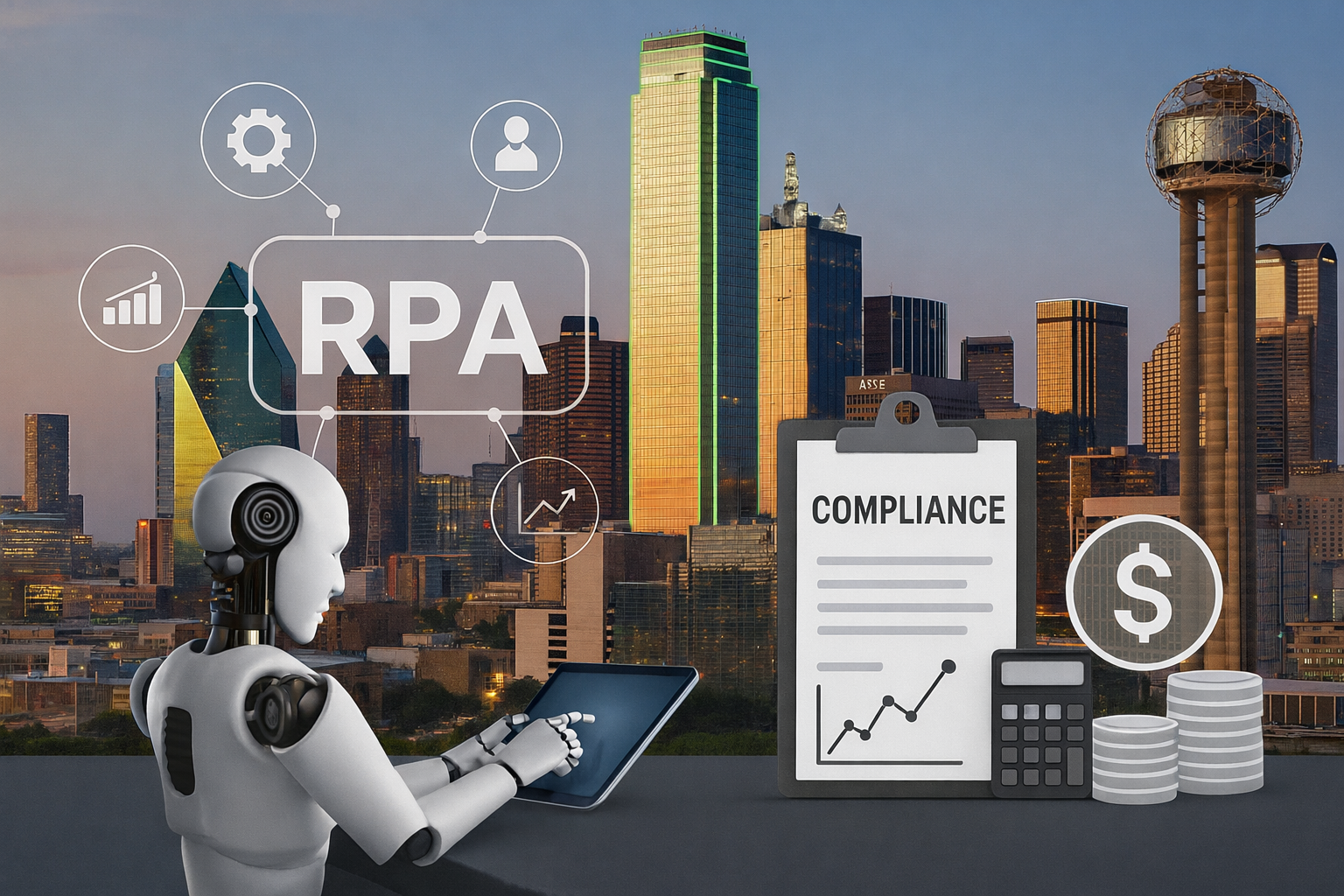
Financial institutions operate in one of the most regulated environments in the world. From KYC and AML to transaction monitoring and audit reporting, compliance requirements continue to grow in complexity. Manual processes, siloed systems, and legacy tools make compliance costly, slow, and error prone. This is where the combined power of Blockchain and Robotic Process Automation (RPA) is transforming compliance operations—making them faster, more transparent, and far more reliable.
By integrating blockchain’s immutable records with RPA’s automation capabilities, banks, fintech firms, and payment providers can simplify compliance while improving operational efficiency across Web, Mobile and Cloud environments.
Why Compliance Needs a Smarter Approach
Traditional compliance relies heavily on manual checks, document reviews, and periodic audits. These processes often:
- Increase operational costs
- Introduce human error
- Slow down onboarding and transactions
- Create challenges during audits
As digital finance expands, compliance teams need systems that can operate continuously and adapt in real time. Blockchain and RPA together enable exactly that.
Understanding the Role of Blockchain in Compliance
Blockchain brings transparency, traceability, and immutability—three critical elements for regulatory compliance. Every transaction recorded on a blockchain is time-stamped and tamper-proof, making it ideal for audit trails and regulatory reporting.
In financial workflows, blockchain can securely store:
- Customer identity verification records
- Transaction histories
- Consent logs
- Smart contract executions
These features reduce disputes and simplify audits, as regulators can verify data integrity without extensive reconciliation efforts.
How RPA Complements Blockchain
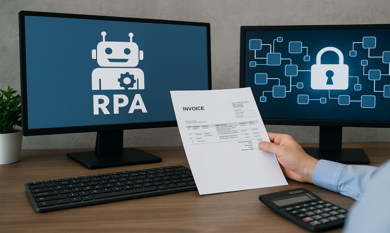
RPA automates repetitive, rule-based tasks such as data entry, validation, reporting, and reconciliation. When integrated with blockchain systems, RPA bots can:
- Automatically verify transactions against blockchain records
- Trigger compliance checks in real time
- Generate regulatory reports without manual intervention
- Monitor anomalies and flag risks instantly
For example, during customer onboarding, RPA can extract documents, validate data, and log verified information on the blockchain—creating a single source of truth for future audits.
Practical Use Case: AML and Transaction Monitoring
Consider a fintech company handling cross-border transactions. Traditionally, AML checks are time-consuming and reactive. By combining blockchain with RPA, every transaction is logged immutably, while bots continuously monitor activity patterns.
If a transaction deviates from normal behavior, RPA triggers alerts and compliance workflows instantly. This proactive approach reduces fraud risk and ensures regulators receive accurate, real-time data when required.
Bridging Compliance with Digital Payments
Modern financial platforms increasingly intersect with retail and payment ecosystems. As institutions support digital payments in retail, compliance systems must also cover crypto and blockchain-based transactions.
For example, financial firms supporting blockchain commerce platforms and cryptocurrency checkout processes must ensure regulatory alignment without slowing transactions. Blockchain provides transparent transaction data, while RPA automates compliance validation—making web3 payment processing both secure and efficient.
In large-scale deployments, solutions supporting crypto payment integration Dallas help financial institutions monitor blockchain-based payments while meeting regional compliance standards.
Blockchain and RPA in E-commerce and Wallet Ecosystems
Financial institutions working with e-commerce platforms face added complexity. Blockchain e-commerce transactions require continuous monitoring for fraud, tax compliance, and reporting. RPA bots automate these checks, while blockchain ensures records cannot be altered.
Similarly, compliance around digital wallet app development benefits from this integration. Wallet activities, consent records, and transaction logs stored on blockchain can be automatically reviewed by RPA bots, reducing compliance overhead.
This approach supports firms offering global crypto retail solutions, enabling them to scale internationally without exponentially increasing compliance costs.
Realistic Scenario: Financial Institution Transformation
A mid-sized financial services firm offering crypto-enabled payment solutions struggled with delayed compliance reporting and high audit costs. By integrating blockchain-based transaction logs with RPA-driven reporting, the firm:
- Reduced compliance processing time by 40%
- Improved audit readiness with real-time data access
- Minimized manual intervention across reporting workflows
The platform was built using scalable architectures supported by web app development services dallas, ensuring secure dashboards and seamless integrations. Strategic guidance from startup it consulting services dallas helped align technology with regulatory requirements from day one.
Key Business Benefits of Blockchain + RPA Integration
For financial institutions, this integration delivers measurable value:
- Operational efficiency: Automation reduces manual compliance tasks
- Improved accuracy: Immutable records reduce disputes and errors
- Faster audits: Regulators gain access to transparent, verifiable data
- Scalability: Compliance processes scale without linear cost increases
- Risk reduction: Continuous monitoring detects issues early
Together, blockchain and RPA shift compliance from a reactive burden to a strategic advantage.
Conclusion
The financial sector is moving toward smarter, automated, and transparent compliance models. By integrating blockchain with RPA across Web, Mobile and Cloud platforms, institutions can streamline regulatory workflows while supporting modern digital finance use cases. Theta Technolabs helps financial organizations design and implement future-ready solutions that balance innovation with compliance, including advanced capabilities supported by crypto trading bot development services in dallas to enhance automation and intelligence across financial ecosystems.
Ready to Simplify Financial Compliance?
If compliance is slowing your financial operations, it’s time to rethink your technology stack. Blockchain and RPA integration can help you achieve speed, transparency, and regulatory confidence—without compromising innovation.
📧 Let’s simplify compliance together: sales@thetatechnolabs.com





















.png)






.png)


























.png)

























.png)


.png)



.png)