

Chicago SMBs can significantly reduce software development expenses by adopting no-code platforms that replace large portions of custom coding with configurable automation tools and integrations. If implemented strategically, these systems can reduce development timelines from months to weeks while lowering maintenance overhead and allowing operations teams to build internal tools without large engineering teams.
Software Development Changes for Chicago SMBs
Many small and mid-market companies across Chicago are beginning to question a long-standing assumption: every operational system must be custom built.
For years, businesses relied on developers to build internal tools for inventory tracking, workflow automation, reporting dashboards, or order management. While this approach offers flexibility, it also introduces significant costs and long development timelines.
But what if many of these systems could be assembled instead of built from scratch?
That question is driving a growing trend across Chicago’s mid-market ecosystem. Operations leaders are exploring how reducing SMB software overhead with no-code platforms can support digital transformation without requiring large engineering budgets.
Instead of commissioning full development projects, companies can configure operational systems using modular tools that connect databases, APIs, and automation workflows.
If implemented thoughtfully, this approach can allow Chicago SMBs to digitize internal operations faster while keeping development costs under control.
This is where the conversation around No-code vs. Custom Dev ROI 2026 is becoming increasingly relevant.
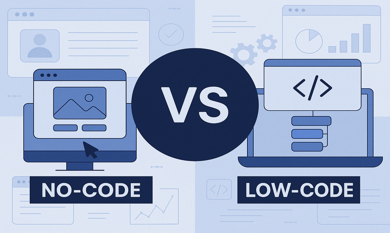
Custom Coding vs. No-Code (2026)
When evaluating technology investments, many companies are comparing traditional development projects with no-code platforms.
The differences can be substantial.
For many organizations, the key insight is this: not every internal system requires a full engineering project.
Systems such as internal dashboards, vendor tracking tools, reporting interfaces, and operational workflows can often be built using no-code platforms if the architecture is designed properly.
This can be one of the most effective strategies for cost-effective digital transformation for mid-market companies.
Logistics Scenario
Consider a realistic scenario involving a mid-sized logistics distributor operating near O’Hare International Airport.
O’Hare is one of the busiest cargo hubs in North America, and logistics companies in the area frequently experience shipment spikes during peak periods.
Now imagine a distributor managing hundreds of daily inbound shipments.
Traditionally, their workflow might rely on spreadsheets combined with manual tracking updates from their freight partners.
But what if the company implemented a lightweight operational system using no-code tools?
What the System Could Look Like
If an Airtable-based inventory system were implemented, it could act as a central database for:
- inbound cargo shipments
- warehouse inventory records
- order fulfillment status
- shipping partner tracking IDs
Now imagine integrating that database with the shipping provider’s API.
If implemented correctly, shipment status updates from the freight carrier could automatically sync with the warehouse inventory dashboard.
Automation workflows could then trigger actions such as:
- generating warehouse pick lists
- notifying staff of incoming shipments
- updating customer delivery timelines
- flagging inventory shortages
Instead of waiting months for a custom logistics application, this type of system could potentially be deployed within several weeks.
For a Chicago distributor dealing with O’Hare logistics fluctuations, that level of visibility could significantly improve operational coordination.
Reducing SMB Software Overhead with No-Code
Software costs rarely end with the first deployment.
Custom systems often require:
- bug fixes
- infrastructure maintenance
- database updates
- developer support for new features
But what if internal operational tools were built on platforms where infrastructure and updates were already managed?
This is one of the primary advantages of no-code systems.
If implemented properly, companies can avoid maintaining large codebases and instead focus on configuring workflows and integrations.
Possible Benefits for Chicago SMBs
If a company replaces several internal tools with no-code systems, the results could include:
• lower development costs
• faster operational improvements
• easier experimentation with workflows
• reduced dependency on developer resources
This is why many mid-market firms are exploring No-code vs. Custom Dev ROI 2026 when planning their technology budgets.
Enterprise-Grade No-Code Security for SMBs
One of the most common concerns among business leaders is security.
In earlier years, many no-code platforms lacked the governance features required for business environments.
But modern platforms now provide enterprise-grade no-code security for SMBs, including:
- encrypted data storage
- role-based user access
- API authentication layers
- audit trails for system changes
- compliance frameworks such as SOC-2
If these platforms are configured properly, they can support internal operational systems while maintaining appropriate security controls.
The key consideration is governance. Companies should define access permissions, data policies, and integration rules before deploying automation systems.
Manufacturing Digital Transformation Chicago
Manufacturing companies across the Chicago region are also exploring how no-code platforms could support operational improvements.
Many manufacturers operate with legacy ERP systems that are difficult to customize.
But what if production teams could build additional operational tools without modifying the ERP itself?
This is where Manufacturing Digital Transformation Chicago initiatives are beginning to incorporate no-code solutions.
Potential Manufacturing Applications
If implemented strategically, no-code tools could help manufacturers build systems such as:
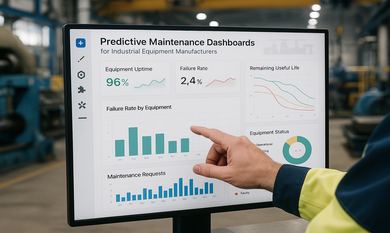
- production monitoring dashboards
- supplier performance trackers
- equipment maintenance workflows
- quality inspection reporting systems
- factory operations analytics
For example, a manufacturing plant could connect its ERP database to a no-code dashboard that visualizes production data in real time.
Operations managers could then monitor:
- equipment performance
- production bottlenecks
- supply chain delays
without waiting for expensive ERP customization projects.
Small Business Tech Grants Illinois 2026
Another factor supporting adoption is the availability of Small business tech grants Illinois 2026.
Illinois economic development programs are increasingly supporting SMB digital transformation initiatives.
Many grant programs now help fund:
- workflow automation systems
- digital supply chain tools
- operational analytics platforms
- manufacturing technology upgrades
If a company combines grant funding with no-code tools, the barrier to implementing modern operational systems can become significantly lower.
This is particularly valuable for mid-market firms that need modernization but operate within strict capital budgets.
The Strategic Role of Chicago Business Automation Consultants
While no-code tools simplify development, they still require thoughtful architecture.
If implemented without planning, automation systems can become fragmented.
This is where Chicago business automation consultants often play an important role.
Their focus is not necessarily coding but designing the structure of digital operations.
They may help companies determine:
- which processes should be automated
- how APIs should connect systems
- where workflow triggers should be placed
- how security policies should be implemented
When designed carefully, no-code systems can support operational growth without introducing unnecessary complexity.
Frequently Asked Questions
Is no-code only suitable for startups?
No. Many mid-market companies use no-code platforms for internal tools, reporting systems, and automation workflows that support operations.
Can no-code platforms scale with growing companies?
Yes, if integrations and architecture are designed properly. Many platforms support API integrations, database scaling, and workflow automation frameworks.
Are no-code systems secure enough for operational data?
They can be, particularly when platforms provide enterprise-level security features such as encryption, role-based access, and compliance certifications.
When is custom development still necessary?
Custom development remains important for highly specialized systems, customer-facing applications, or proprietary technologies that require deep engineering control.
Conclusion
For Chicago SMBs exploring digital transformation in 2026, the question is no longer simply whether to build software. The more strategic question is how those systems should be built to ensure long-term scalability and security.
While some platforms will still require the deep expertise of a traditional engineering team, others function more effectively when assembled using modern automation tools. By combining these approaches, organizations can achieve faster innovation while significantly controlling development costs.
As a premier AI Development Company in Chicago, technology partners like Theta Technolabs; specializing in Web, Mobile and Cloud solutions—help organizations evaluate exactly where no-code platforms fit within a broader, high-performance architecture strategy. This balanced approach provides the flexibility and efficiency required to scale operations in the competitive 2026 landscape.
Start Your Technology Upgrade
If your organization is exploring ways to reduce development costs while modernizing internal systems, strategic planning can make a significant difference.
Theta Technolabs helps companies design scalable solutions using Web, Mobile and Cloud technologies alongside modern automation platforms.
To discuss your requirements or explore implementation strategies, contact: sales@thetatechnolabs.com



.png)


























.png)
.png)






.png)

.png)
.png)
.png)


.png)
.png)
.png)
.png)

.png)









.png)




_How%20Cloud%20Solutions%20Are%20Enhancing%20Remote%20Patient%20Monitoring%20in%20Healthcare_Q4_25.jpg)
_Streamlining%20Appointment%20Scheduling%20with%20Cloud%20Computing%20in%20Dallas%20Healthcare_Q4_25.jpg)