

In manufacturing, and especially in food processing, the real problem usually isn't a lack of rules it's the gap between inspections. Take a cooler that drifts a few degrees overnight. Nobody's walking the floor at 2 a.m., so nobody catches it until the morning check, and by then the batch may already be compromised. That gap is where most recalls, spoiled inventory, and failed audits actually come from.
The solution more plants are moving toward is continuous, sensor-based monitoring instead of periodic manual checks, paired with analytics that can flag a developing issue before it turns into a violation. That's what this blog walks through: how IoT sensors for food safety work on a real processing floor, where AI-driven analytics fits in on top of basic alerts, and why this is especially relevant for plants operating in and around Chicago.
Why Manual Monitoring Breaks Down in Food Processing
Most plants still run some version of the same process someone walks the floor a few times a shift, checks a thermometer, and logs a number on paper or in a spreadsheet. It works most of the time, but the method has built-in blind spots.
A reading taken at 8 a.m. says nothing about what happened at 2 a.m. A unit that starts failing quietly over a weekend can sit outside safe range for hours before anyone notices. And when an auditor asks for a complete temperature history, a log with occasional gaps doesn't hold up well.
The USDA FSIS lays out why this matters in practical terms: food held between 40°F and 140°F sits in what's called the temperature danger zone, where bacteria can multiply quickly enough to make a batch unsafe within a matter of hours. (Commercial food establishments follow the FDA Food Code's slightly tighter 41°F–135°F range for the same danger zone.) Manual spot-checks weren't built to catch a fast-moving deviation in real time cold-chain monitoring that runs continuously is a better fit for that job.
How IoT Sensors Actually Work on the Plant Floor
Strip away the buzzwords and it's a fairly straightforward setup. Here's the general flow:
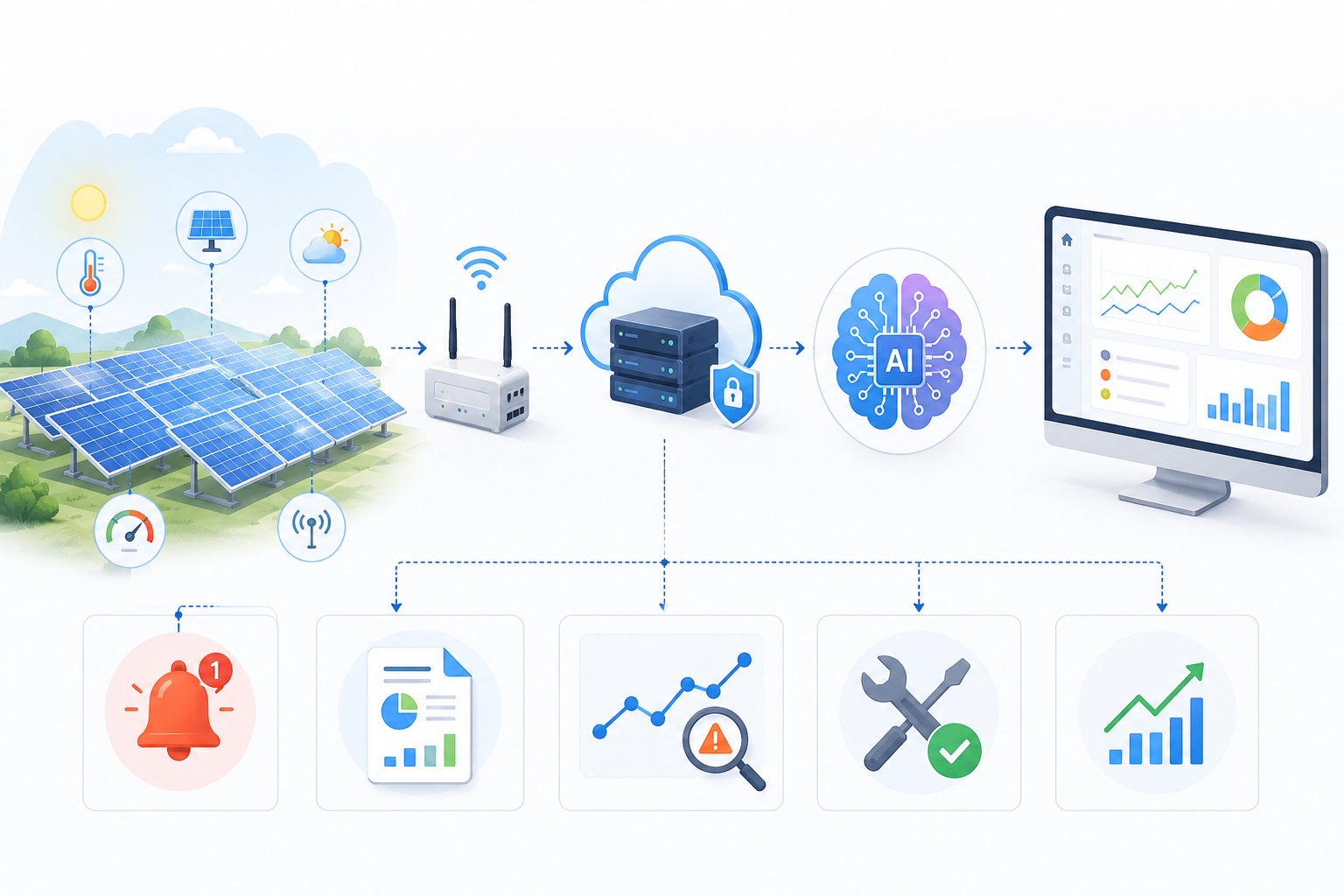
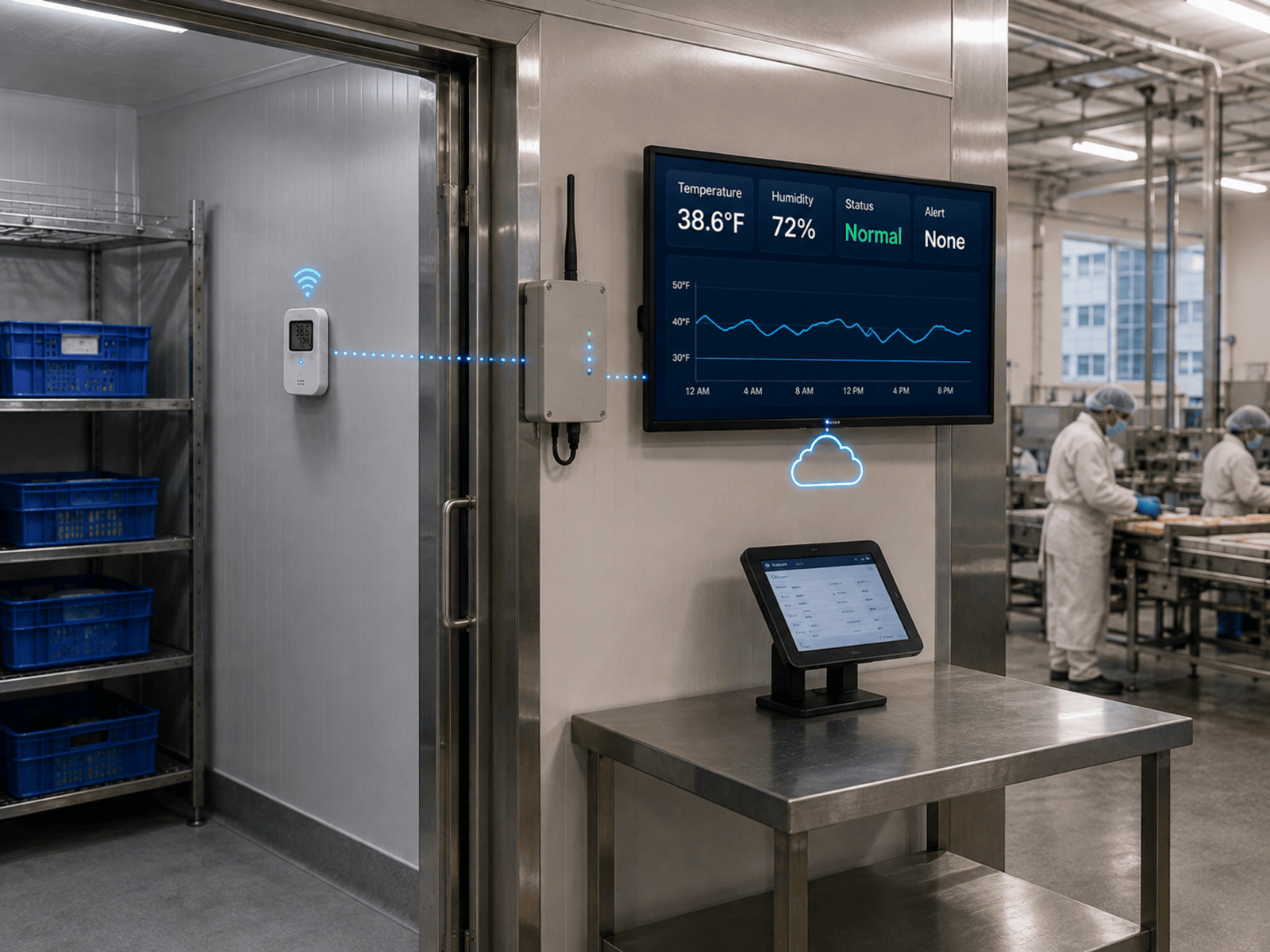
- Sensor placement — wireless temperature sensors (and sometimes humidity sensors) are installed in coolers, freezers, receiving docks, and transport units.
- Data transmission — each sensor reports back to a gateway on a set interval, typically every few minutes.
- Cloud logging — the gateway pushes readings to a cloud dashboard, where they're stored and visualized over time.
- Alerting — if a reading crosses a set threshold, the system sends an alert immediately instead of waiting for the next manual check.
That's the core shift with real-time temperature monitoring from someone having to notice a problem to the system flagging it the moment one starts.
For plants weighing this out, deployment usually falls into one of two paths. A retrofit adds sensors to existing refrigeration and storage units without touching the underlying equipment, which is generally the faster route. A new-build approach integrates monitoring directly during a facility upgrade or expansion, allowing tighter integration but taking longer to plan. Most food processing plants we've seen start with a retrofit on their highest-risk zones and expand from there — a pattern that holds across manufacturing environments generally, not just food.
From Alerts to Predictions - Where AI-Driven Analytics Comes In
Basic sensors solve the visibility problem. They tell you what's happening right now and flag it when something's wrong. What they don't do on their own is tell you a problem is coming before it shows up in the data as a violation.
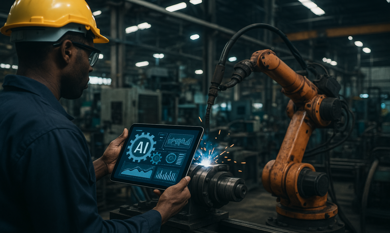
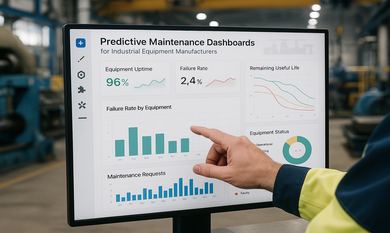
That's where AI-driven IoT analytics changes the picture. Instead of only comparing a reading against a fixed threshold, models trained on a plant's own historical data can learn what "normal" looks like for that specific facility including seasonal shifts, load changes during busy periods, and the gradual signs a compressor may be starting to wear. A slow upward creep in temperature over several days, for example, might never trip a hard alert threshold on its own, but a model trained on that unit's baseline behavior has a better chance of catching it early enough for maintenance to be scheduled before it becomes a bigger problem.
This is the layer that shifts monitoring from reactive to more preventive. A basic sensor tells you a cooler is currently out of range. A predictive model can help flag that a unit is trending in that direction, while there's still time to act; it's an early-warning aid, not a guarantee against every failure.
HACCP Compliance and Audit-Readiness
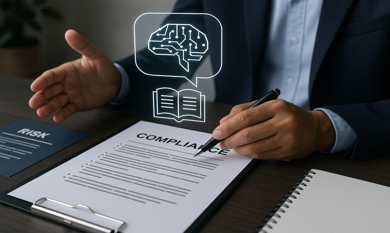
For any plant operating under a HACCP plan, documentation is central to passing an audit. Continuous IoT monitoring changes what that documentation looks like. Instead of a paper trail with gaps, you get a timestamped digital record of readings, alerts, and corrective actions.
That matters in two ways. During a routine audit, a complete, automatically generated log can save meaningful prep time and reduce the back-and-forth auditors sometimes run into with manual records. And when a deviation does happen, having a documented, fast corrective-action trail tends to support a better outcome than an incomplete one. None of this replaces a solid HACCP compliance plan, it makes the plan easier to demonstrate you're actually following.
Why This Matters for Chicago Food Processors Specifically
Chicago has a substantial concentration of food and meat processing operations, along with a significant cold-storage and logistics footprint tied to distribution across the Midwest. That combination means plenty of plants in the region run cold-chain operations at a scale where a single equipment failure or missed deviation isn't a minor inconvenience — it can mean a lost batch, a disrupted shift, or a strained client relationship.
For a regional operator, the cost of food safety recalls or a spoilage event goes beyond the immediate product loss. There's the time spent on a failed audit, the strain on a client relationship if a delivery doesn't meet spec, and the disruption of pulling a line down to investigate. Working with a partner that understands how a Midwest processing or distribution facility actually runs — shift patterns, seasonal volume swings, older facility layouts tends to matter more here than a generic, one-size-fits-all monitoring package would for Chicago food manufacturers.
Getting Started - Practical Rollout Notes
The plants that get the most out of this generally don't try to instrument every unit on day one. A phased approach tends to work better in practice:
- Start with the highest-risk zones first - typically walk-in coolers, freezers, and receiving docks, where excursions are most costly.
- Run the new system alongside existing manual checks for a short period to validate accuracy before retiring the paper log.
- Expand sensor coverage to secondary storage and transport once the core zones are proven out, supporting broader cold chain logistics visibility.
- Layer in predictive analytics once there's enough historical sensor data for the models to learn from — usually a few months in, aiding predictive maintenance for cold storage and food spoilage prevention over time.
This keeps the rollout manageable and gives QA teams time to build trust in the new data before relying on it fully.
How We Approach This
At Theta Technolabs, this kind of project usually starts the same way mapping out which zones in a plant carry the most risk, then building a monitoring setup around that instead of a blanket rollout. On the technical side, that typically means wireless IoT sensors and gateways feeding into a cloud platform like AWS IoT Core, with a machine learning layer built on top to handle the predictive side once there's enough historical data to work with. The exact stack shifts depending on what's already running in a plant, but that's the general shape of it.
If you're scoping something similar for a Chicago-area facility, you can reach us at sales@thetatechnolabs.com and we can walk through what a phased setup would look like for your plant.
Frequently Asked Questions
Can IoT sensors fully replace manual food safety inspections?
No. IoT monitoring handles continuous temperature and condition tracking far better than manual checks, but regulatory inspections and human oversight still play a role in a complete food safety program.
How quickly do IoT systems detect a temperature deviation?
Most systems check readings every few minutes and trigger an alert once a threshold is crossed, compared to manual checks that might only happen a few times per shift.
Do IoT monitoring systems help with HACCP audits?
Yes. Continuous digital logging creates a timestamped record of temperatures, alerts, and corrective actions, which can meaningfully reduce the prep work involved in a HACCP audit.
What's the typical starting point for a Chicago plant adopting this?
Most plants begin with a retrofit of their highest-risk cold storage zones — walk-in coolers and freezers — before expanding coverage to transport and secondary storage.
How does AI improve on basic sensor alerts?
Basic sensors flag a problem once it crosses a fixed threshold. AI models learn a facility's normal operating patterns and can help catch slow trends, like a compressor gradually losing efficiency, before they turn into a full deviation.


.png)



.png)




















.png)
.png)




.png)
.png)
.png)
.png)


.png)
.png)
.png)
.png)

.png)







.png)