Large hospitals in Dallas are under pressure to manage rising admissions, discharge delays, emergency department congestion, and limited bed visibility across departments. For Dallas hospital executives, the bottleneck isn't just a lack of physical beds; it is the latency between a patient’s medical clearance and the administrative 'green light' that triggers housekeeping and transport.
With the right implementation, hospitals can combine real-time bed tracking systems, patient admission forecasting, discharge prediction, and operational rules to support faster decisions and better patient flow.
For multi-specialty corporate hospitals, this creates a more proactive way to manage occupancy, reduce ER delays, and improve hospital resource planning.
Operational Challenge
Bed allocation is one of the most operationally sensitive issues in large hospitals. When bed turnover is not visible in real time, delays quickly affect the entire care chain.
Common problems include:
- Delayed discharge updates that keep beds marked unavailable longer than necessary
- Limited coordination between admissions, nursing, housekeeping, and transport teams
- Emergency cases waiting because bed status changes are not reflected quickly enough
- Peak admission periods that overwhelm manual planning teams
- Bed assignment mismatches based on specialty, infection control, or clinical priority
- Lack of forecasting for scheduled discharges and likely incoming admissions
For Dallas hospitals dealing with complex patient volumes, these issues can increase ER crowding and reduce operational efficiency. Many organizations still depend on manual spreadsheets, phone calls, or siloed systems that cannot support hospital workflow automation at scale.
This is why interest is growing in hospital bed allocation AI Dallas, predictive discharge planning hospitals, and AI hospital capacity optimization. The goal is not to remove human judgment, but to give hospital teams better visibility and earlier signals so they can act before bottlenecks worsen.
How the Solution Can Be Implemented
A practical implementation usually starts with operational data, not with a full platform overhaul. Hospitals can build predictive bed allocation in phases.
1. Connect core operational data sources
The first step is integrating bed status, admissions, discharge activity, housekeeping updates, transfer requests, and patient flow data from EHR, HIS, ADT, and facility systems. This creates a live operational layer for hospital resource utilization AI.
2. Build forecasting models
AI models can then analyze historical and current patterns to estimate:
- likely discharges by unit and time window
- expected admissions from ER, surgery, and scheduled procedures
- average turnover times by department
- bed demand pressure by specialty or acuity
This supports patient admission forecasting and helps hospitals plan capacity several hours ahead instead of reacting after congestion begins.
3. Apply rules-based allocation logic
Hospitals need more than prediction. They also need allocation rules based on gender, isolation needs, specialty requirements, clinical severity, and bed type, while aligning with administrative and insurance processes where applicable. AI can score likely placement options while respecting hospital policies and clinical constraints.
4. Trigger workflow automation
Once a bed is predicted to become available, alerts can be sent to housekeeping, nursing supervisors, transport teams, and admissions staff. This is where AI-driven healthcare solutions Dallas can create real operational value, by linking predictions with workflow actions rather than just displaying insights on a dashboard.
5. Deploy operational dashboards
Leadership teams need dashboards for occupancy trends, delay sources, expected bed releases, ER queue pressure, and unit-level performance. These dashboards can support both daily operations and capacity planning meetings.
6. Improve through feedback loops
The system should be tuned continuously using actual discharge times, admission patterns, and exception cases. This helps improve model quality and supports better predictive analytics hospital operations over time.
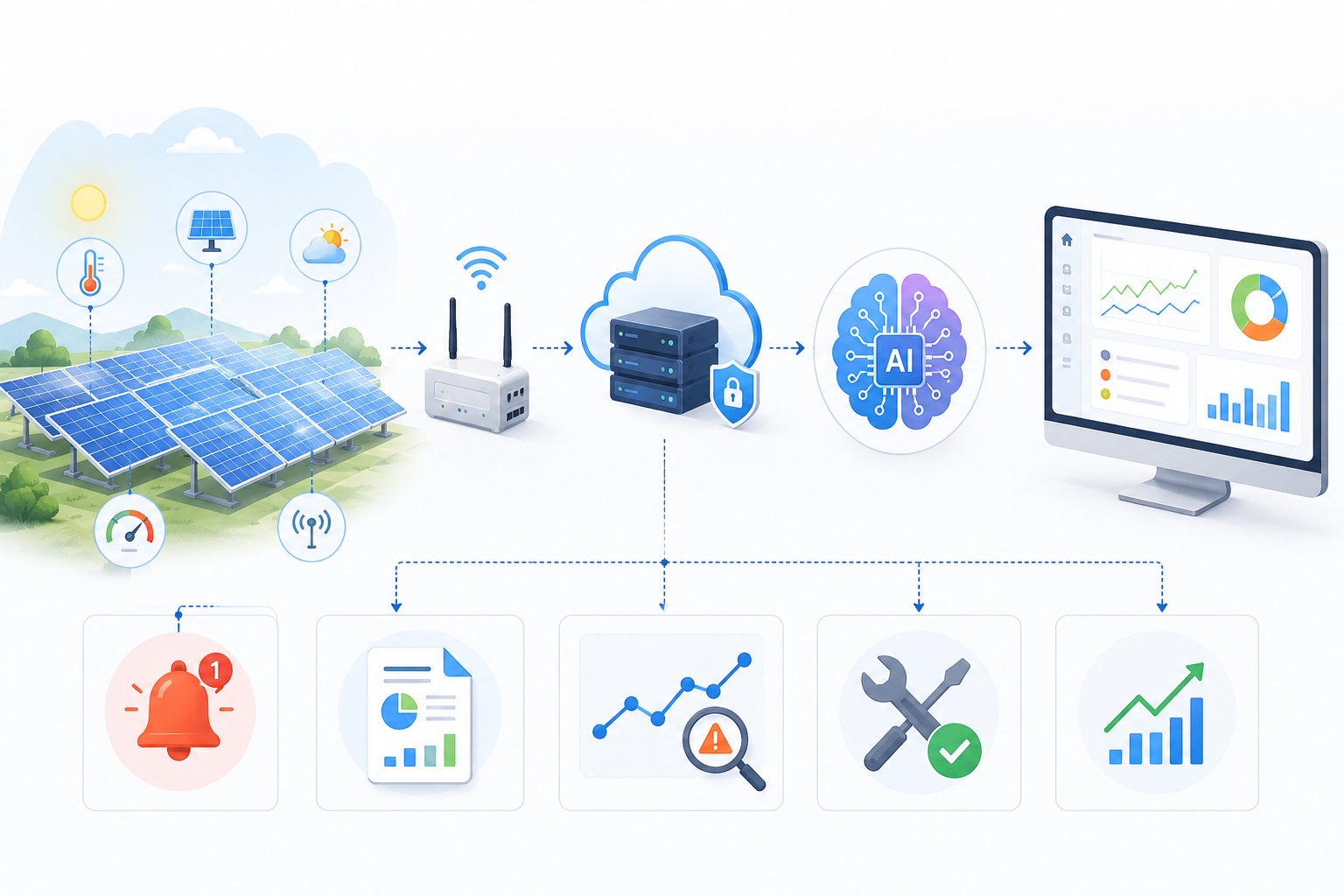
Figure: AI predictive bed allocation workflow showing real-time data integration, forecasting, orchestration, and hospital capacity dashboards
Key Capabilities
A hospital-ready bed allocation solution should include several functional layers.
Predictive discharge intelligence
This module estimates which patients are likely to be discharged within upcoming time windows. It supports predictive discharge planning hospitals by helping teams prioritize reviews, approvals, and preparation tasks.
Bed availability and turnover monitoring
This component connects real-time bed tracking systems with turnover status, cleaning progress, transfer readiness, and unit-level occupancy.
Admission demand forecasting
Hospitals need to estimate demand from ER arrivals, elective procedures, ICU transfers, and seasonal peaks. This helps with AI hospital bed utilization Dallas planning.
Priority-based allocation engine
This engine matches available and soon-to-be-available beds with patient needs using operational rules and predicted urgency.
Delay and bottleneck alerts
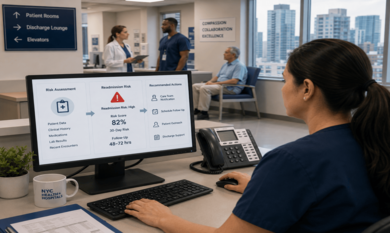
When discharge, cleaning, or transport delays affect capacity, the system can notify operational teams early. This is especially useful for AI reducing ER wait times and improving escalation workflows.
Executive visibility dashboards
Leadership dashboards can show occupancy, turnover speed, bottlenecks, pending discharge counts, and pressure points across departments.
Technology Stack
For implementation, the architecture should remain practical, secure, and interoperable.
A typical setup can include:
- EHR and hospital information system integration through APIs or HL7/FHIR interfaces
- ADT feeds for real-time patient movement
- Data pipelines to centralize bed, admission, and discharge events
- Cloud or hybrid infrastructure for model processing and dashboard delivery
- Machine learning models for discharge prediction, admission load prediction, and bed demand scoring
- Workflow engine for task routing to housekeeping, transport, and bed management teams
- BI dashboards for hospital command center visibility
For a multi-site environment, hospital capacity software Dallas deployments should also support role-based access, department-level views, and integration with existing command center processes.
Hospitals evaluating modern capacity operations may also consider AI emergency bed allocation features for critical surges, especially in emergency or seasonal demand periods. In these setups, AI helps rank bed options faster, while staff retain approval control. By utilizing HL7 FHIR R4 standards, the system can support near real-time, bi-directional updates so that changes in one interface are reflected across connected operational systems.
Commercial Impact
When implemented properly, predictive bed allocation can improve both operational and financial performance.
Potential benefits include:
- Faster bed assignment decisions
- Better utilization of existing bed capacity
- Shorter ER boarding times
- Fewer delays caused by poor discharge coordination
- Improved admission planning for scheduled and emergency cases
- Better visibility for administrators and capacity teams
For large hospitals, even a moderate improvement in bed turnover can have significant impact. The proof points in this use case are commercially meaningful: improved patient flow, fewer ER delays, and based on observed implementations in multi-specialty environments, integrating EHR data with predictive triggers can significantly improve bed utilization, depending on workflow design and adoption maturity, by capturing 'hidden capacity' during shift changes and peak ER hours.
This is why AI hospital capacity optimization is increasingly viewed as an operational investment, not just an analytics project.
Adoption Considerations
Healthcare AI adoption must be handled carefully. Bed management decisions affect patient flow, staff workload, and hospital experience, so trust matters.
Key considerations include:
- Data quality across EHR, ADT, housekeeping, and patient flow systems
- Governance for model outputs and human review
- Role-based access control for operational and patient-related data
- Audit trails for workflow actions and allocation decisions
- Bias checks to ensure recommendations do not create unfair operational patterns
- Clear distinction between operational support and clinical decision-making
Hospitals should also run controlled pilots before full deployment. A phased rollout across selected units can help validate workflow fit, data accuracy, and staff adoption.
Practical Scenario
Consider a 500-bed multi-specialty facility in North Dallas. During the winter flu surge, their ER 'boarding' times typically spike by 40% due to manual discharge tracking. Its bed management team relies on manual updates from nursing units, environmental services, and admissions. During peak periods, patients wait in the ER even when beds are likely to become available soon, because that visibility does not reach the right teams fast enough.
After implementing a predictive bed management layer, the hospital begins forecasting likely discharges by unit, identifies probable cleaning windows, and routes bed release alerts to the right operational teams. Leadership dashboards highlight expected capacity pressure by hour and department.
The result is not instant perfection, but a more coordinated operation. Bed turnover becomes more visible, admissions planning improves, and the organization starts using capacity more proactively instead of reacting to delays after they happen.
Why This Matters
For hospital administrators, operations heads, and CIOs in Dallas, the issue is larger than bed status. It affects patient satisfaction, emergency throughput, staff coordination, and the ability to scale without unnecessary expansion.
In large multi-specialty hospitals, fixed capacity is expensive. Improving utilization of existing beds can often deliver more immediate value than adding new infrastructure. That is why hospital bed allocation AI Dallas and predictive analytics hospital operations are becoming strategic priorities for healthcare leaders focused on flow, efficiency, and service quality.
This also matters for planners responsible for digital transformation. Capacity intelligence works best when it is tied to real workflows, not isolated dashboards. Hospitals that invest in integrated, workflow-connected models can build a stronger foundation for smarter operations.
Conclusion
Predictive bed allocation gives hospitals a practical way to improve patient flow, reduce delays, and make better use of existing capacity. When connected with EHR data, discharge signals, workflow automation, and live operational dashboards, it can support more reliable planning across admissions, transfers, and emergency demand.
For Dallas hospitals, this is not just a reporting improvement. It is a scalable operations strategy that can strengthen throughput, reduce avoidable wait times, and improve coordination across departments. With the right implementation path, AI development services in Dallas for healthcare can help hospital groups move from reactive bed management to a more intelligent and measurable capacity model. Teams like Theta Technolabs, with expertise across Web, Mobile, and Cloud solutions, can support healthcare organizations in designing these operational systems with the flexibility and trust modern hospitals require.
Explore the Right Solution
Looking to modernize bed allocation, discharge coordination, and patient flow operations for your hospital network in Dallas?
Theta Technolabs helps healthcare organizations build practical AI-powered operational systems backed by web, mobile, and cloud expertise. From predictive dashboards and workflow automation to integrated capacity planning tools, the focus stays on real hospital outcomes, not just technical deployment.
To discuss a tailored solution for smarter hospital capacity management, contact sales@thetatechnolabs.com.
Frequently Asked Questions
1. What is AI predictive bed management in hospitals?
AI predictive bed management uses hospital data to forecast bed availability, discharge timing, and admission demand. It helps operations teams make faster and better allocation decisions.
2. How can predictive bed allocation reduce ER wait times?
By forecasting upcoming bed availability and identifying bottlenecks early, hospitals can move patients faster from ER to appropriate units. This supports smoother patient flow and reduces boarding delays.
3. Does AI replace hospital bed management teams?
No. AI supports operational teams by improving visibility, forecasting, and workflow coordination. Final decisions can still remain with hospital staff and supervisors.
4. What systems need to be integrated for this solution?
Most implementations connect EHR, HIS, ADT feeds, housekeeping status, transfer workflows, and dashboard systems. Integration quality is critical for reliable predictions.
5. Is predictive discharge planning useful for multi-specialty hospitals?
Yes. Multi-specialty hospitals often face more complex patient movement and bed matching requirements. Predictive discharge planning can improve coordination across departments and units.
6. What are the biggest risks in implementation?
The biggest risks include poor data quality, weak workflow fit, low staff adoption, and overreliance on model outputs without governance. A phased rollout helps reduce these risks.
7. How long does it take to implement hospital capacity optimization with AI?
Typically 12 to 24 weeks. While timelines vary by infrastructure age, most Dallas hospitals can launch a pilot program in high-traffic units like Cardiology or the ER within 90 days. Many organizations begin with a pilot in selected units before expanding to wider operational deployment.






























.png)






.png)


























.png)

























.png)



.png)



.png)