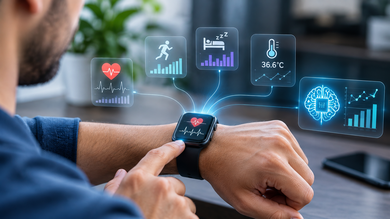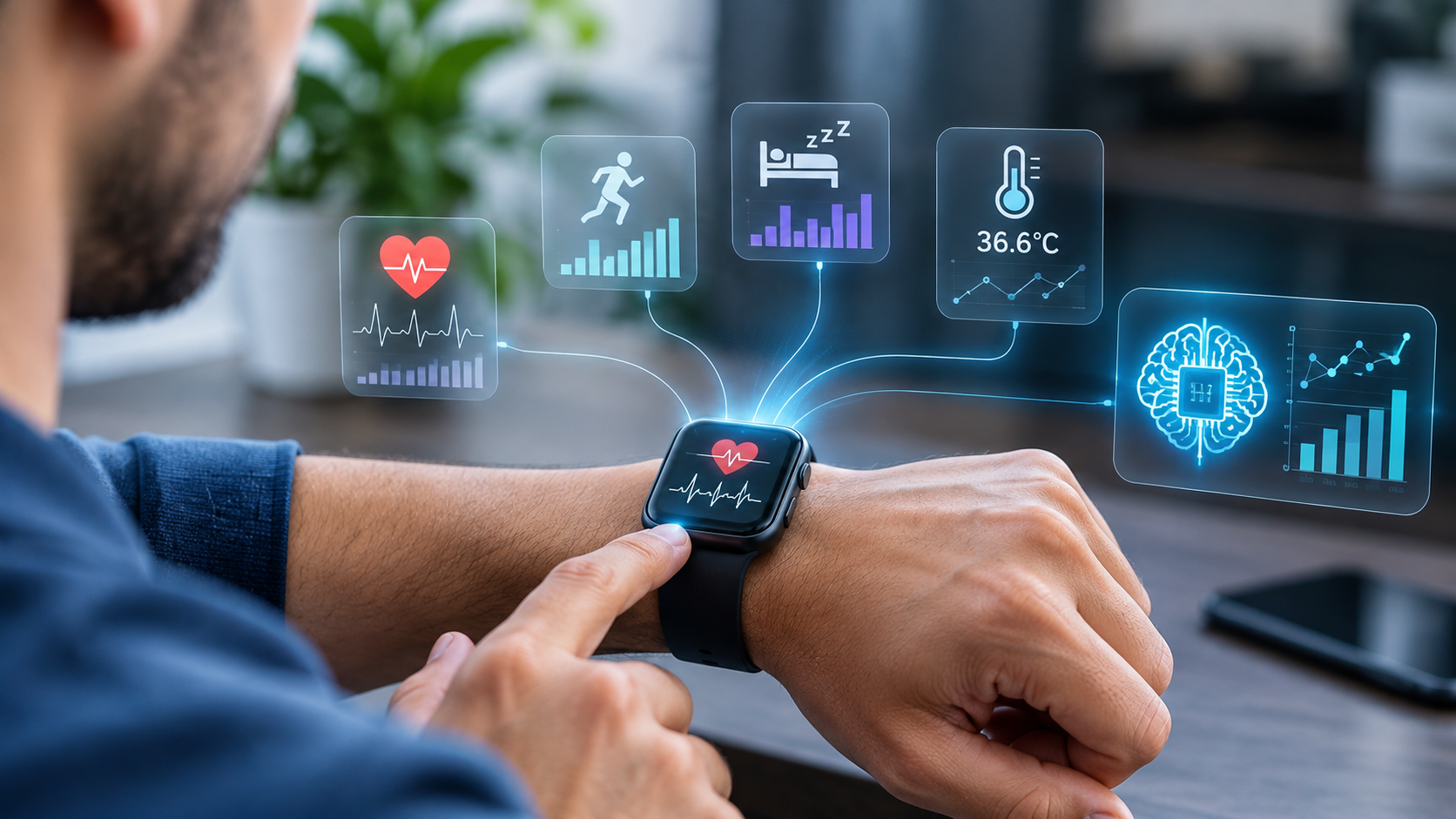


Wearable devices have become an important part of modern healthcare, fitness, and personal wellness. From smartwatches and fitness trackers to connected medical devices, these technologies continuously collect information about heart rate, physical activity, sleep patterns, body temperature, and other health indicators. However, collecting this information is only the first step. Understanding what the data reveals is where machine learning makes a difference.
Machine learning for wearable sensor data helps businesses transform continuous sensor readings into meaningful insights. By identifying recurring patterns, recognizing unusual changes, and analyzing historical information, machine learning models can support smarter applications and more personalized user experiences.
For healthcare technology companies, wearable device manufacturers, and fitness businesses across the USA, Machine Learning Services In USA can help transform raw wearable data into intelligent software capabilities.
Understanding Wearable Sensor Data and Its Growing Importance
Wearable sensor data refers to information collected through sensors embedded in devices worn on the body. These sensors capture physical movements, physiological measurements, and other signals that help applications understand user activity and health-related patterns.
Common examples include:
- Accelerometers: Measure movement, steps, and physical activity.
- Gyroscopes: Track body orientation and movement direction.
- PPG sensors: Measure pulse-related signals using light.
- ECG sensors: Capture the electrical activity of the heart.
- Temperature sensors: Monitor temperature changes.
- Motion sensors: Help recognize activities such as walking, running, and sleeping.
These devices generate continuous streams of information. However, raw readings do not always provide meaningful conclusions on their own.
For example, a fitness tracker may record heart rate throughout the day. By analyzing this information alongside activity levels and historical readings, a machine learning model can identify patterns that may not be immediately noticeable through basic tracking.
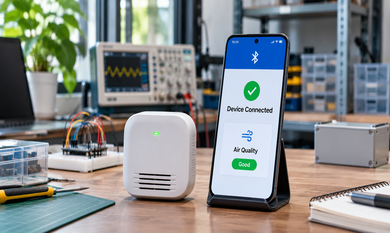
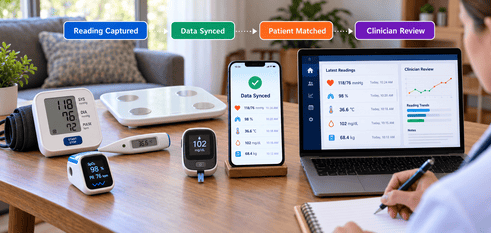
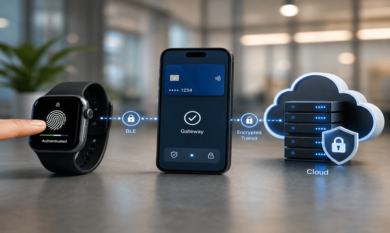
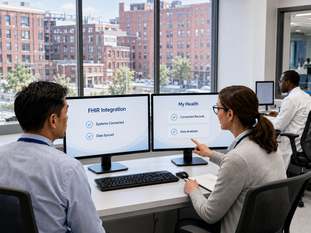
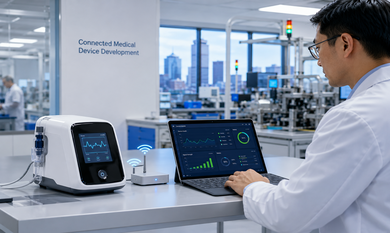
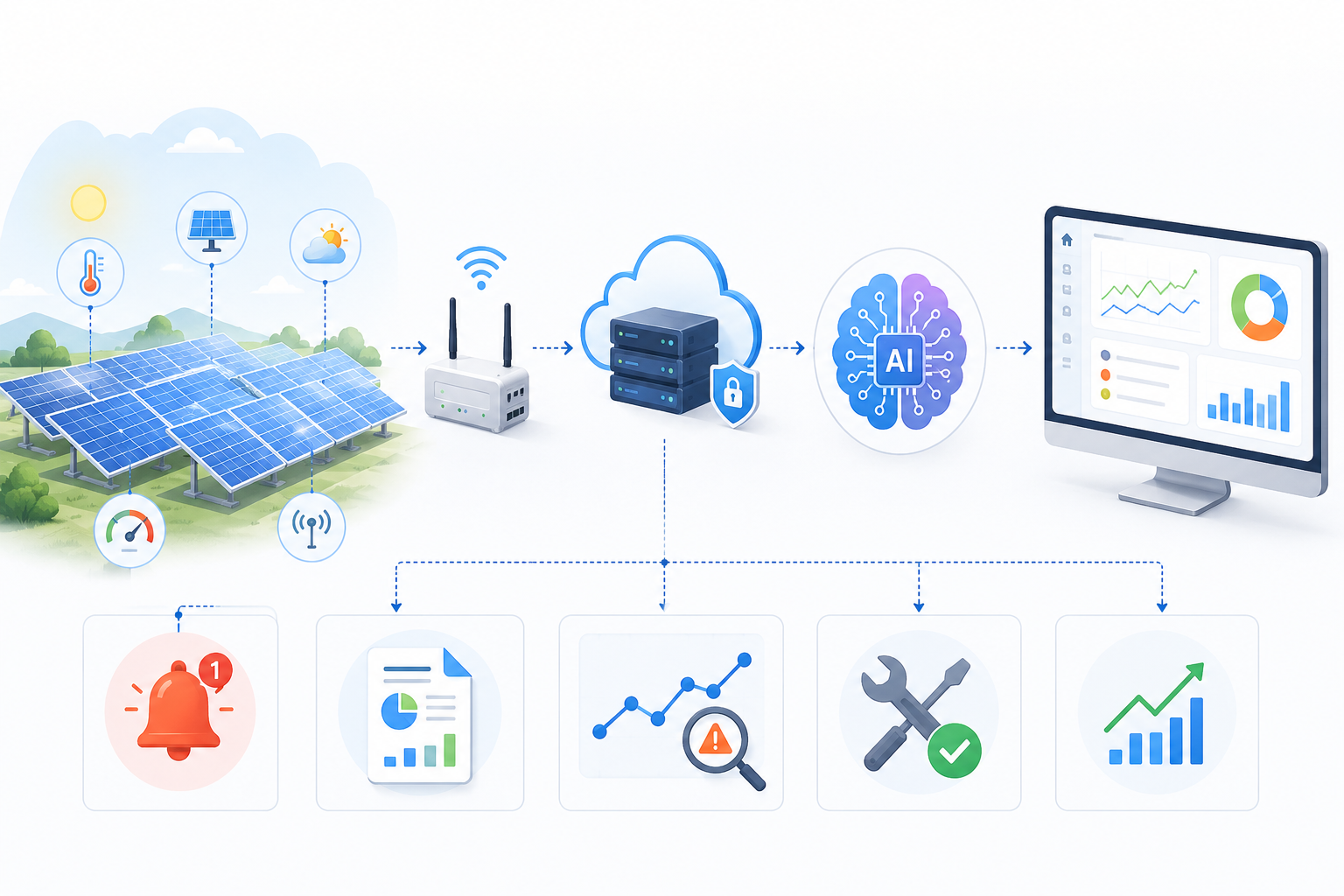
Reliable BLE medical device integration can also help connect compatible medical sensors with software applications, enabling data to move between devices, platforms, and dashboards for further analysis.
How Machine Learning Detects Patterns in Wearable Sensor Data
Machine learning analyzes large volumes of data to identify relationships, recurring behaviors, and unusual variations. Instead of relying entirely on predefined rules, models can learn from historical examples and recognize patterns in new data.
The process generally involves the following steps.
1. Data Collection and Preprocessing
The first step is collecting readings from wearable sensors and transferring them to the connected software platform.
However, sensor data may contain noise, missing values, inconsistent timestamps, or inaccurate measurements caused by device movement and poor sensor contact.
Data preprocessing helps address these issues through filtering, normalization, missing-value handling, and data transformation. This creates a more consistent dataset for machine learning analysis.
2. Feature Extraction
Once the data is prepared, relevant features are identified.
For example, a wearable device monitoring physical activity may generate movement readings at regular intervals. The software can extract features such as average movement intensity, activity duration, heart rate variations, and sleep intervals.
These features help machine learning models understand the information more effectively.
3. Model Training and Pattern Recognition
Machine learning algorithms analyze historical sensor data to learn patterns and relationships.
Depending on the application, developers may use classification, regression, clustering, or deep learning techniques.
For example, a model trained on activity data may learn to distinguish between walking, running, resting, and other movement patterns.
4. Anomaly Detection and Predictions
Once trained, the model can evaluate incoming sensor readings and identify unusual changes.
An anomaly detection model may flag an unexpected variation in heart rate or a significant change in an individual's usual activity pattern.
These insights can be used to generate notifications, support further analysis, or help users understand changes in their recorded data.
Machine Learning Algorithms Used for Wearable Devices
Different machine learning algorithms serve different purposes depending on the type of sensor data, application requirements, and desired outcomes.
Some commonly used approaches include:
Supervised Learning: Algorithms such as Random Forest, Support Vector Machines (SVM), and decision trees learn from labeled datasets. They can help recognize activities, classify movement patterns, and identify specific data categories.
Unsupervised Learning: Techniques such as K-means clustering help identify groups and recurring patterns in datasets without requiring predefined labels. This can be useful when analyzing previously unidentified user behaviors.
Deep Learning: Convolutional Neural Networks (CNNs) and Recurrent Neural Networks (RNNs) can learn complex patterns from sensor signals. They are useful for applications involving sequential data and multiple sensor inputs.
Time-Series Analysis: Wearable readings are collected over time, making time-series analysis important for understanding trends, fluctuations, and recurring behaviors.
The right approach depends on the data quality, processing requirements, available training data, and whether the application needs real-time analysis.
Real-World Applications of Machine Learning in Wearable Devices
Machine learning is expanding the capabilities of wearable technology across multiple industries.
1. Healthcare and Remote Patient Monitoring
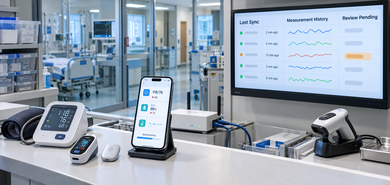
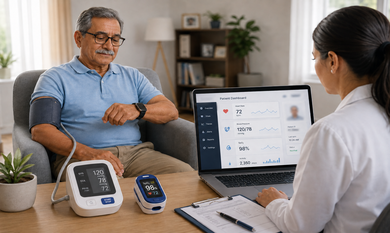
Healthcare applications can use wearable sensor data to monitor physiological measurements and identify changes over time.
Machine learning models can analyze heart rate trends, activity levels, and other available signals to flag unusual patterns for further review. This can support remote patient monitoring and help healthcare teams access additional information between appointments.
2. Fitness and Activity Recognition
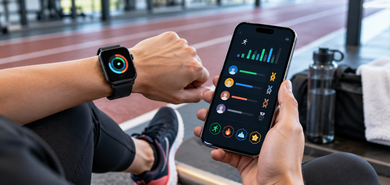
Fitness applications use machine learning to understand movement patterns, recognize different activities, and analyze exercise performance.
For example, a fitness platform can combine movement and heart rate data to provide personalized activity summaries and recommendations.
Businesses planning connected fitness products can explore wearable fitness platform development to understand how device data can be integrated into engaging digital experiences.
3. Sleep and Wellness Analysis
Wearable devices can collect information related to sleep duration, movement, and heart rate variations.
Machine learning can analyze these measurements to identify recurring sleep patterns and changes in daily routines. Applications can use these insights to provide personalized wellness summaries and help users better understand their habits.
Key Challenges in Wearable Sensor Data Analysis
Despite its potential, machine learning implementation in wearable technology comes with several challenges.
Data Quality and Accuracy: Sensor readings may be affected by movement, inconsistent device placement, or connectivity issues. Proper preprocessing and signal quality checks are important for reliable analysis.
Data Privacy and Security: Wearable devices can collect sensitive personal information. Businesses need appropriate data protection measures, secure integrations, and access controls to protect user information.
Real-Time Processing: Continuous sensor streams require efficient data processing. Depending on the application, analysis may happen on the device, a connected smartphone, or cloud infrastructure.
Integration and Scalability: Connecting different wearable devices, sensors, APIs, and existing software platforms can be complex. The software architecture must support reliable communication and future expansion.
Addressing these challenges requires the right combination of software engineering, data processing, machine learning expertise, and integration capabilities. Businesses exploring Machine Learning Services In USA should consider both their current software infrastructure and long-term product requirements.
How Machine Learning Development Services Help Build Smarter Wearable Solutions
Businesses developing wearable technology need software that can collect, process, and interpret sensor data effectively. Machine learning capabilities can be introduced into new products as well as existing software platforms.
As a software development company, Theta Technolabs helps businesses build and improve technology solutions through custom software development and machine learning implementation.
Depending on business requirements, this can include:
- Hardware and Software Integration: Connecting existing wearable hardware and sensors with custom applications, APIs, and cloud-based platforms.
- New Software Development: Building new web applications, mobile applications, dashboards, and machine learning-powered platforms for wearable technology products.
- Existing Software Enhancement: Upgrading current applications with machine learning models, predictive analytics, anomaly detection, and improved data processing capabilities.
- Custom Machine Learning Development: Developing models that analyze wearable sensor data, recognize patterns, and generate application-specific insights.
- Software Modernization and Scalability: Improving existing software architecture to support growing data volumes, connected devices, and evolving business requirements.
Through its machine learning development services, Theta Technolabs helps businesses explore practical ways to integrate intelligent data analysis into their software products.
Businesses looking for Machine Learning Services In USA can work with a technology partner to connect existing hardware with software, develop new wearable applications, or enhance current platforms with intelligent analytics.
Whether a company wants to build a new wearable software solution, connect existing hardware with an intelligent application, or upgrade an existing platform with machine learning, the right development approach can help turn wearable data into greater product value.
Conclusion
Wearable devices generate valuable information, but their real potential lies in how effectively businesses can analyze and use that information. Machine learning makes it possible to identify recurring patterns, recognize unusual changes, and generate meaningful insights from continuous sensor data.
For healthcare technology providers, wearable device manufacturers, and fitness businesses, these capabilities create opportunities to build smarter and more connected digital products.
As a web and app development company USA businesses can approach for software development requirements, Theta Technolabs supports custom software development, hardware-software integration, and existing application enhancement. Its Machine Learning Services In USA help businesses explore intelligent ways to improve wearable technology and build data-driven software solutions.
With the right software integration, custom development, and machine learning implementation, businesses can improve existing wearable solutions and create new applications that make sensor data more useful.
Frequently Asked Questions
1. How does machine learning analyze wearable sensor data?
Machine learning analyzes wearable sensor data through data preprocessing, feature extraction, model training, and pattern recognition. It helps identify recurring behaviors, trends, and unusual variations in information collected by connected devices.
2. Which machine learning algorithms are used for wearable sensor data analysis?
Common approaches include Random Forest, Support Vector Machines, K-means clustering, Convolutional Neural Networks, and Recurrent Neural Networks. The selection depends on the data type and application requirements.
3. Can machine learning detect abnormal patterns in wearable devices?
Yes. Anomaly detection models can identify unusual variations in sensor readings, such as changes in heart rate or activity patterns. These findings can be flagged for further investigation.
4. How can businesses integrate machine learning into existing wearable applications?
Businesses can integrate machine learning by connecting sensor data sources with existing software, preparing the data, developing or integrating suitable ML models, and displaying the resulting insights through application interfaces or dashboards.
5. Can a software development company build custom software for wearable devices?
Yes. A software development company can integrate existing hardware with custom applications, develop new wearable software platforms, and enhance existing applications with machine learning, analytics, and connected-device capabilities.