

The robo advisory market is growing, and investor expectations are rising. People want platforms that respond to market shifts in real time, deliver personalized insights, and support faster decisions. Traditional robo advisory systems handle basic rule-based tasks, but they fall short when portfolios need continuous monitoring and adaptive action.
This is where Agentic AI for portfolio management creates a meaningful difference. Agentic AI systems observe portfolio data, understand investor goals, evaluate risk signals, and support approved portfolio actions within defined boundaries. The result is a more capable form of autonomous portfolio management that helps platforms serve investors better and at scale.
What Is Agentic AI in Portfolio Management?
Agentic AI in portfolio management refers to AI systems that monitor portfolio data, evaluate risks, interact with financial APIs, and recommend or perform approved actions based on predefined rules. Unlike standard AI models that only analyze and report, agentic systems work through multi-step tasks.
Autonomous does not mean uncontrolled. It means controlled, rule-based, and monitored automation. Every action operates within boundaries set by the platform, the advisor, or the investor. The system acts as an intelligent assistant, not an independent decision-maker.
Why Robo Advisory Platforms Need Autonomous Portfolio Intelligence
The investment advisory space is more competitive than ever. Investors expect personalization, not generic allocations. Markets shift quickly, and manual reviews cannot keep pace. For robo advisory platform development teams, the challenge is scale: managing thousands of portfolios without growing advisory headcount proportionally is a real operational constraint.
AI in wealth management helps platforms move beyond static rule sets. Continuous risk monitoring, better-timed portfolio rebalancing, personalized insights, and consistent advisory workflows are practical outcomes. Autonomous portfolio management enables platforms to deliver quality services at scale.
How Agentic AI Works Inside a Portfolio Management System
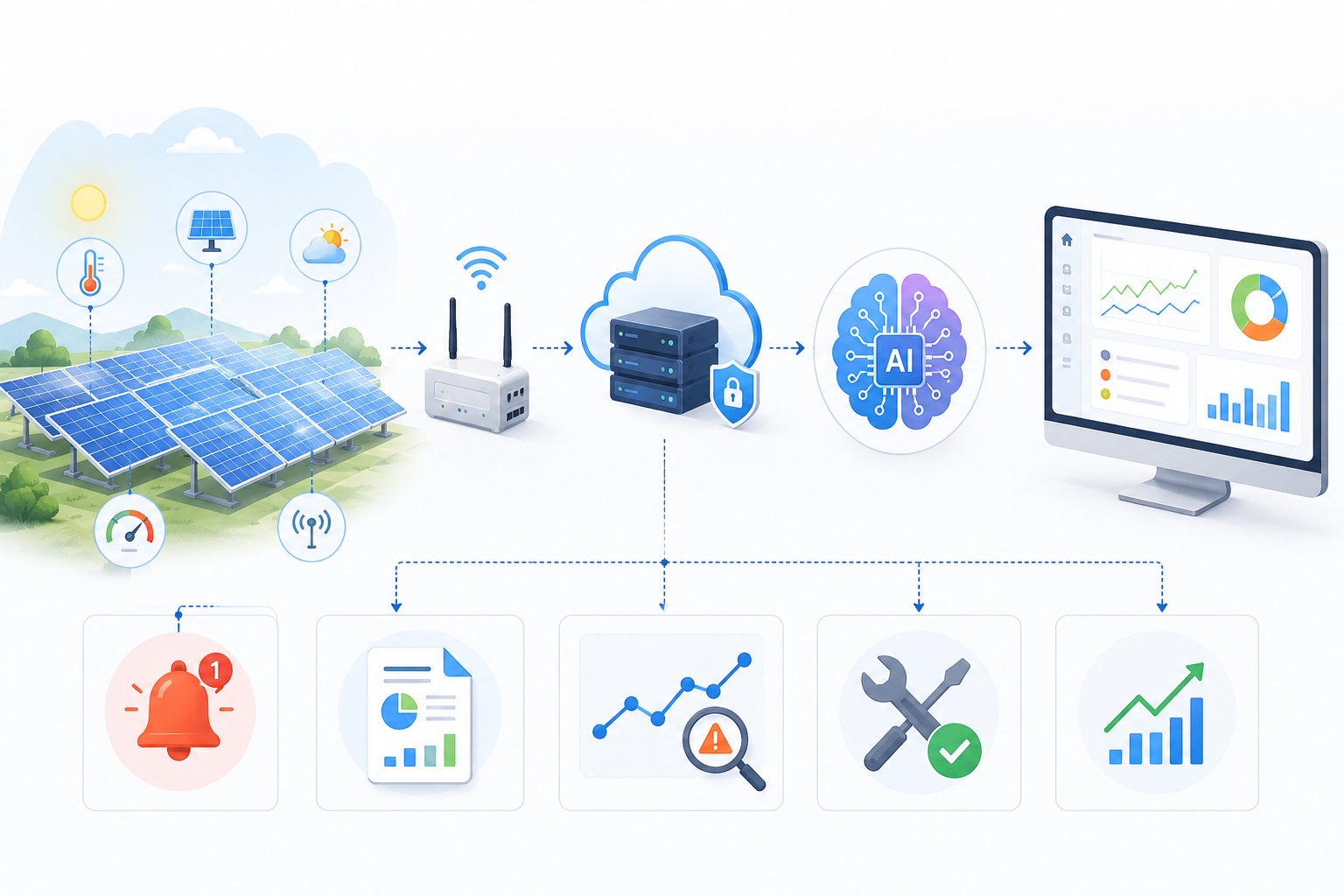
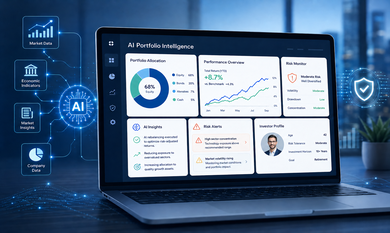
An AI portfolio management system follows a structured workflow. Investor profiles and risk appetites are collected at onboarding. Portfolio and asset data connect through secure financial data APIs. The system continuously monitors performance and market conditions, checking for allocation drift, asset exposure changes, and risk signals.
When a portfolio moves outside approved limits, the AI identifies rebalancing needs. Depending on platform rules, it may recommend actions to an advisor, trigger pre-approved workflows, or send personalized alerts to investors. All actions are recorded in compliance logs. This keeps advisors in control while reducing manual monitoring workload significantly.
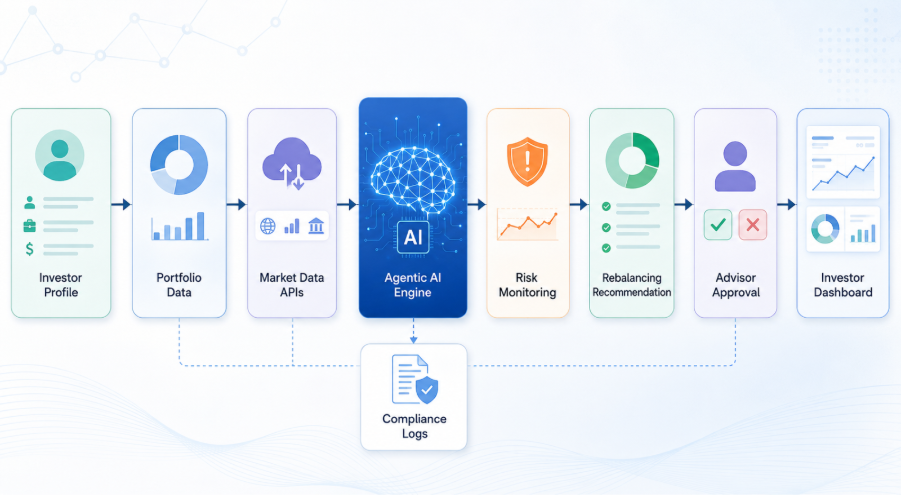
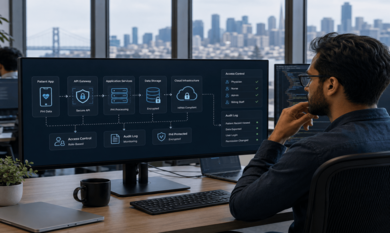
Figure: Agentic AI workflow for autonomous portfolio management in robo advisory platforms
Key Use Cases of Agentic AI for Robo Advisory Platforms
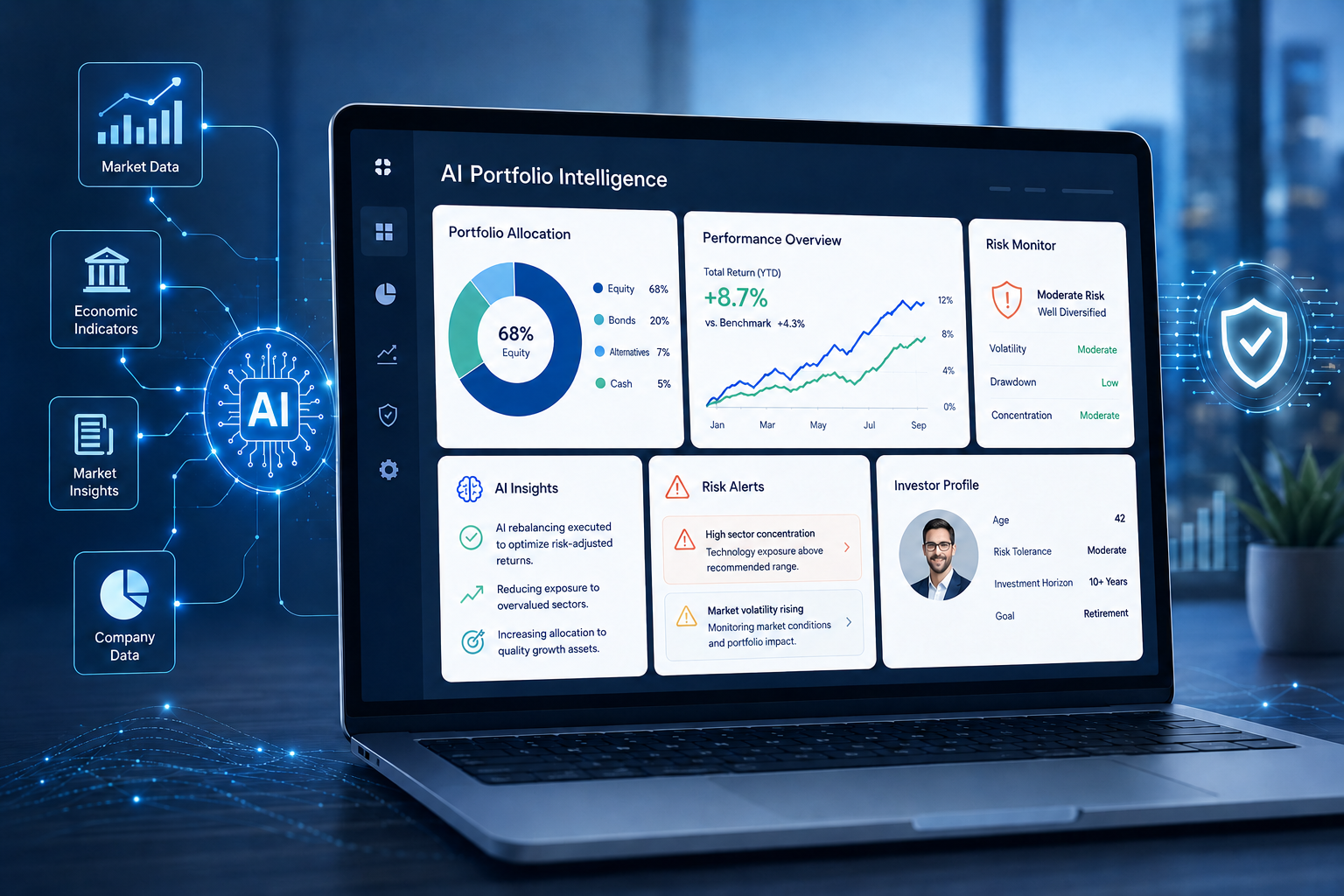
Portfolio rebalancing automation is one of the most valuable applications. The system monitors allocation drift in real time and triggers rebalancing when portfolios move outside set rules, improving timing and consistency over manual reviews.
Risk-based portfolio monitoring detects exposure changes, sector concentration risks, or volatility signals before they affect investor outcomes. Advisors receive alerts when portfolios approach defined thresholds.
Intelligent investment advisory becomes scalable when AI generates personalized insights based on individual goals, timelines, and holdings. Automated investor reporting saves advisor time without reducing communication quality.
Modern robo advisory platforms need secure and scalable fintech software development solutions that can support portfolio analytics, risk tracking, AI-driven insights, and investor personalization. API-based financial workflow automation connects portfolio data, market feeds, CRM tools, and compliance systems into one intelligent pipeline.
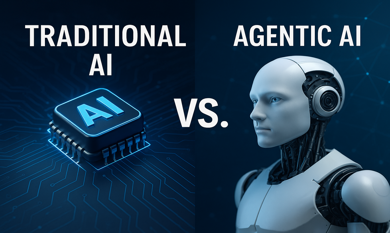
What Makes Agentic AI Different from Traditional Robo Advisory Automation?
Traditional robo advisory platforms follow fixed rules and remain largely static. They handle standard rebalancing schedules well but do not adapt to shifting inputs or reason through multi-step situations.
Agentic AI monitors changing data, evaluates multiple signals, and supports adaptive insights and approved actions. It generates personalized portfolio explanations rather than templated reports, adding intelligence and flexibility when designed properly.
Compliance, Security, and Human Control in AI Portfolio Management
Compliance and security are foundational in fintech AI. Agentic AI should not make uncontrolled financial decisions. Human approval must be included for high-risk actions. All recommendations and actions must be recorded in audit trails. Data privacy, investor consent, and transparency are essential.
Role-based access control ensures advisors, managers, and investors see only what is appropriate. Model outputs should be explainable where possible.
Autonomous portfolio management should be designed as controlled automation, where AI works within defined financial, risk, and compliance boundaries. Relevant regulations must be evaluated before any system reaches production.
Technology Stack Needed to Build an Agentic AI Portfolio Platform
Building this platform requires AI, data, and infrastructure working together. Core components include:
- AI and ML models
- Large language models for insight generation
- Portfolio analytics engine
- Market data APIs for real-time pricing
- Risk scoring models to evaluate exposures
- Secure databases
- Advisor and investor dashboards
- Compliance logging
- Role-based access control
- Integrations with trading, CRM, and reporting tools
Example Scenario
Consider a Houston-based fintech platform managing thousands of investor portfolios. Instead of advisors manually reviewing each one, the Agentic AI system monitors allocation drift, market signals, and risk rules daily.
When a portfolio moves outside approved parameters, the system identifies the issue, explains the reason, and routes it for advisor approval or executes a pre-approved workflow. Advisors focus on complex decisions rather than routine monitoring.
Business Benefits for Fintech Companies
Fintech companies building Agentic AI into portfolio management can expect faster portfolio reviews, reduced manual workload, better investor personalization, and improved platform scalability.
Real-time visibility keeps advisors and investors informed. Consistent workflows reduce missed signals. Better advisor productivity means more clients can be served without proportional team growth. These are operational improvements and do not guarantee investment returns or eliminate financial risk.
What Fintech Companies Should Consider Before Building This System
Before building, decision-makers should address key questions: What data sources are available and reliable? Will AI recommend actions only, or also execute pre-approved ones? Which decisions require mandatory human approval? How will risk rules be defined and updated? How will compliance logs be maintained? How will investors understand AI-generated recommendations? How will data security be managed as the platform scales?
Partnering with an experienced AI development company for fintech portfolio management helps teams address these questions before design begins.
Frequently Asked Questions
What is Agentic AI in portfolio management?
Agentic AI refers to AI systems that monitor portfolio data, evaluate risk signals, and support approved actions based on predefined rules, always operating within defined boundaries.
How does Agentic AI help robo advisory platforms?
Understanding how Agentic AI helps robo advisors manage portfolios starts with intelligent automation. These systems reduce manual monitoring, surface risk signals faster, support timely rebalancing, and generate personalized insights at scale.
Can Agentic AI automate portfolio rebalancing?
Yes. It supports portfolio rebalancing automation by monitoring drift in real time and triggering pre-approved workflows when portfolios move outside defined parameters, improving timing and consistency.
Is autonomous portfolio management safe for fintech platforms?
When designed with human approval controls, audit logging, data privacy protections, and clear risk boundaries, it is a practical and responsible approach for fintech platforms.
Can Agentic AI replace financial advisors?
No. It supports advisors, not replaces them. Monitoring, reporting, and routine automation are system responsibilities. Human judgment and client relationships remain with licensed professionals.
Conclusion
Agentic AI is reshaping what robo advisory platforms and autonomous portfolio management can deliver, moving platforms from passive tracking to intelligent, controlled action.
For fintech companies in Houston and beyond, this is a practical evolution available today. With expertise in Web, Mobile, Cloud, and generative and agentic AI services, Theta Technolabs helps fintech businesses design and deliver the next generation of intelligent portfolio management systems.
Ready to Build Your AI-Powered Portfolio Management Platform?
Theta Technolabs helps fintech businesses build secure, scalable robo advisory and autonomous portfolio management platforms using AI, Web, Mobile, and Cloud technologies. Whether starting from scratch or evolving an existing platform, our team supports your roadmap from strategy to deployment.
Contact us today: sales@thetatechnolabs.com















.png)





.png)


























.png)
























.png)


.png)



.png)