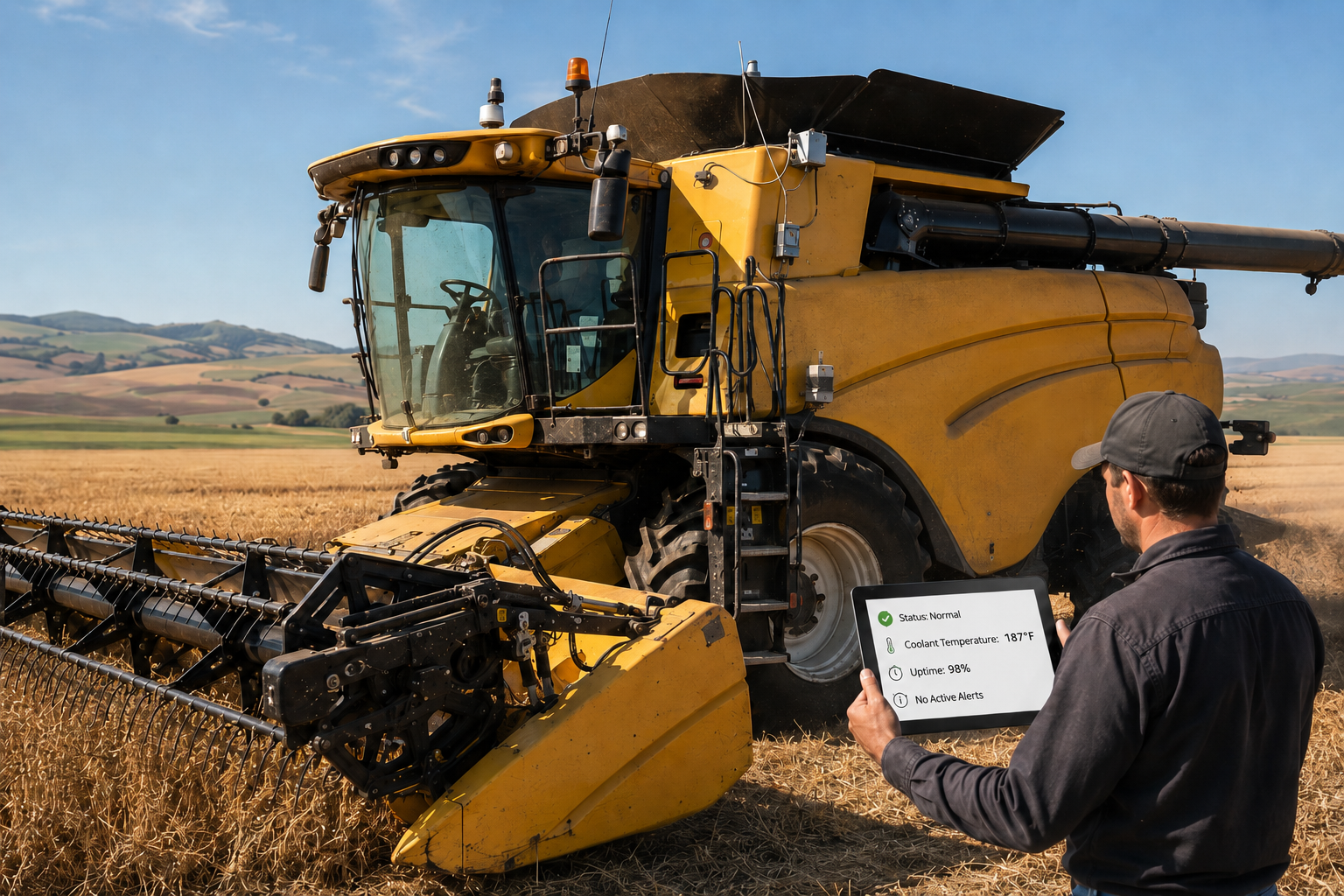


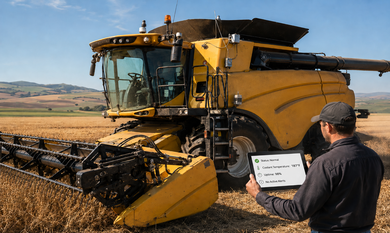
For a farmer, the harvest window is a few unforgiving weeks where every working hour counts. A combine that goes down for two days in mid-October is not an inconvenience, it is lost crop and lost revenue. And increasingly, when that machine fails, the farmer's first question is not only who fixes it, but also why the equipment did not warn them first. That question lands on you, the maker. Remote equipment monitoring for agricultural equipment has moved from a premium add-on to something buyers quietly expect, and for makers building agriculture software solutions into their machines, it is becoming a deciding factor in whether a customer stays loyal.
Why Harvest-Window Downtime Is the Maker's Problem, Not Just the Farmer's
Off-season, a breakdown is a scheduling problem. During harvest, it is a financial one. The window is short, weather-bound, and does not reopen, so a failure at the wrong moment can cost a farm far more than the repair bill itself. Reducing unplanned equipment downtime in that window is where connected machinery earns its keep.
What's changed is who owns the problem when a machine breaks down. Reliability used to end at the factory gate. Now that machines carry sensors and software, the maker's brand is tied to how the equipment behaves in the field, not just how it left the line. A customer who loses a day of harvest to a failure that was never flagged remembers the badge on the machine, and in a tight regional market that word reaches their neighbours fast. So the real question for makers is no longer whether to monitor, but how to reduce harvest-window downtime with remote monitoring in a way the customer actually notices in the field.
What Remote Equipment Monitoring Actually Does
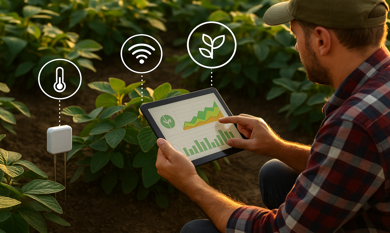
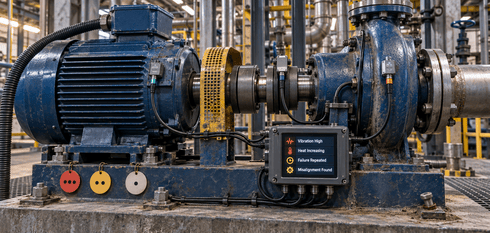
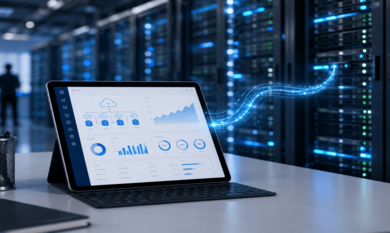
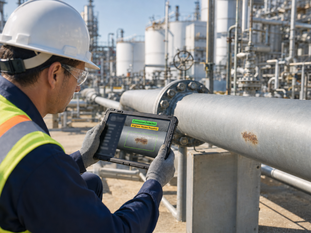
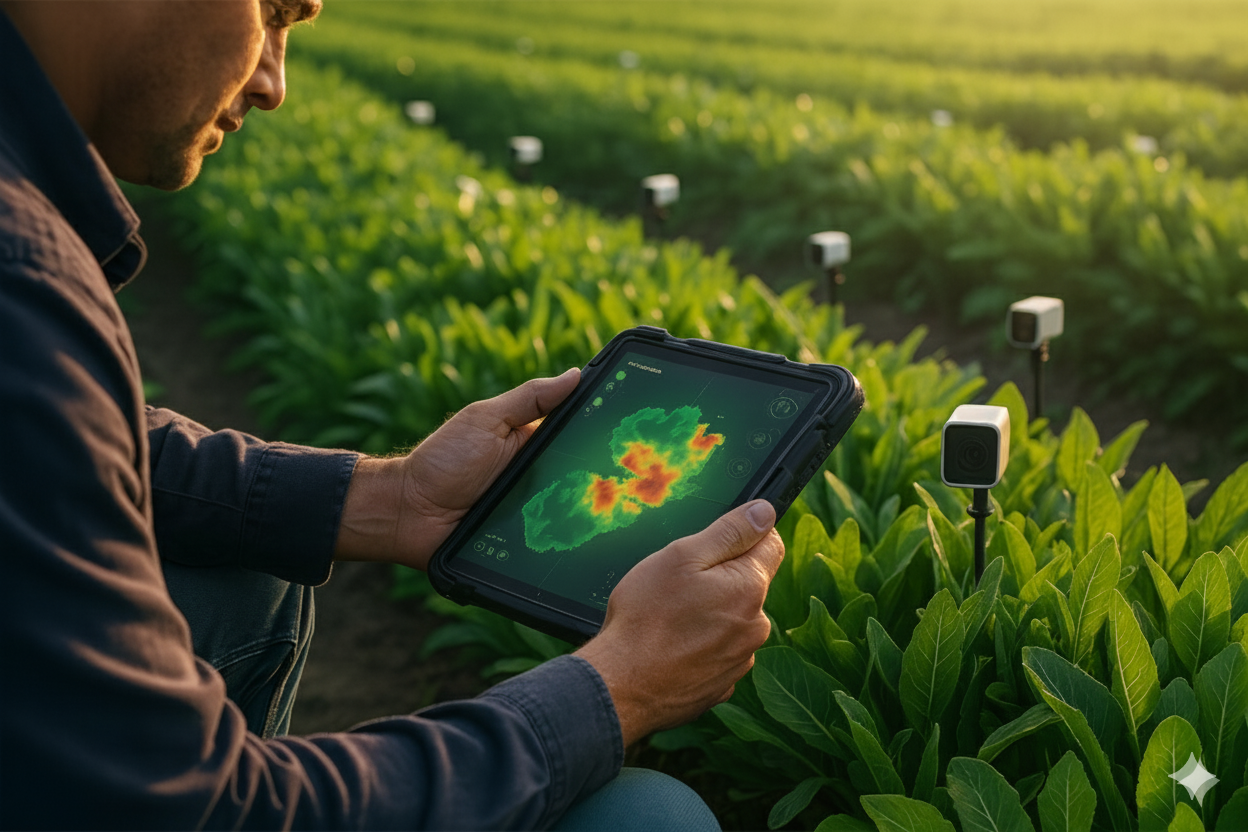
Remote equipment monitoring is the continuous collection of operating data from a machine in the field, sent back to a platform where it can be viewed and acted on without anyone standing next to the equipment. It tracks things like engine hours, temperature, vibration, fuel use, and location and turns them into a live picture of machine health.
Three terms get blurred together, so it helps to separate them.
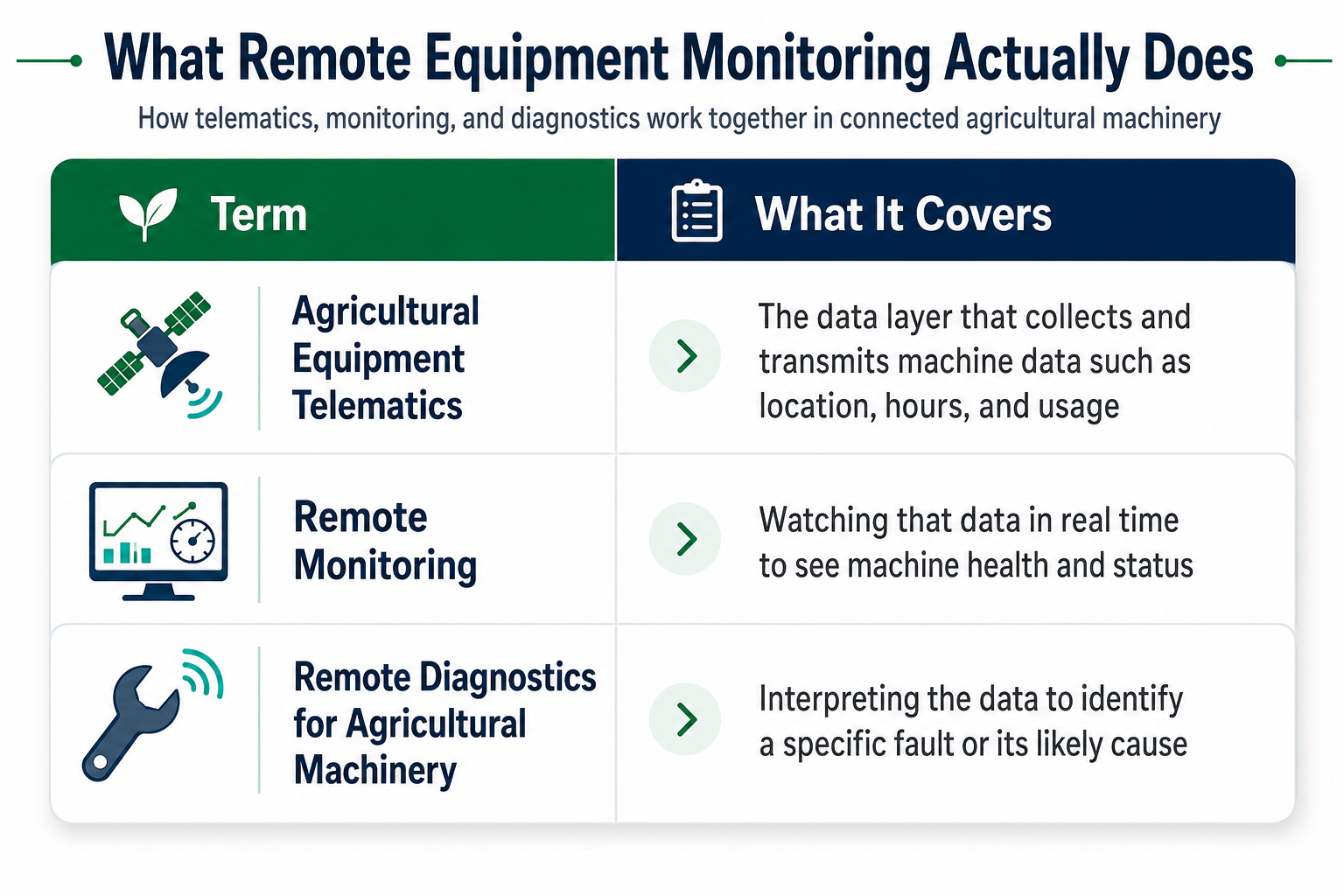
In practice they stack. Agricultural equipment telematics moves the data, monitoring watches it, and diagnostics explains what a worrying reading means. Get all three working together and you start catching problems early instead of reacting to them.
How Predictive Maintenance Turns Sensor Data Into Uptime
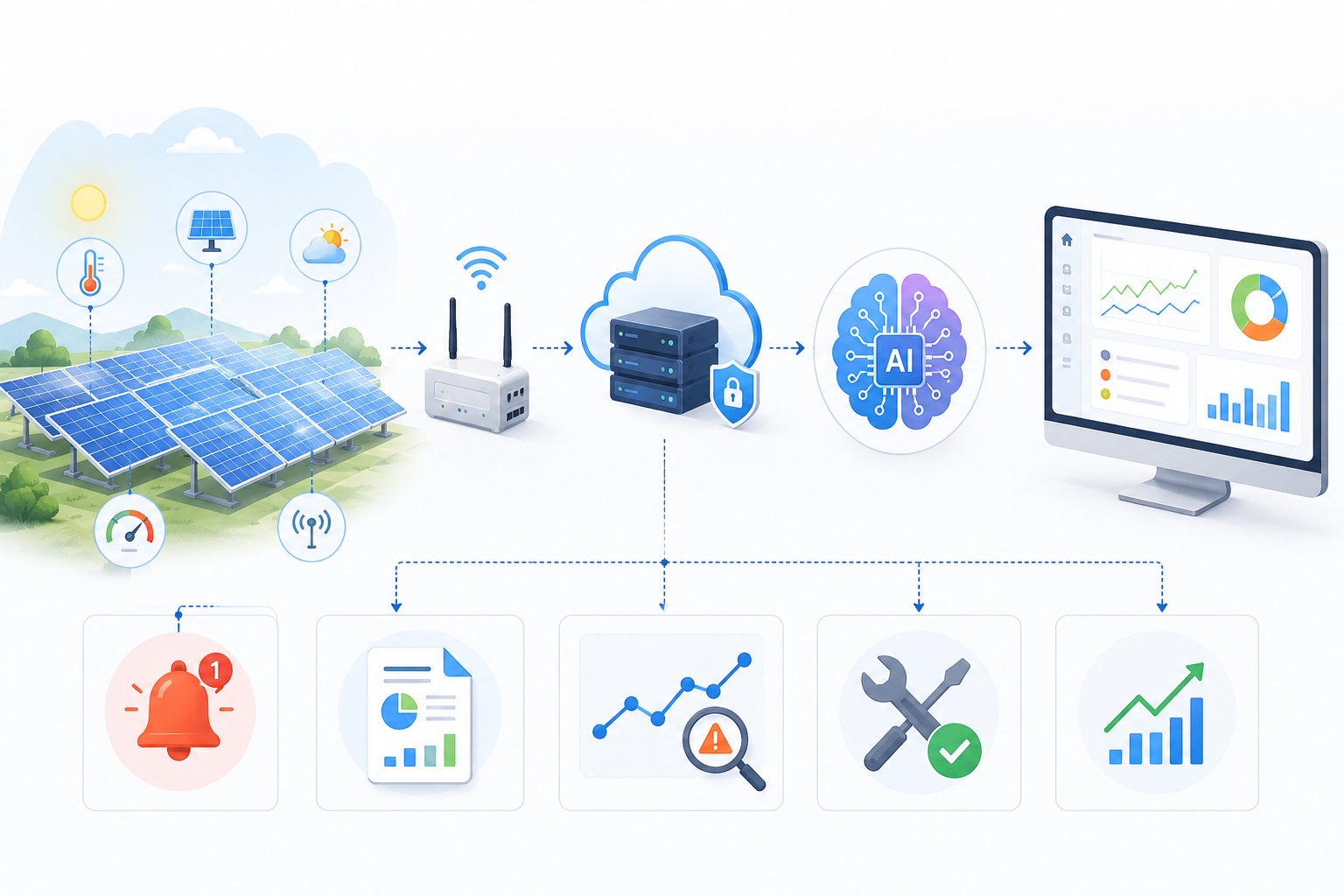
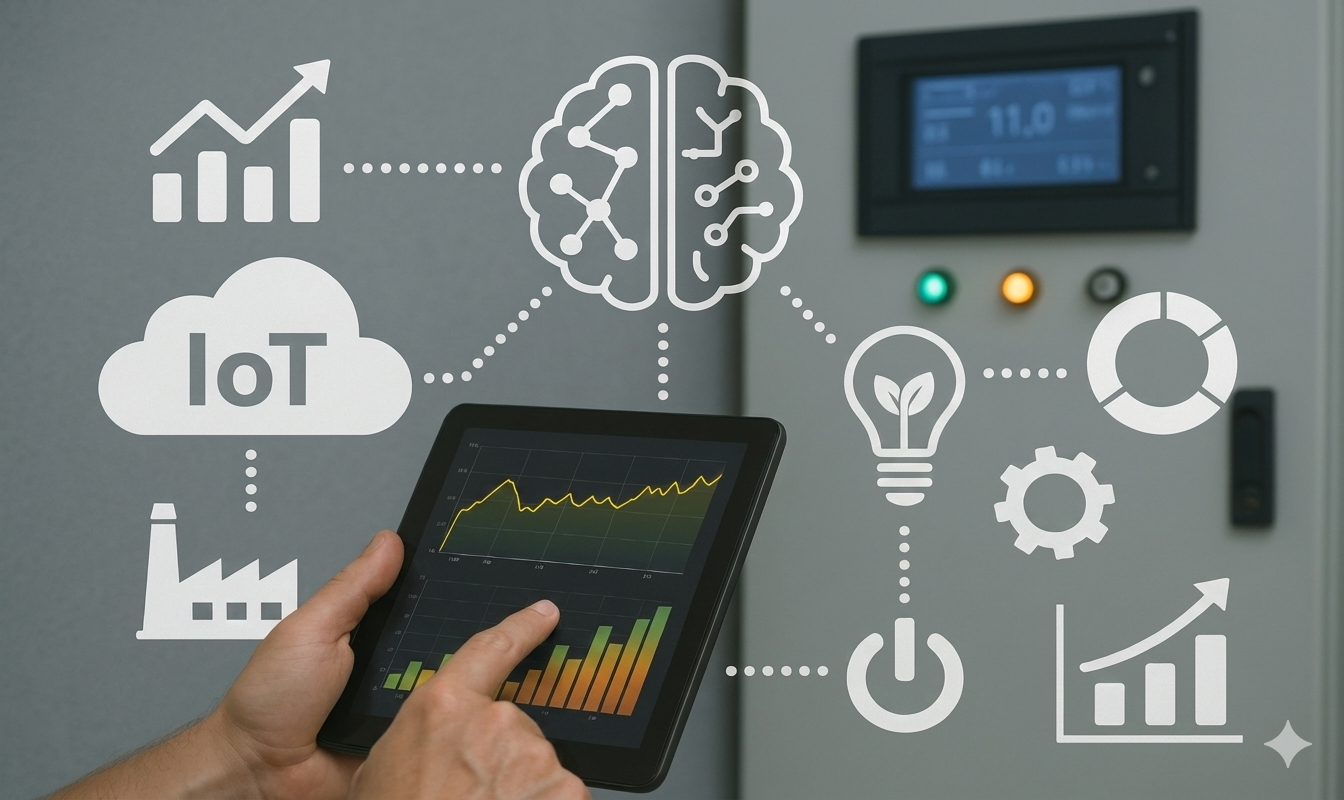
Monitoring tells you what is happening now. Predictive maintenance for farm equipment goes a step further and flags what is about to happen so a part can be replaced on a planned service day rather than failing mid-field. It works as a chain:
- Collect. IoT sensors for farm machinery capture readings like vibration, temperature, and oil pressure across the machine.
- Analyse. Software compares those readings against normal operating patterns and looks for drift or anomalies.
- Predict. When a pattern matches the early signature of a known failure, the system estimates that a component is wearing toward failure.
- Act. The maker or dealer alerts the customer to service the part before the harvest window, not during it.
This is the hard part. Turning raw sensor data into predictions people can trust, using AI-driven IoT analytics, is the difference between a system makers rely on and one that just throws off false alarms. Real makers already do this. Most of the major equipment manufacturers already build connected monitoring and predictive maintenance into their machines as standard. The takeaway is simple: the bar your customers compare you against has already moved.
The Connectivity Challenge in California's Fields
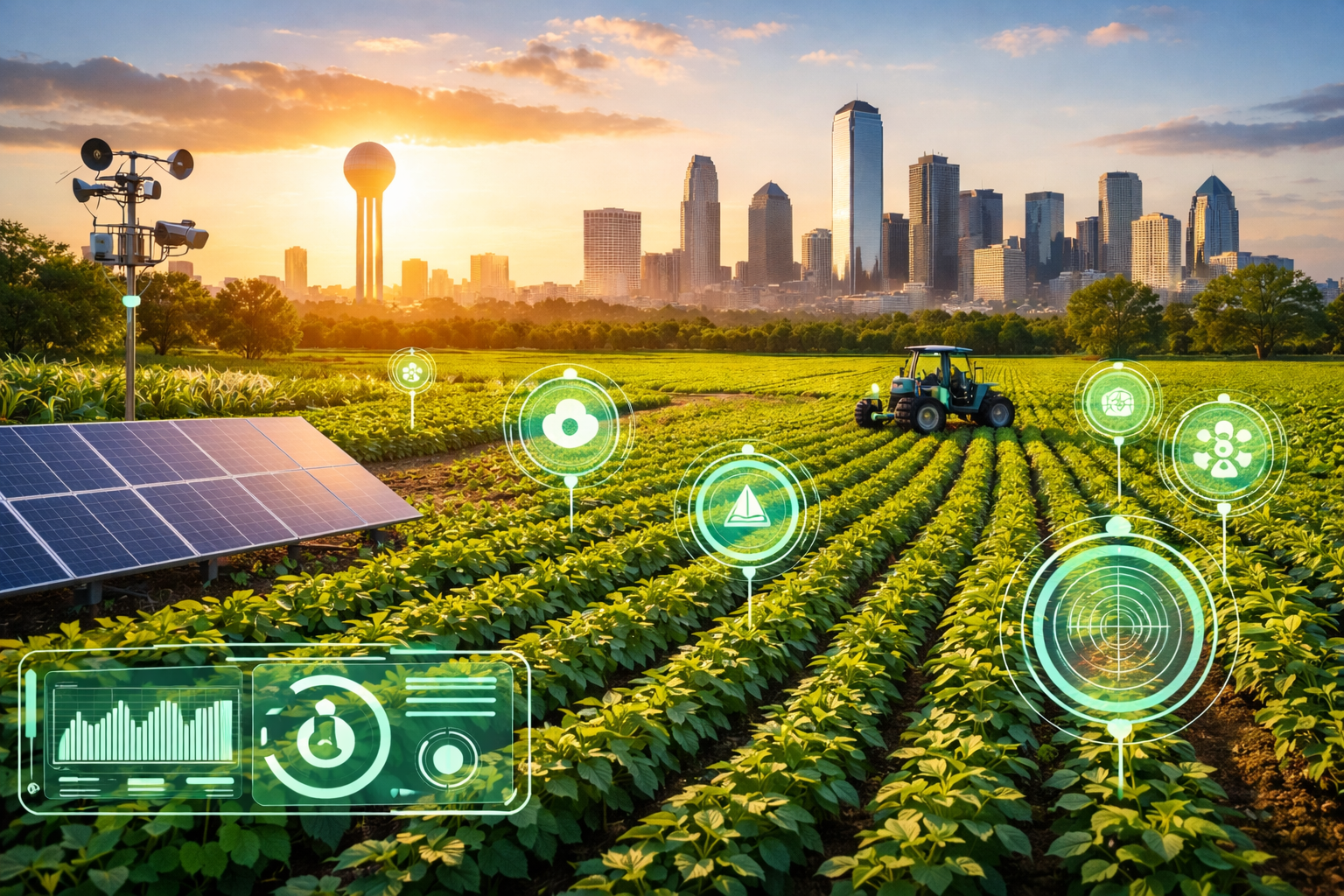
None of this works if the data cannot get off the machine. In the Central Valley and the farmland around the Bay Area, fields are large and cellular coverage is uneven, so connectivity is the constraint makers most often underestimate. The main options each carry a trade-off:
- Cellular (4G and 5G) is simple and inexpensive where coverage exists, but it drops out in the remote corners of large fields, which is often exactly where machines are working.
- Satellite covers those gaps and reaches the last acre, but it adds hardware cost and suits lower-frequency data better than constant streaming.
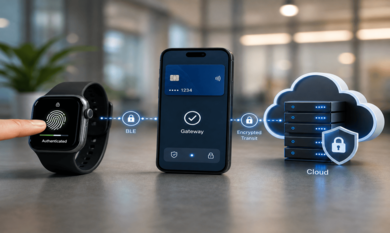
- Low-power links such as LoRaWAN and Bluetooth handle short-range sensor data efficiently, but they need gateways and a plan for carrying that data onward.
Most workable designs combine these rather than betting on one, and the right mix depends on the machine, the crop, and where it runs.
Build It In-House or Partner with a Development Team
For makers, the honest question is whether to build the system internally or bring in a partner. Both are valid, and it depends on what you already have.
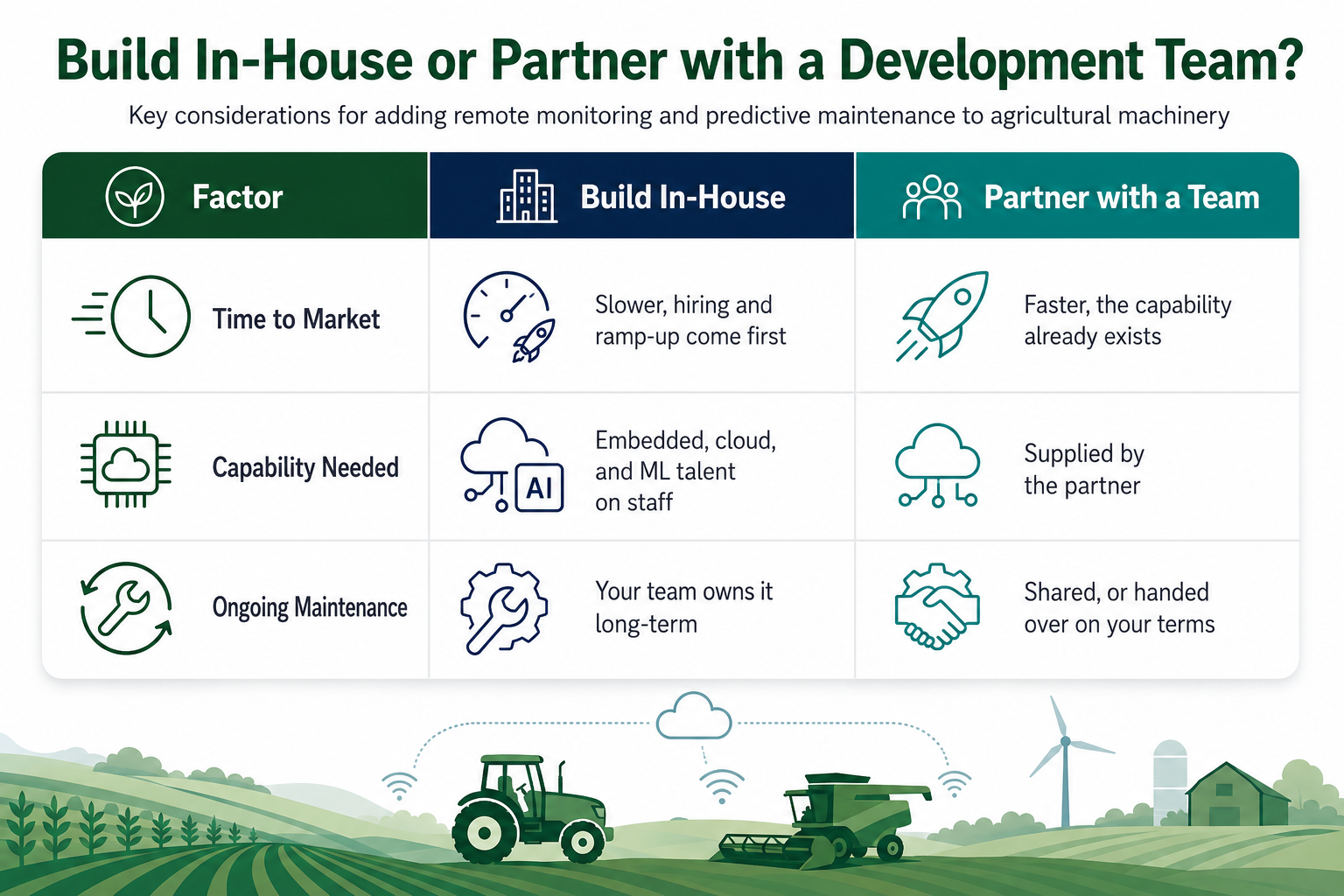
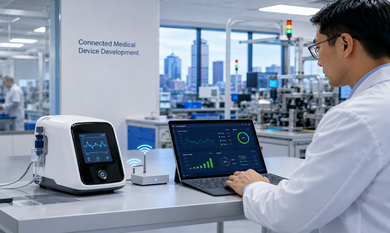
A large manufacturer with an embedded-systems group may rightly build. A smaller maker or an ag-tech startup usually does not have embedded, cloud, and machine-learning skills under one roof, and that is where predictive maintenance for agricultural equipment manufacturers is better served by a partner who has shipped it before. Bringing in IoT development and consulting can turn a multi-year hiring effort into a focused build.
The Business Case, Reliability as a Differentiator
It is tempting to treat monitoring as just another cost. In practice it is a selling point. Connected features build customer loyalty, open a recurring-revenue line through service and subscription plans, and increasingly decide which machine a buyer chooses in the first place. A maker that can show its dealer network fewer emergency callouts, and a service plan customers are willing to pay for, has a real edge over rivals, and none of it shows up on a spec sheet.
There are hard numbers behind this too. The Association of Equipment Manufacturers, in its study on the benefits of precision agriculture found that technologies including equipment telematics contribute to roughly a 7 percent reduction in fuel use, on the order of $4,000 a year for a 1,000-acre row-crop farm. Figures like that let your sales team talk about value rather than features, and they come from a source your buyers already trust rather than from a marketing claim.
Frequently Asked Questions
1. How much harvest downtime can remote monitoring realistically prevent?
It depends on the equipment and the type of failure. It does not eliminate breakdowns, but it shifts many of them from unplanned field failures to scheduled service before the season. The honest framing is fewer surprises during the window, not zero failures.
2. Should we build remote monitoring in-house or outsource it?
The deciding factors are whether you have embedded, cloud, and machine-learning talent on staff, how quickly you need to ship, and who will maintain the system long-term. Makers with that talent often build, while smaller makers and startups usually move faster with a partner.
3. What connectivity works for equipment in low-coverage fields?
Usually a combination. Cellular where coverage is good, satellite for the remote gaps, and low-power links for short-range sensor data, chosen by where the machine actually operates rather than by a single default.
4. How long does it take to add monitoring to existing machinery?
It varies with whether you are retrofitting machines already in the field or integrating at the factory. Retrofits depend on the sensors and connectivity already present, while factory integration is cleaner but tied to your production cycle.
5. Is predictive maintenance different from the telematics we already offer?
Yes. Telematics is the data layer that collects and sends machine information. Predictive maintenance is the intelligence layer on top that interprets that data to warn of a failure before it happens.
Closing Thought
For equipment makers serving California's growers, remote equipment monitoring for agricultural equipment is no longer a premium extra. It is part of what protects a customer's harvest and, with it, your reputation. The practical decision is not whether to offer it, but whether to build it yourself or partner to get there well.
If you are weighing that build, Theta Technolabs is an agricultural IoT development company in the Bay Area that has shipped connected machinery before, and that experience can shorten the path. Alongside remote monitoring builds, we also work across IoT development and consulting, AI-driven IoT analytics and predictive intelligence, BLE application development, and computer vision for connected equipment. To talk through your project, reach us at sales@thetatechnolabs.com or start a conversation with our team.







.png)


.png)
















.png)
















.png)

.png)


.png)