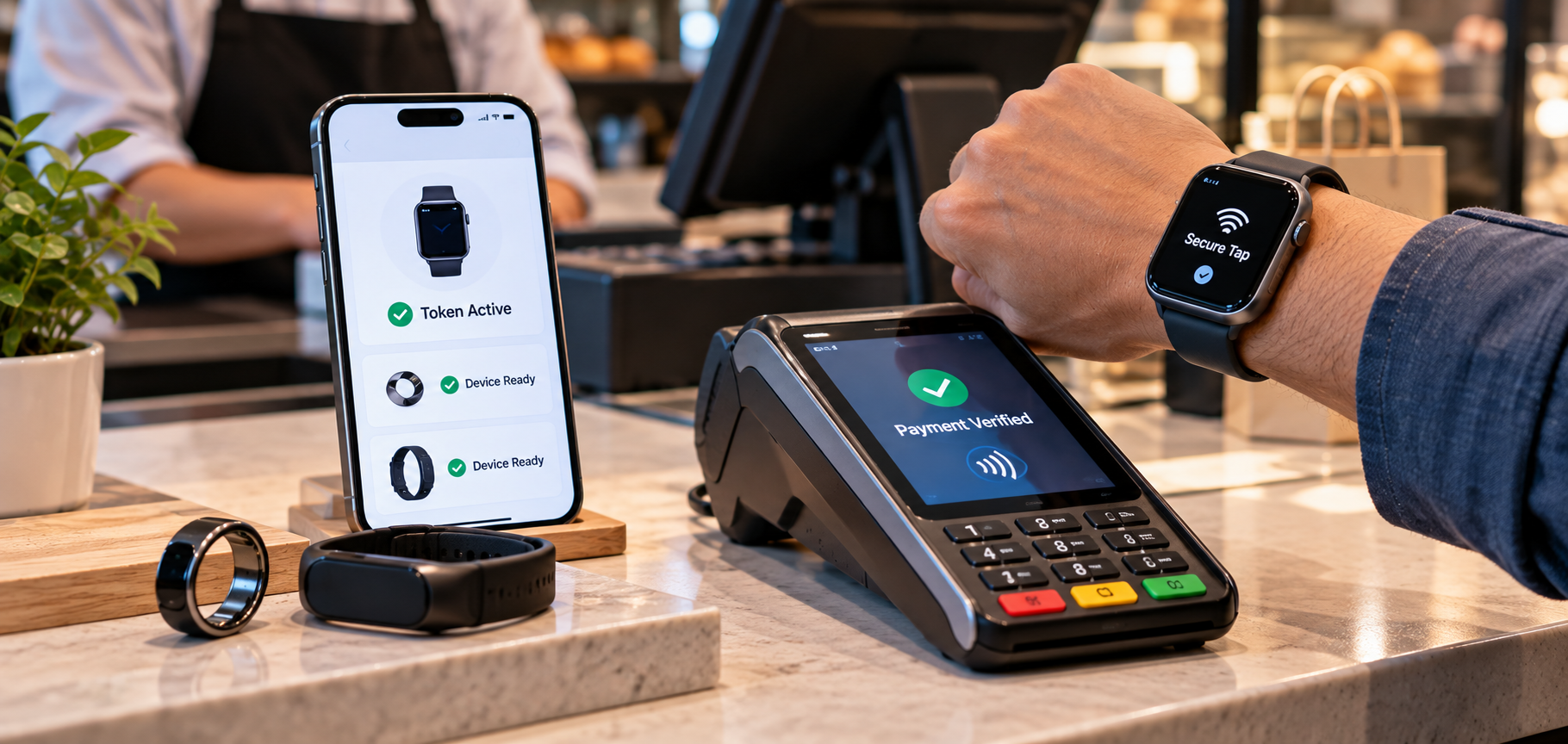


Smartwatches, payment rings, fitness bands, and other connected devices can allow users to make contactless payments without carrying a physical card. The wearable hardware is only one part of the product. A complete solution also requires firmware communication, card provisioning, a companion mobile application, token management, secure Cloud services, and payment-system integration.
A team providing AI Development Services in San Francisco can develop transaction-monitoring tools, anomaly-detection models, risk dashboards, and intelligent support workflows for the payment platform.
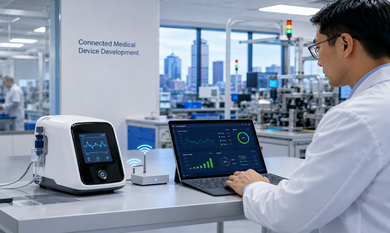
Providers of IoT BLE Development Services in San Francisco can build the software that connects wearable hardware with mobile applications, administrative dashboards, and Cloud infrastructure.
Why Payment Tokenization Matters
A wearable payment product must complete transactions without unnecessarily exposing the customer’s card number. Payment tokenization helps achieve this by replacing the primary account number, or PAN, with an alternative credential called a payment token.
According to EMVCo, an EMV payment token can be restricted to a particular device, merchant, or payment scenario. A token obtained from one wearable may therefore be unusable in an unauthorized environment.
Tokenization can support:
- Reduced exposure of sensitive card information
- Device-specific payment credentials
- Remote token suspension
- Lost-device management
- Compatibility with existing payment infrastructure
- Safer card provisioning and replacement workflows
Tokenization remains one layer of security. The software must also protect user accounts, APIs, device communication, transaction records, and administrative access.
How Is a Card Added to the Wearable?
The card-provisioning process begins inside a wallet or companion mobile application. The app collects the required information and submits a request through the approved payment ecosystem.
The card issuer verifies the customer and decides whether the card can be added. After approval, an authorized Token Service Provider generates a device-specific payment token. The token and related cryptographic information are then provisioned to a Secure Element or another approved protected environment.
The companion application must display provisioning status, verification requests, supported cards, token status, and error messages. It may also allow the customer to remove a card, suspend a lost device, or review recent wearable transactions.
A smartwatch may support a passcode, biometric verification, or wrist detection. A passive ring may have no battery, display, or biometric sensor. The software workflow must reflect the capabilities and limitations of the selected hardware.
What Happens During a Contactless Payment?
A wearable payment transaction generally follows these steps:
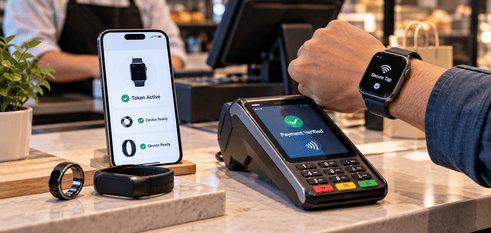
- The user places the watch, ring, or band near an NFC-enabled terminal.
- The device provides its payment token instead of the original card number.
- Transaction-specific cryptographic information accompanies the token.
- The terminal sends the request through the merchant’s acquiring system.
- The payment network processes the tokenized transaction.
- The issuer performs authorization and risk checks.
- The approval or decline returns to the terminal.
The interaction may take only a few seconds, but the supporting software must reliably coordinate device status, token validity, transaction processing, and risk controls.
What Software Must Be Developed?
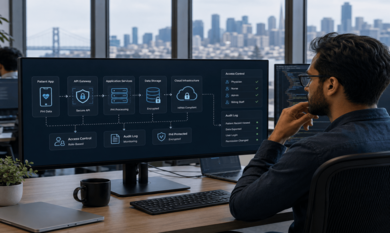
The software layer around wearable payment hardware may include:
- iOS and Android companion applications
- BLE pairing and synchronization
- Secure device registration
- User authentication and account management
- Card-provisioning interfaces
- Token lifecycle management
- Lost-device and token-suspension workflows
- Cloud APIs and databases
- Web-based administration dashboards
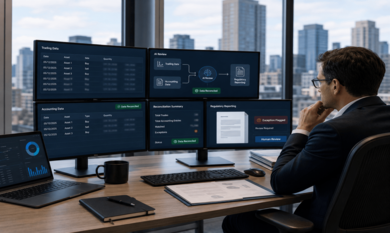
- Transaction and device monitoring
- Notification services
- Audit logs and access controls
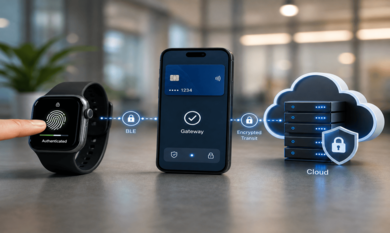
IoT BLE Development Services in San Francisco can support BLE communication, firmware integration, connection recovery, mobile synchronization, remote configuration, and Cloud-based device management.
The platform may also require APIs from issuers, processors, payment networks, or qualified Token Service Providers. These integrations should be defined during product discovery because availability, documentation, testing environments, and approval processes can affect the development timeline.
How Can AI Support the Payment Platform?
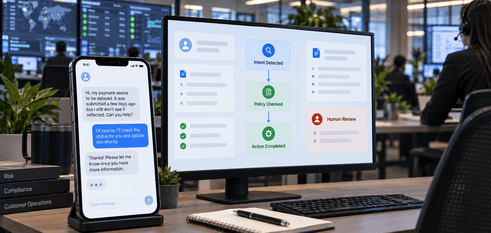
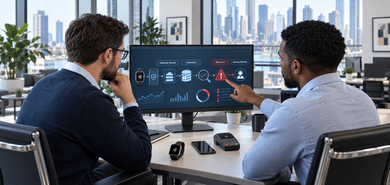
Tokenization helps protect credentials, while AI can support fraud and operational monitoring. Businesses using AI Development Services in San Francisco may develop models that examine device history, transaction frequency, location patterns, provisioning attempts, and unusual purchasing behaviour.
For example, the system may detect that a wearable has generated several transactions within an unusually short period or that its behaviour differs significantly from its established usage pattern. The software can assign a risk score and initiate additional verification or human review.
AI should support established payment rules instead of replacing issuer controls. Models must be tested for false alerts, performance drift, and inconsistent outcomes.
Practical Payment Ring Scenario
Consider a payment ring manufacturer that has completed the NFC hardware and Secure Element design but still needs the supporting digital platform.
A mobile application is developed to register the ring, authenticate the customer, initiate card provisioning, and show token status. Cloud APIs connect the app with approved payment services and maintain device records. A Web dashboard allows authorized staff to review provisioning errors, device activity, and support requests.
When the customer taps the ring at a café, the device sends the token and transaction-specific cryptographic information. If the ring is later lost, the customer opens the app and reports it. The platform starts the appropriate suspension workflow for that device token while leaving the underlying card available on other approved devices.
This software transforms payment-enabled hardware into a manageable product that customers and support teams can use confidently.
What Should Be Included in an MVP?
An initial version should focus on one wearable type, one defined payment flow, and the essential management features.
A practical MVP may include:
- Device onboarding
- Secure BLE pairing
- Customer registration and authentication
- Controlled card provisioning
- Token-status visibility
- Contactless payment support
- Lost-device reporting
- Token suspension or deletion
- Basic transaction visibility
- An administrative dashboard
- Monitoring and audit logs
A provider of IoT BLE Development Services in San Francisco should be able to integrate the selected hardware without requiring unnecessary changes to its core design.
A company offering AI Development Services in San Francisco can add risk monitoring after dependable transaction, device, and user data becomes available. Beginning with rules and gradually introducing validated models can reduce unnecessary complexity.
What Should Be Evaluated Before Development?
Before development begins, the hardware capabilities, payment relationships, target market, user-verification method, and certification route should be documented.
Important questions include:
- Is the hardware NFC and BLE enabled?
- Which Secure Element or protected environment is available?
- Which issuers and payment networks must be supported?
- Who will provide tokenization services?
- Which card-provisioning APIs are available?
- How will lost devices be disabled?
- What information will appear in the mobile app?
- Which actions will administrators perform through the Web dashboard?
- How will firmware and mobile-app updates be managed?
- What testing and certification will be required?
Answering these questions early helps create realistic software requirements and reduces integration problems later.
Conclusion
Payment tokenization enables a smartwatch, ring, or connected device to complete payments without directly exposing the customer’s actual card number. Turning the hardware into a complete commercial product requires mobile software, secure Cloud services, token management, administrative tools, payment integrations, and ongoing device monitoring.
As a software development company in San Francisco, Theta Technolabs can develop mobile applications, Web dashboards, Cloud platforms, APIs, and intelligent analytics for connected payment devices.
Through AI Development Services in San Francisco, Theta Technolabs can support transaction analytics, anomaly detection, risk dashboards, and decision-support workflows.
With IoT BLE Development Services in San Francisco, the team can integrate wearable hardware with companion applications, BLE communication, device-management systems, and secure Cloud infrastructure.
FAQs
1. How does tokenization make wearable payments more secure?
Payment tokenization replaces the actual card number with a payment token. This reduces the need to expose the customer’s primary card credentials during contactless transactions and can allow tokens to be restricted to specific devices or payment scenarios.
2. Can a payment ring work without a mobile application?
The ring may be able to complete contactless payments independently once it has been provisioned. However, a companion mobile application is typically useful for onboarding, card provisioning, token management, device status, lost-device reporting, and customer support.
3. What role does BLE play in wearable payment products?
BLE can support communication between the wearable and a smartphone or other connected systems. It can be used for device pairing, synchronization, configuration, firmware-related workflows, and device management, depending on the hardware architecture.
4. Can AI be used to detect suspicious wearable payment activity?
Yes. AI models can analyze transaction and device behaviour to identify unusual patterns, such as abnormal transaction frequency, unexpected provisioning attempts, or activity that differs from established usage patterns. AI should complement established payment and issuer risk controls.
5. What should be included in a wearable payment MVP?
A practical MVP can include device onboarding, secure BLE communication, user authentication, controlled card provisioning, token-status management, contactless payment support, lost-device workflows, basic transaction visibility, administration tools, and monitoring and audit capabilities.
Ready to Build Your Wearable Payment Platform?
From payment rings and smartwatches to connected fitness devices, the right software architecture can turn wearable hardware into a secure, scalable payment product.
Let’s talk about your wearable payment project and explore the right combination of mobile, IoT, Cloud, payment integration, and AI capabilities for your product.



















.png)



.png)




















.png)











.png)


.png)



.png)