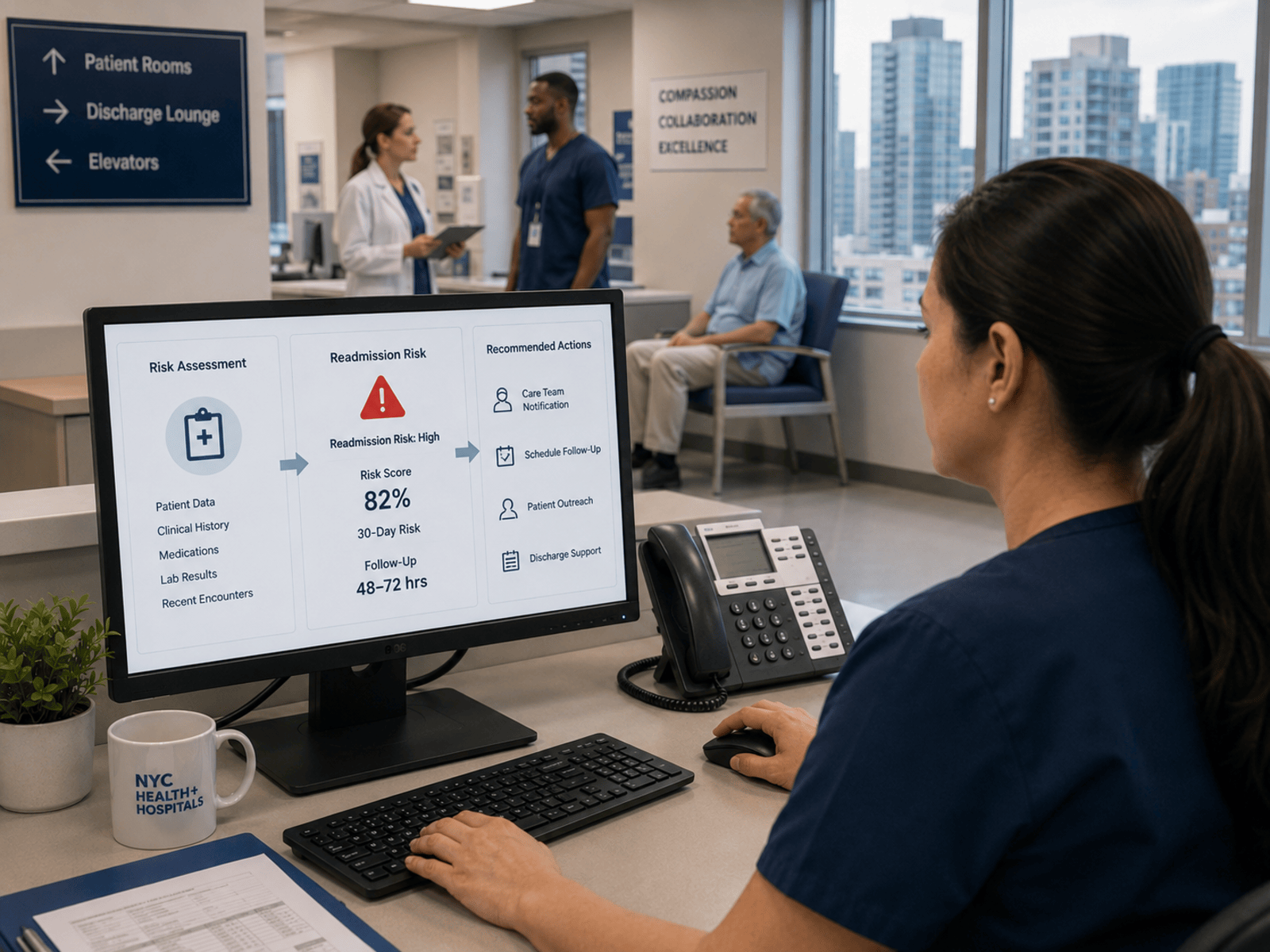


Every hospital network deals with the same recurring headache: patients who get discharged and then return within weeks, sometimes days. It's not always a failure of treatment, often it's a gap in what happens after the patient walks out the door. Take a fairly common scenario: a patient treated for heart failure gets discharged, goes home, and three weeks later ends up back in the ER because nobody caught that they were struggling with their new medication schedule. That single case reflects a much bigger, systemic pattern across hospital networks.
The solution more hospital systems are adopting is AI readmission risk prediction, using a patient's existing data to flag, before they even leave the hospital, who's most likely to come back. This blog walks through how that prediction actually works under the hood, what changes for a care team once they have the score in hand, and what it takes for a hospital network, particularly in New York, to actually build and use one of these systems.
Why Readmissions are a Bigger Problem Than Most Hospital Networks Realize
Readmissions rarely trace back to one clear cause. They're usually the sum of several smaller gaps, a discharge summary that never reached the primary care doctor, a patient confused about a new prescription, a follow-up visit scheduled three weeks out instead of three days. Any hospital network, regardless of size or region, runs into some version of this. Medicare's Hospital Readmissions Reduction Program penalizes hospitals for excess 30-day readmissions across a defined set of conditions, so the cost isn't abstract, it lands directly on reimbursement.
New York carries a heavier version of this problem. The state has consistently ranked among the highest for 30-day readmission rates nationally, and many of its hospital networks operate as large, multi-site systems handling high patient volumes across a broad Medicaid population. A smaller hospital in a mid-sized city can often manage discharge follow-up with a compact care team. A large New York hospital readmission rates picture looks different, multiple facilities, denser patient loads, and post-discharge support that's harder to coordinate consistently across every site. The underlying problem is the same one every hospital faces; the scale just makes it tougher to stay ahead of. It's part of why New York hospitals are adopting AI across different clinical use cases, not just readmissions.
How AI Actually Predicts Readmission Risk
This is where the concept becomes concrete rather than abstract. A hospital readmission risk prediction model works from data the hospital already collects, it doesn't require anything new from the patient. Most models draw from:
- Prior admission history and how recently those admissions occurred
- Chronic conditions and comorbidities, heart failure, COPD, and diabetes come up frequently
- Length of the current hospital stay
- Discharge disposition, home, rehab, or skilled nursing
- Lab results and vital sign trends recorded during the stay
- Social factors where available, such as insurance type or living situation
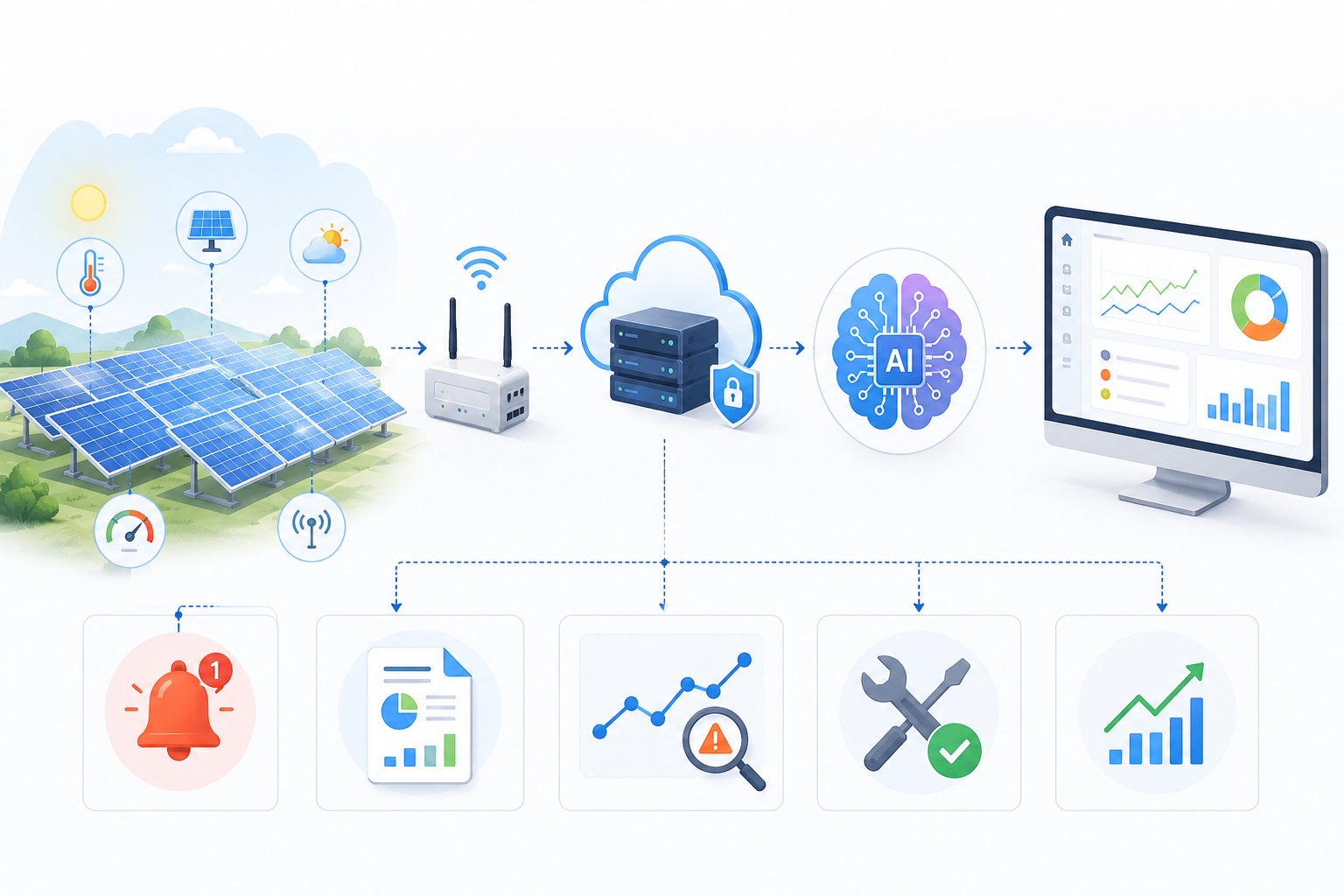
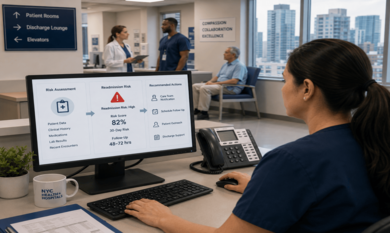
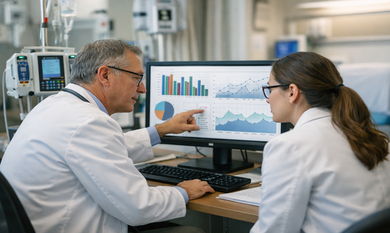
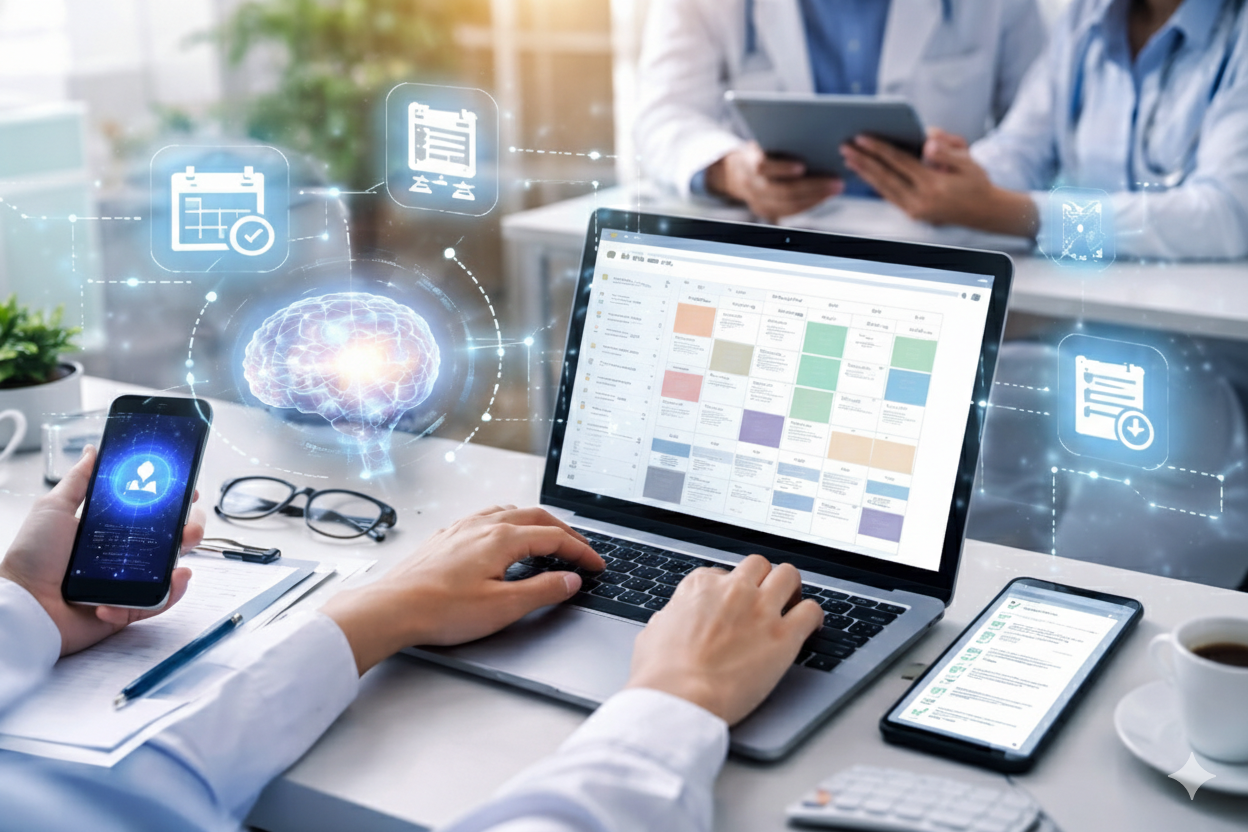
The model generates a score for each patient before discharge, and that score needs to land somewhere clinicians actually check, typically a dashboard built into the existing EHR workflow rather than a separate tool nobody opens. A useful real-world reference here is NYUTron, a large language model developed by researchers at NYU Grossman School of Medicine. According to their published study in Nature, NYUTron achieved an area under the curve (AUC) of 78.7–94.9% across its prediction tasks, including 30-day readmission, an improvement of 5.36–14.7% over traditional models. It's currently used within NYU Langone Health hospitals to help flag readmission risk at the point of discharge, a documented example, not a marketing claim.
What Changes Once a Hospital Has the Score
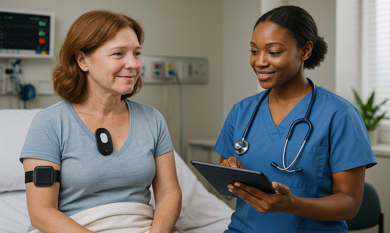
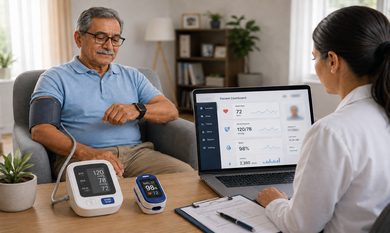
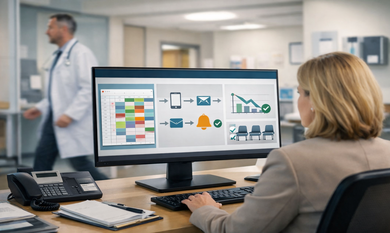
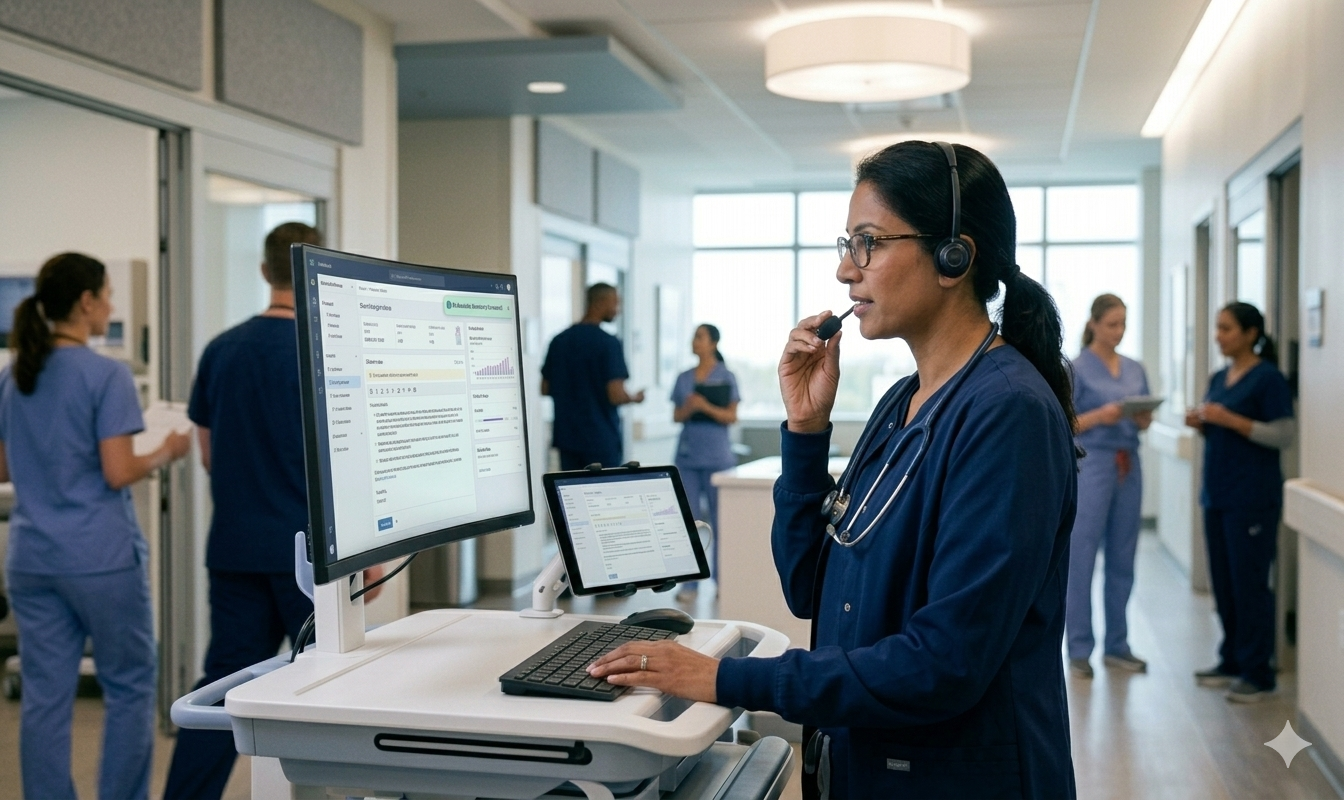
The score itself doesn't do anything on its own, what a care team does with it is what matters. Once a patient is flagged high-risk, a few things typically shift. Care coordinators move that patient to the front of the line for a follow-up call within 48 to 72 hours instead of leaving it to whenever staff get to it. Discharge planners bring in home health support earlier for patients heading back to an empty apartment. Pharmacists step in for medication reconciliation before discharge, catching the kind of dosage mix-up that sends people straight back to the ER. None of this replaces clinical judgment, it just tells the team where their limited follow-up time is best spent first.
Build It In-House or Bring in a Development Partner
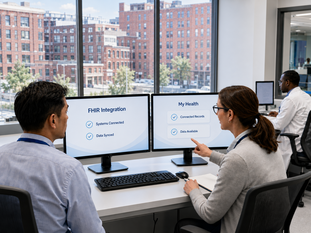
This is the point where most hospital networks get stuck. Building a machine learning discharge planning model in-house usually means growing a dedicated data science team, which is a heavier lift than most hospitals, even large New York systems, are set up for. A more common route is partnering with a development team that has already built predictive tools for healthcare and understands how to work within EHR data standards like HL7 and FHIR. This is the kind of predictive analytics and AI-driven healthcare development work that shortens the path considerably compared to building it from scratch internally.
The real bottleneck is rarely the algorithm itself, it's data readiness. Hospital data is often spread across systems that don't communicate cleanly, and getting that data into a usable, structured pipeline usually takes longer than training the model. A development partner familiar with this kind of work can shorten that timeline considerably compared to an internal IT team handling it alongside everything else already on their plate.
Where This Can Go Wrong
Worth stating plainly: prediction models trained on data that doesn't reflect a hospital's actual patient mix can under-flag or over-flag certain groups, the model is only as fair as the data behind it. Flooding clinicians with too many "high-risk" alerts leads to alert fatigue, where staff eventually start tuning the flags out, which defeats the entire point. And a model that doesn't integrate cleanly into the existing EHR workflow just becomes another login nobody bothers opening. A prediction model is only as useful as the workflow built around it, it isn't a fix on its own.
Frequently Asked Questions
How does AI predict hospital readmission risk?
It analyzes data the hospital already has, prior admissions, comorbidities, length of stay, discharge disposition, and vitals, to generate a risk score before a patient is discharged.
How accurate is AI in predicting hospital readmissions?
Accuracy depends on the model and the data quality behind it. NYU's NYUTron model reported an AUC of 78.7–94.9% across its prediction tasks, including 30-day readmission, an improvement of 5.36–14.7% over standard non-LLM approaches..
What data does a hospital need to build a readmission prediction model?
Mainly EHR data, admission history, diagnoses, lab results, discharge details, and where available, factors like insurance type and living situation.
Can this reduce CMS penalty exposure for New York hospitals?
It can help indirectly, catching high-risk patients earlier and triggering timely follow-up care can lower actual readmission rates, which is the metric CMS penalties are tied to. Results depend heavily on how well the model is integrated into discharge workflows, and outcomes will vary by hospital.
Is this only useful for large hospital systems?
No. Smaller hospital networks can use this too, the model just needs to be scaled to the size of the data and patient volume they actually have.
How Theta Technolabs Can Help
We work with hospital networks on the technical side of this, building predictive analytics models and integrating them into existing EHR systems using FHIR-based data pipelines and Python-based machine learning frameworks, so the model fits into how a care team already works instead of sitting outside it. This connects to the broader healthcare technology solutions we've delivered for hospital networks over time.
If a hospital network wants to talk through what building a readmission risk model would actually take for their setup, reach out to Theta Technolabs at sales@thetatechnolabs.com.










.png)



.png)














.png)


















.png)