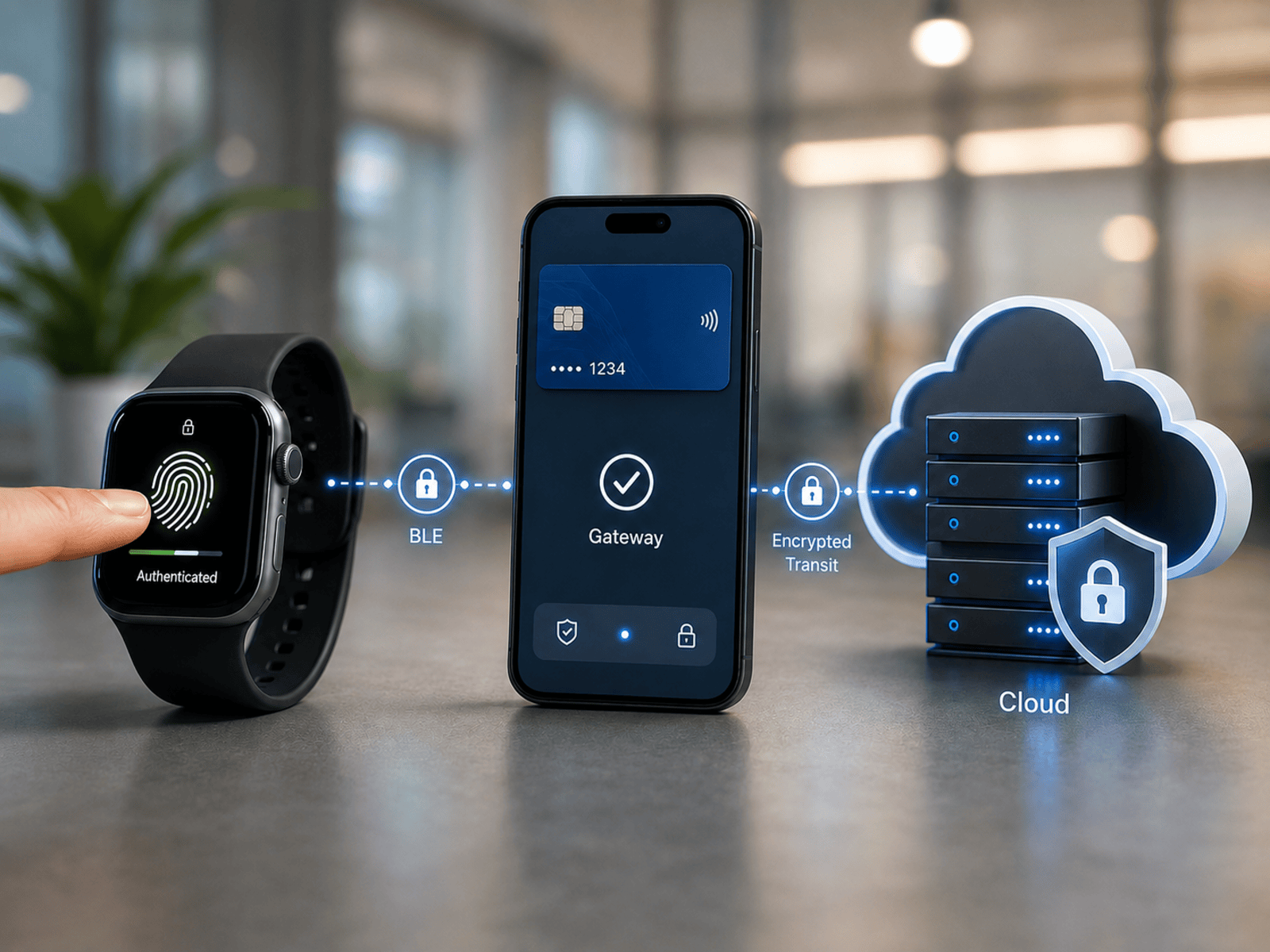


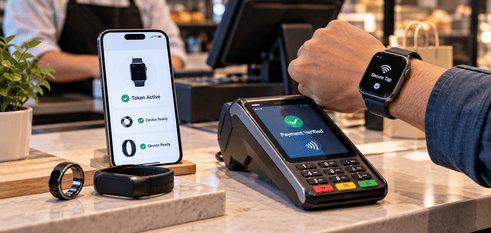
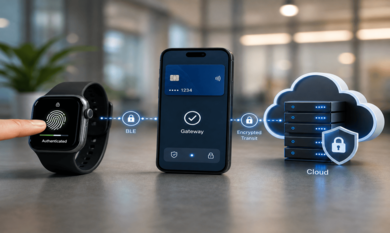
Wearable payments have moved well past the novelty stage. Smartwatches, fitness bands, and payment rings are now routine at checkout counters, and the fintech teams building these products are under growing pressure to get the security architecture right, not just the tap-to-pay experience. That architecture is really a chain of three distinct systems: the wearable's biometric sensor, the Bluetooth Low Energy link to a paired gateway, and the cloud backend that finalizes the transaction.
Most conversations about wearable payment app security stop at the first and last links in that chain, biometrics and tokenization. Fingerprint sensor, encrypted token, done. But that framing skips the part of the system that actually breaks in production: the BLE hop between the sensor and the gateway device, and the handoff from that gateway into the cloud backend. If you are building or auditing this stack, that middle stretch is where most of the real engineering decisions, and most of the real risk, actually live. This piece walks through the pipeline end to end, from BLE biometric authentication on the wrist to the cloud services that finalize a transaction.
How Wearable Payment Authentication Actually Works
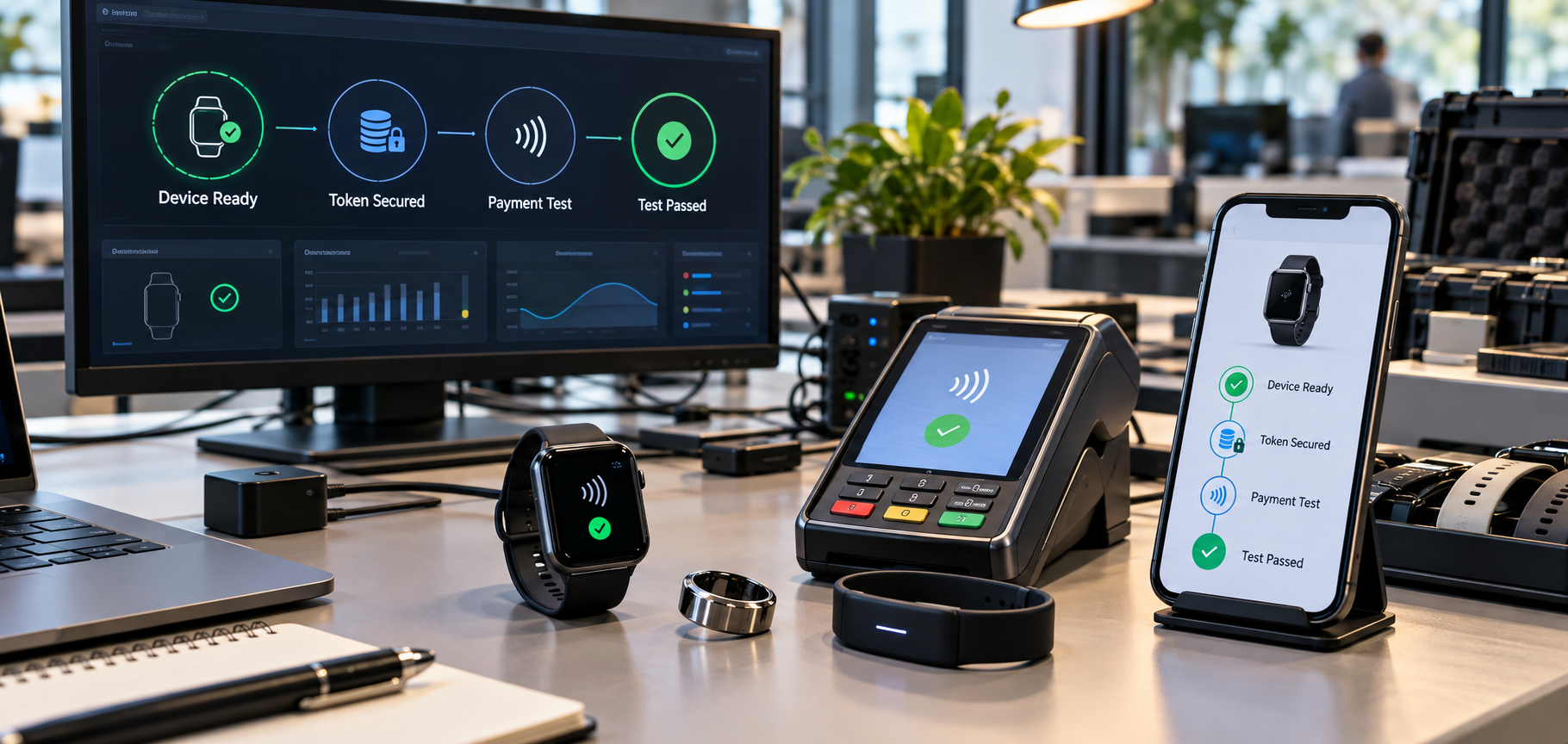
A typical flow looks like this: the wearable captures a biometric signal, usually a fingerprint touch, a heartbeat pattern, or in some designs a PIN fallback. That signal is matched either locally on the device's secure element or passed along as a template for verification further up the chain. Once the match succeeds, the wearable advertises over BLE to a paired gateway, which is often the user's phone but can also be a dedicated hub in enterprise or healthcare-adjacent deployments. The gateway then relays payment authorization data to the cloud backend, which talks to the payment processor.
Two decisions shape everything downstream: how much biometric processing happens on-device versus off-device, and how the BLE payload is protected in transit. Weak choices at either point undermine biometric data encryption even if the cloud side is airtight. This is also where contactless payment encryption needs to be applied consistently, not just at the final API call to the payment processor.
Where BLE Introduces Risk
BLE was designed for low power consumption, not for high-assurance financial transactions, and that tradeoff shows up in a few specific ways. Pairing and bonding, if left in a permanently connected state, create a persistent attack surface that a well-designed system should avoid. GATT characteristics, if not scoped tightly, can expose more of the device's internal state than intended to anything scanning nearby. In plain terms, if Bluetooth broadcast rules aren't configured tightly, the wearable can leak sensitive data to anyone scanning nearby. And the advertisement phase itself, before a secure connection is established, is a known window for man-in-the-middle attempts if the implementation does not enforce proper bonding and encryption from the first handshake.
None of this means BLE is unsuitable for payments. It means the architecture around it has to assume BLE is the weakest link and design accordingly, including short-lived pairing sessions, encrypted characteristic values, and strict scoping of what the wearable actually broadcasts. This is the kind of detail work we handle in our IoT & BLE work in New York, where fintech and retail clients need connected hardware that holds up under real-world scanning and interference, not just lab conditions.
Securing the Gateway to Cloud Handoff
The gateway is not just a pass-through, it functions more like a secure checkpoint than a router. If it simply relays raw BLE payloads to the cloud, whatever protection existed on the BLE side becomes irrelevant the moment the data leaves the device. A more defensible BLE to cloud architecture re-encrypts the payload at the gateway before it ever touches the internet, typically using a transport layer like MQTT over TLS or an equivalent secured channel, so that a compromised local network cannot expose payment or biometric data in transit.
This layered approach reflects the direction that current fintech security research has been pushing. A peer-reviewed study on IoT-based wearable payment security proposed a scheme combining Elliptic Curve Integrated Encryption, Elliptic Curve Digital Signature Algorithm, and AES, essentially layered encryption at each stage of the pipeline, to protect data moving between wearable, gateway, and backend, specifically because contactless and Bluetooth-based wearable payment systems have shown real security breaches in practice. That is not a reason to avoid BLE-based wearables. It is a reason to treat the gateway-to-cloud handoff as its own dedicated security boundary rather than an afterthought, with strong cloud gateway security and IoT payment security practices applied consistently.
Tokenization: Why the Cloud Should Never See Raw Biometric Data
Once a transaction is authorized on-device, the cloud backend generally has no legitimate reason to ever receive or store a raw biometric template. Tokenization wearable payments systems replace the actual card and biometric data with a substitute token that has no value outside the specific transaction context. If a database is ever breached, the tokens sitting in it should be effectively useless to an attacker.
The same principle applies to biometric templates specifically. Where local matching is architecturally possible, keeping the template on the secure element of the wearable itself, rather than transmitting it anywhere, removes an entire category of cloud-side risk. Where server-side verification is genuinely required for the product to work, that data should be hashed and isolated from the rest of the transaction pipeline, never stored alongside plain payment records.
Common Mistakes We See in Wearable Fintech Builds
A handful of patterns show up repeatedly in early-stage wearable payment products, and they are usually fixable before launch if caught early:
- Leaving BLE pairing permanently open instead of re-establishing bonded, encrypted sessions per use
- Storing raw biometric templates on the server instead of tokenizing or keeping them on-device
- Skipping mutual TLS between the gateway and backend, relying on one-way certificate validation only
- Reusing static encryption keys across devices instead of rotating and scoping keys per wearable
None of these are exotic problems. They are the kind of gaps that surface in a proper secure wearable payments architecture review, which is exactly why this stage of wearable fintech app development deserves as much scrutiny as the user-facing app itself.
Building This Right: What a Secure Stack Looks Like
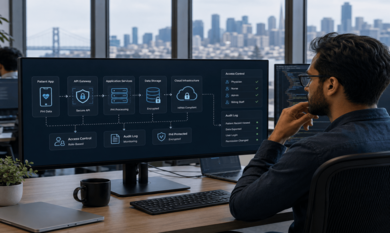
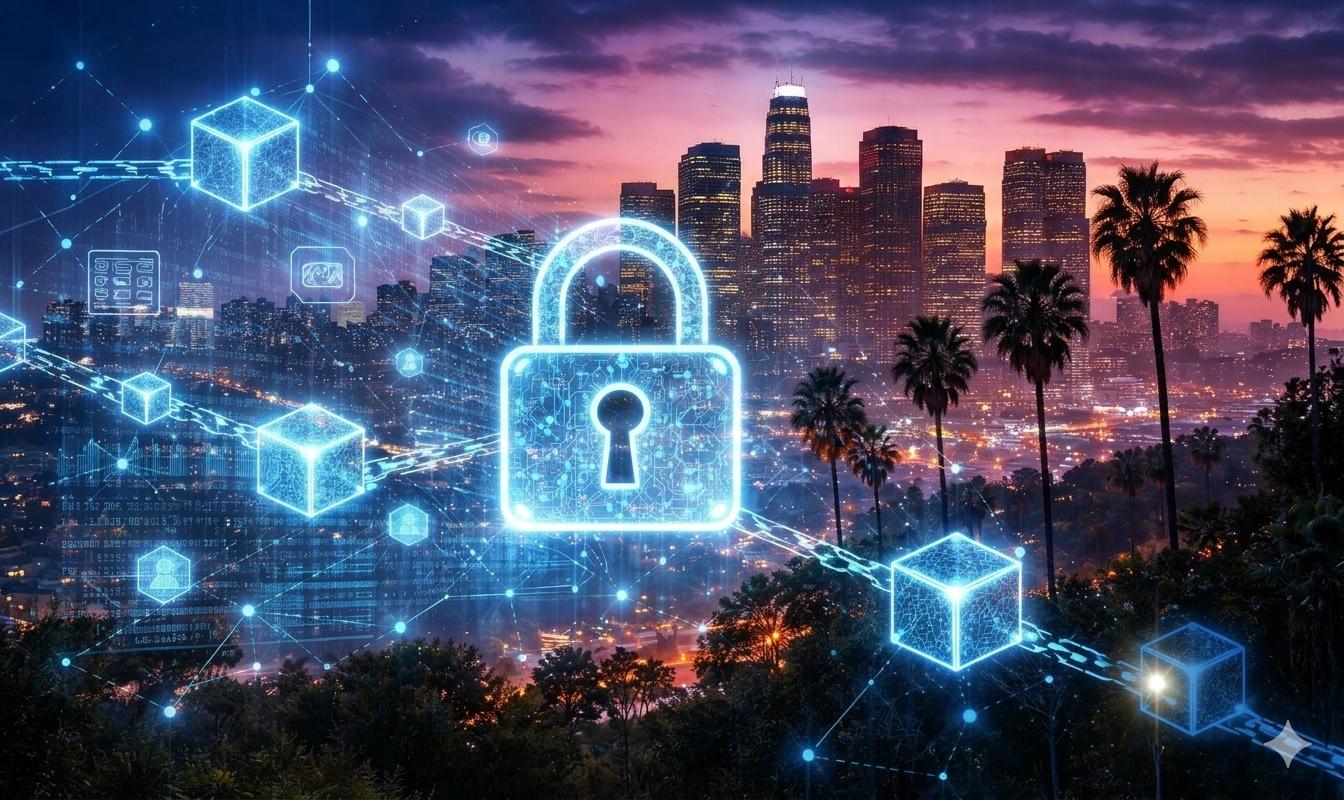
A defensible wearable payment stack treats BLE, the gateway, and the cloud as three separate trust boundaries, each with its own encryption, its own key management, and its own failure assumptions. It does not rely on a single layer of security to protect the whole chain. Beyond the technical risk, a poorly secured handoff can mean real financial exposure, regulatory scrutiny, and lasting damage to customer trust. This is the kind of architecture we build through our Cloud & Mobile Solutions, combining secure BLE integration with cloud mobile solutions for fintech infrastructure that is scoped correctly from day one rather than retrofitted after a security review flags problems. For fintech teams evaluating a wearable app development company New York based, that kind of end-to-end thinking, not just app polish, is usually the differentiator that matters when a product has to handle real money.
Frequently Asked Questions
1. Is biometric data stored on the wearable or the cloud?
Where possible, it should stay on the wearable's secure element. Some architectures require server-side verification, but that data should be tokenized or hashed, never stored as raw biometric information alongside transaction records.
2. What is the biggest security risk in wearable payments?
The BLE connection between the wearable and its paired gateway is often the weakest point, particularly when pairing is left open or GATT characteristics are not properly scoped.
3. Does tokenization replace encryption?
No. Tokenization protects stored data by substituting it with a non-reusable value, while encryption protects data in transit and at rest. A secure system needs both, applied at different points in the pipeline.
4. How is BLE different from NFC for payment security?
NFC has a very short physical range, which naturally limits interception opportunities, while BLE operates over a longer range and requires deliberate pairing and encryption controls to reach a comparable level of protection.
Closing
Wearable payments are not inherently less secure than card or phone-based payments, but the pipeline has more moving parts, and each one needs its own protection rather than a single layer of trust. Getting the BLE-to-cloud handoff right early saves significant rework later, especially once a product is handling live transactions. If your team is architecting or auditing this layer, our earlier blog on wearables in fintech covers the broader product landscape, and Theta Technolabs' engineering team is available to walk through the security architecture in more depth at sales@thetatechnolabs.com.
























.png)






.png)






















.png)