You have an idea for a telemedicine app. Maybe you are a physician in Los Angeles who keeps watching patients struggle to get timely care, or a first time founder who spotted a real gap in virtual health. The idea feels right. The hard part is the distance between that idea and a product that patients and providers actually use. Telemedicine app development involves far more than a video screen, and the founders who succeed are the ones who understand the path before they spend a dollar. This guide walks you through how to take a telemedicine app idea from concept to launch, step by step, so you can move forward with clarity instead of guesswork.
Start by Validating Your Telemedicine Idea
Before you write a single line of code, find out whether your idea solves a real problem for real people. Most telemedicine apps that fail do not fail on technology. They fail because no one needed the product, or because it did not fit how clinicians actually work. So spend time with the people you intend to serve. Talk to patients, and just as importantly, talk to the doctors and care teams who would open your app every day.
As you test the idea, get clear on a few things:
- Who exactly is your user, the patient, the provider, or both
- Which care model you are supporting, such as urgent care, teletherapy, or chronic condition follow-up
- What specific problem your app removes that current options do not
- Whether people are willing to pay, and who actually pays
In the Los Angeles market, where virtual care options are already crowded, a sharp answer to these questions is what separates an idea worth building from one worth rethinking.
Understand HIPAA and FDA Before You Build
Healthcare apps carry rules that ordinary apps do not, and understanding them early saves you from expensive rework later.
HIPAA Rules You Must Follow
Because a telemedicine app handles protected health information and works alongside healthcare providers, it almost always falls under HIPAA. A HIPAA compliant telemedicine app is not a badge a vendor hands you. It is a product designed so that protected health information stays secure at every step. According to the U.S. Department of Health and Human Services, the HIPAA Security Rule requires appropriate administrative, physical, and technical safeguards for electronic protected health information. In practice that means encryption, strict access controls, audit logging, and signed agreements with any vendor that touches patient data. Compliance is your legal responsibility as the operator, so it has to be built into the product from day one, including any EHR integration you plan.
When FDA Rules Apply to Telemedicine Apps
Most telemedicine apps that simply connect patients and providers for consultations are not regulated as medical devices. The line moves when your app starts making clinical recommendations. If it analyzes symptoms and suggests a diagnosis or a treatment, it may be classified as a medical device and require FDA oversight, which adds significant time and cost. When in doubt, confirm your specific case with a healthcare attorney before you build.
If you want a partner who builds with these requirements in mind from the start, our healthcare app development team works on secure, compliant telemedicine products.
Scope Your Telemedicine MVP
The biggest budget mistake founders make is trying to build everything at once. Your first version, the telemedicine MVP, should prove that people will use your core service and that it fits real clinical workflows. Everything else can wait.
A focused first version usually centers on a small, dependable set of features. Build these now:
- Secure video consultations between patient and provider
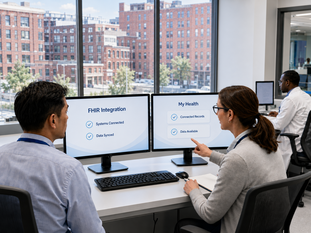
- A connection to patient records, often through EMR integration
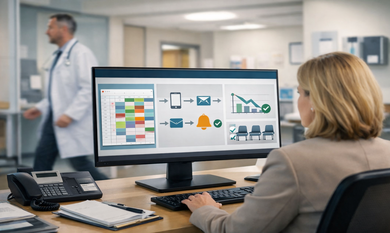
- Secure messaging and basic scheduling
- E-prescribing, if it is core to your care model
These can wait for a later phase:
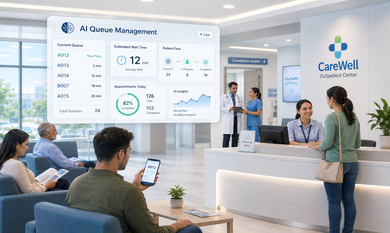
- AI symptom checking and triage
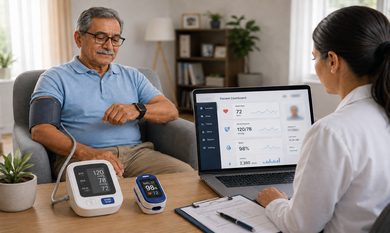
- Remote patient monitoring with wearables
- Advanced analytics and multi-provider marketplaces
Shipping a lean version first lets you learn from real usage, attract early supporters, and avoid pouring money into features no one asked for. If you need help turning your concept into that first working version, our MVP development service is built for exactly this stage of a startup.
Build the App, Custom or Off the Shelf
Once your MVP scope is clear, the question of how to build a telemedicine app comes down to one real decision.
Custom Build vs White-Label Platforms
White-label platforms let you launch quickly and cheaply by renting an existing telehealth system. The trade-off is limited control. You usually do not own the code or the patient data architecture, and you are tied to the provider's roadmap and pricing. A custom build costs more upfront but gives you ownership, flexibility, and a product shaped around your exact workflow. For founders planning to grow and raise funding, custom usually pays off over time. For testing a narrow idea fast, white-label can be the smarter first step.
Getting Video and Data Security Right
A telemedicine product is delivered as connected mobile and web apps, and the parts that look simple are often the hardest. Reliable, low-latency video that holds up on shaky mobile networks takes real engineering, and so does securing patient data end to end. This is not the place to cut corners. Experienced mobile app development is the difference between an app providers trust and one they abandon after the first dropped call.
Plan for Cost and Timeline
There is no single price for building a telemedicine app, and any company that quotes you a firm number before understanding your scope is guessing. Telemedicine app development cost depends on several factors:
- The number and complexity of features
- Compliance and security requirements
- Integrations with records, payments, and prescribing
- Whether you build for one platform or several
The most common reason budgets overrun is what teams call compliance creep. Each new feature can pull in new HIPAA obligations, so a project that started simple grows in scope and cost as you add chat, file sharing, and record integration. You can avoid the surprise by mapping your compliance needs at the start and building in phases. Expect a focused MVP to take less time and money than a full platform with deep record integration, and plan your runway around phases rather than one big launch.
Launch and What Comes After
Launch is a milestone, not the finish line. The steps to launch a telemedicine app for startups usually follow a clear order:
- Prepare for app store review and meet platform requirements
- Run a pilot with a small group of real providers and patients
- Launch to your initial market and gather feedback quickly
- Iterate on what you learn, fixing friction and adding the features users actually request
The strongest telemedicine apps are the ones that keep improving after launch based on real clinical use, not the ones with the longest feature list on day one.
From Idea to Launched Product
Taking a telemedicine app from concept to launch comes down to validating the idea, respecting the rules, scoping a focused MVP, building it well, and treating launch as the start of an ongoing journey. Do those things in order and you give your idea a real chance to succeed. If you are a founder looking for a telemedicine app development company in Los Angeles to build it with you, Theta Technolabs can help. Reach out at sales@thetatechnolabs.com to talk through your idea.
Frequently Asked Questions
1. How much does it cost to build a telemedicine app?
There is no fixed price. Cost depends on your feature set, your compliance and security needs, and your integrations. A lean MVP costs far less than a full platform with deep record integration, so a scoped estimate is worth more than any headline figure.
2. Does my telemedicine app have to be HIPAA compliant?
Almost certainly. A telemedicine app that handles protected health information alongside US healthcare providers falls under HIPAA. Compliance is your responsibility as the operator, and it should be designed into the product from the start rather than bolted on later.
3. Do I need FDA approval for a telemedicine app?
Most consultation and scheduling apps do not. But an app that analyzes symptoms and recommends a diagnosis or treatment may be regulated as a medical device. Confirm your specific case with a healthcare attorney.
4. How long does it take to launch a telemedicine app?
It varies with scope. A focused MVP is faster to launch than a full platform with record integration, which is why building in phases is the safer plan.
5. Should I build a custom telemedicine app or use a white-label platform?
White-label is faster and cheaper to start. Custom gives you ownership, flexibility, and room to scale. The right choice depends on your goals and your runway.























.png)






.png)
























.png)
























.png)



.png)



.png)